
Balcony PV in Europe: How a Niche Trend Became a Mainstream Energy Revolution
A recent conversation with a professional in the PV module logistics sector revealed that since 2025, among residential photovoltaic products destined for the European market, shipment volumes for balcony PV have been multiplying.
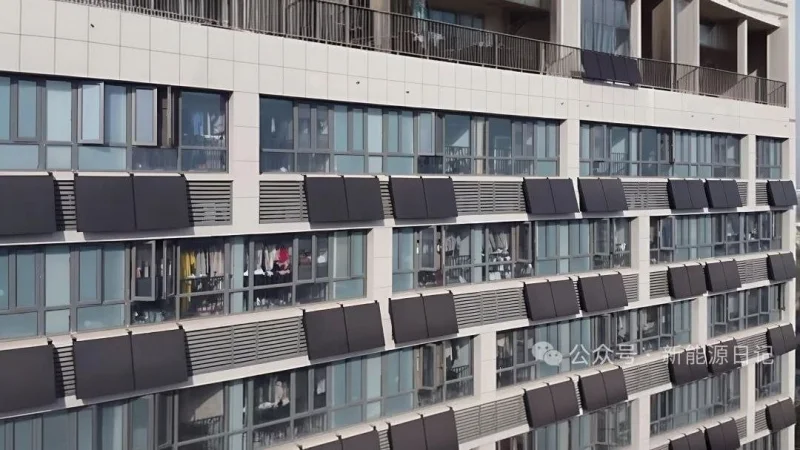
Driven by the combined forces of the energy transition, high electricity costs, and technological maturity, this market, once considered niche, is rapidly moving into the mainstream. Germany holds a commanding lead, with multiple European countries quickly following suit, creating a highly dynamic market landscape. Policy simplification, product innovation, and shifts in user demand are collectively shaping an emerging market that is full of potential but also faces challenges.
01 | Overall Market Overview: Germany Leads, Other Nations Diverge
As of the third quarter of 2025, the European balcony PV market has shown significant growth momentum, but development is highly uneven across countries.
Germany is undoubtedly the market leader. The number of registered balcony PV systems has surpassed one million, with an estimated three million actual installations and a total installed capacity of 956 MW. In the first four months of 2025, Germany added 135,000 new systems, a year-on-year increase of 36%, continuing its lead in Europe. This achievement is attributed to long-term policy support, a mature supply chain, and strong public acceptance.
In contrast, the market performance of other countries varies considerably. Belgium is a notable bright spot, with over 15,000 users and a threefold increase in demand within two years. In the Netherlands, the growth rate slowed to 12% in 2024, primarily constrained by grid congestion. Poland’s small-scale residential PV market declined by over 40%, but the “virtual prosumer” model is creating new possibilities for its balcony PV sector. While the traditional residential PV markets in France, Italy, and Austria have contracted, balcony PV is emerging as a new growth point.
From an EU-wide perspective, newly installed PV capacity reached 150 GW between 2022 and 2024, with an additional 70 GW expected in 2025. However, after experiencing high growth of 54% in 2023, residential rooftop PV may see its first decline in a decade in 2025 (-1.4%), with some demand gradually shifting to balcony PV.
The core drivers for market growth are threefold: policy simplification, improved economic viability, and lower technological barriers. The EU’s Energy Performance of Buildings Directive (EPBD) requires new buildings to be equipped with solar facilities, while the Renewable Energy Directive (RED III) has shortened the approval time for small systems to one month. Rising electricity prices have significantly reduced the investment payback period, which is only 2-3 years in Belgium, for example. Furthermore, the standardization of system design and the popularization of plug-and-play technology have substantially lowered barriers to installation and use.
02 | Policy Environment: A Mix of Encouragement and Restriction
European countries exhibit significant differences in their policies on balcony PV, ranging from highly supportive to still in exploratory phases.
Germany, through its “Solarpaket 1” (Solar Package I) legislation, has further simplified the registration process and raised the system power limit to 800W for inverters and 2000Wp for modules, while also explicitly granting tenants the right to install balcony PV. At the local level, cities like Berlin offer a subsidy of €500 per system, further stimulating demand.
France has introduced a “zero-approval” process, reducing approval times to seven days. It has also eliminated feed-in tariff (FIT) subsidies for small systems, replacing them with a net metering policy for surplus electricity, and has lowered the VAT to 5.5%.
Italy has launched a “free construction” policy, exempting systems under 800W from approval requirements. This is complemented by a 50% income tax deduction and a 40% grant for community projects, helping to reshape the market as traditional subsidies recede.
Austria has passed legislation establishing a “tacit consent” principle for apartment buildings (excluding tenants). Despite the sudden elimination of the VAT exemption, it continues to promote system integration through a subsidy of €150 per kWh of energy storage.
Belgium officially legalized balcony PV in April 2025 and adopted the Synergrid C10/11 safety standard. Although there are no direct subsidies, a clear policy framework has helped the market emerge rapidly.
The Netherlands, facing growing grid congestion, plans to phase out its net metering policy by 2027, pushing the market toward self-consumption and energy storage.
Poland has innovated with a “virtual prosumer” mechanism, allowing users to purchase electricity remotely to offset their own electricity bills. It also requires energy storage capacity to be at least 1.5 times the PV power, providing a new option for users who are unable to install systems on-site.
03 | Product Trends: Appliance-Like Integration and Smart Features
Balcony PV systems are rapidly becoming more standardized and intelligent.
In system configuration, an 800W inverter paired with 2000Wp modules has become the market mainstream, a standard confirmed by legislation in Germany, Austria, and Belgium. Grid connection methods have also been greatly simplified; for example, Germany allows direct grid connection via a Schuko plug, while Belgium enables report-free connection through smart meters.
Product innovations are constantly emerging. Modular and expandable kit designs (such as those introduced by EcoFlow and Jackery) make balcony PV more “appliance-like,” allowing users to flexibly adjust system size according to their needs. The integration of smart apps enables real-time monitoring and remote control of power generation and consumption.
The importance of energy storage in the market is rising sharply. In the Netherlands, the impending phase-out of the net metering policy has led to an explosion in user demand for storage. Lithium Iron Phosphate (LFP) batteries, with their safety and long lifespan, account for over 70% of the market. Safety technologies are also continuously being upgraded, with protections against overcharging, overheating, and short circuits becoming standard. Some high-end products have also incorporated fire suppression features.
On the supply-chain front, Chinese companies dominate the inverter sector, with brands like Hoymiles and Deye performing strongly. Meanwhile, in the energy storage sector, companies like Anker Solix and EcoFlow are driving the popularity of “plug-and-play” solutions. Vertical service providers such as NeueEnergie24 (Germany), IKEA (Italy), and Wattuneed (Belgium) are also promoting channel innovation and localized services.
04 | User Demand: New Demographics and New Motivations
The core user base for balcony PV is expanding. The primary sources of demand are now owners and tenants of urban apartments, along with residents unable to install traditional PV systems. In Poland, the “virtual prosumer” model has attracted a large number of users who lack installation space.
Purchase motivations are becoming more diverse. In Germany, electricity bill savings are the main driver, with users generally prioritizing self-consumption. In the Netherlands, the desire for energy independence is driving growth in demand for energy storage. So in countries like Italy and France, policy subsidies and environmental awareness still significantly influence consumer decisions.
Significant user pain points are also evident. In France and Italy, installation still requires approval from the property owner or property management; Austrian law still prohibits tenants from installing systems independently; and in the Netherlands, grid connection is difficult due to congestion, and users are required to pay an annual grid fee.
05 | Challenges and Opportunities: Policy and Grid as Key Variables
The challenges facing the market are significant. Policy volatility, such as Austria’s sudden cancellation of tax incentives and the market contraction in Italy following the withdrawal of subsidies, has eroded investor confidence. Grid bottlenecks are becoming increasingly prominent in countries like the Netherlands and Belgium, with connection delays and additional fees acting as constraints. Installation barriers, such as restrictions on building aesthetics and shortages of electricians, are also hindering market development in some countries.
However, the opportunities are equally vast. Demand for energy storage is exploding. The Netherlands and Poland are mandating or encouraging storage integration through policy, while France’s cancellation of the FIT policy is further boosting self-consumption demand. Innovation in business models is ongoing, with Poland’s “virtual prosumer” model and Germany’s ZEREZ grid compatibility standard injecting new vitality into the industry. Smart integrated systems (HEMS/EMS) are improving overall system efficiency by optimizing energy management.
06 | 2030 Outlook: Ecosystem Integration and Smart Technology
The EU has set a target of achieving 600 GW of renewable energy and 700 GW of solar installed capacity by 2030, but the current growth rate is insufficient to realize this vision.
In the future, balcony PV systems will trend toward a standard configuration of “PV + Energy Storage + Smart Management,” with modular designs becoming more widespread. At the policy level, an 800W power limit and simplified registration are expected to become common across Europe, though localized differences will persist.
For manufacturers, transitioning from hardware suppliers to “solution providers” (hardware + software + services) will become a key strategy. Investors should focus on markets with stable policies (such as Germany and Austria) and innovative sectors (Poland’s virtual power plants, the Netherlands’ energy storage market). Policymakers can draw lessons from Germany’s model of prioritizing trust and simplification, focusing on breaking down barriers to community installations.
07 | Conclusion: Localization and System Integration Capabilities Will Determine Success
The European balcony PV market is exhibiting a pattern of “Germany leading, with multiple countries following suit.” Its explosive growth stems from policy simplification and the trend toward appliance-like, user-friendly technology. Future growth will depend more heavily on energy storage integration, smart management, and continued policy stability. To succeed in this market, it is necessary to thoroughly understand and cater to local needs (such as Austria’s “tacit consent” rule) and provide end-to-end solutions. The innovative models in Poland and the Netherlands may lead to a fundamental shift in the industry’s paradigm.
Ti potrebbe interessare:
Segui guruhitech su:
- Google News: bit.ly/gurugooglenews
- Telegram: t.me/guruhitech
- X (Twitter): x.com/guruhitech1
- Bluesky: bsky.app/profile/guruhitech.bsky.social
- GETTR: gettr.com/user/guruhitech
- Rumble: rumble.com/user/guruhitech
- VKontakte: vk.com/guruhitech
- MeWe: mewe.com/i/guruhitech
- Skype: live:.cid.d4cf3836b772da8a
- WhatsApp: bit.ly/whatsappguruhitech
Esprimi il tuo parere!
Ti è stato utile questo articolo? Lascia un commento nell’apposita sezione che trovi più in basso e se ti va, iscriviti alla newsletter.
Per qualsiasi domanda, informazione o assistenza nel mondo della tecnologia, puoi inviare una email all’indirizzo [email protected].
Scopri di più da GuruHiTech
Abbonati per ricevere gli ultimi articoli inviati alla tua e-mail.