
CE Mark vs. Australian Standards: Key Differences
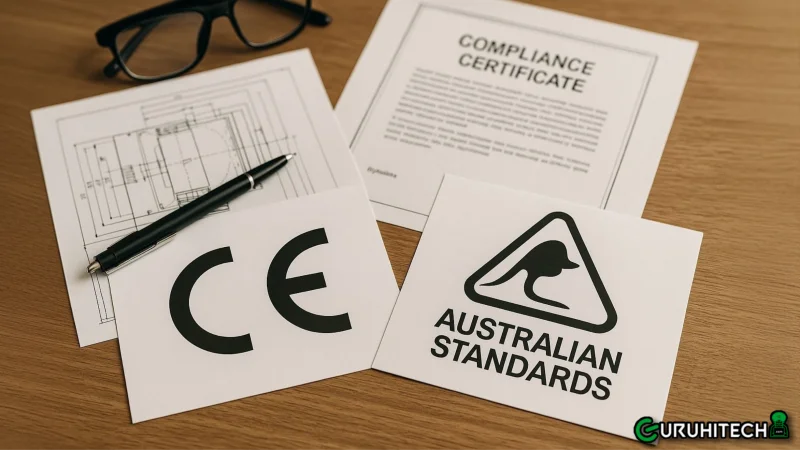
Navigating international markets can be challenging for manufacturers and distributors, especially when it comes to compliance and regulatory requirements. One frequently encountered comparison in this realm is between the CE Mark, a crucial certification for the European Economic Area (EEA), and Australian Standards, which govern compliance for products sold in Australia. Each has its unique criteria, regulatory frameworks, and implications for businesses. Understanding these differences is imperative to ensure compliance and market success.
The CE Mark, or Conformité Européenne, is a certification mark that indicates a product meets the essential requirements of European health, safety, and environmental protection legislation. It is mandatory for products marketed within the EEA. The CE Mark acts as a passport for products, enabling them to be freely traded within the EEA without being subject to further modifications or scrutiny. However, it is not a quality mark or a certification of origin; instead, it signifies that the product complies with all applicable directives, such as machinery, electromagnetic compatibility, and low voltage directives.
On the other hand, Australian Standards refer to voluntary and mandatory standards set by Standards Australia and enforced by various regulatory bodies such as the Australian Competition and Consumer Commission (ACCC). These standards ensure that products are safe, reliable, and perform as expected when used correctly. Unlike the CE Mark, Australian Standards may not always be mandatory. However, for certain high-risk products like electrical appliances and children’s toys, compliance is mandatory. These products must meet specific requirements set forth by the relevant Australian Standards to be legally sold in the country.
Differences in conformity assessment approaches
A notable difference between the two lies in the approach to conformity assessment. For the CE Mark, manufacturers can often self-declare that their products comply with the relevant directives, although for higher-risk products, the involvement of a notified body is necessary. This third-party organization conducts rigorous testing and certification to ensure compliance. Conversely, in Australia, the regulatory framework generally requires third-party certification or testing for products where high safety risks are involved, making the compliance process often more stringent and less reliant on self-declaration.
Key differences also emerge in terms of documentation and labeling. Products with a CE Mark must be accompanied by a Declaration of Conformity, which outlines the directives the product complies with and is signed by the manufacturer.
Additionally, technical documentation must be compiled and retained for ten years after the product is placed on the market. In Australia, compliance with standards often requires specific labeling, including the Regulatory Compliance Mark (RCM) for electrical and electronic products. The RCM indicates that the product meets both electrical safety and electromagnetic compatibility requirements, adhering to Australian rules.
Another critical aspect is the scope of enforcement and market surveillance. In the EEA, market surveillance authorities (MSAs) ensure that non-compliant products are swiftly removed from the market. They conduct inspections, review documentation, and have the authority to impose penalties. Similarly, in Australia, regulatory bodies conduct compliance audits and can demand proof of compliance from manufacturers or importers. Non-compliance can lead to fines, product recalls, or bans from the Australian market.
Market acceptance and dual compliance challenges
The CE Mark and Australian Standards also differ in their respective scopes of acceptance. The CE Mark is widely recognized in markets outside Europe, including Turkey, Switzerland, and the member states of the European Free Trade Association (EFTA). Some non-EU countries may also accept CE-marked products, simplifying the regulatory hurdles for manufacturers. In contrast, Australian Standards are primarily recognized within Australia and New Zealand, governed by a Trans-Tasman mutual recognition arrangement.
Understanding when additional approvals are required can be complex. For example, a product with a CE Mark set for entry into the Australian market may still need to meet specific Australian Standards, especially if the product falls under a high-risk category. This scenario necessitates dual compliance, where the product must adhere to both European directives and Australian regulatory requirements. Conversely, products complying with Australian Standards but meant for the EEA market would require CE certification to be lawfully sold in Europe.
Final considerations for manufacturers
In conclusion, while both the CE Mark and Australian Standards aim to ensure product safety, their regulatory frameworks, conformity assessments, documentation requirements, enforcement mechanisms, and scopes of acceptance reveal significant differences.
Manufacturers and distributors aiming for international market success must navigate these complexities to ensure compliance and capitalize on global opportunities. By thoroughly understanding these regulatory landscapes, businesses can streamline their entry into both European and Australian markets, ensuring their products are not only compliant but also trusted by consumers and authorities alike.
Ti potrebbe interessare:
Segui guruhitech su:
- Google News: bit.ly/gurugooglenews
- Telegram: t.me/guruhitech
- X (Twitter): x.com/guruhitech1
- Bluesky: bsky.app/profile/guruhitech.bsky.social
- GETTR: gettr.com/user/guruhitech
- Rumble: rumble.com/user/guruhitech
- VKontakte: vk.com/guruhitech
- MeWe: mewe.com/i/guruhitech
- Skype: live:.cid.d4cf3836b772da8a
- WhatsApp: bit.ly/whatsappguruhitech
Esprimi il tuo parere!
Ti è stato utile questo articolo? Lascia un commento nell’apposita sezione che trovi più in basso e se ti va, iscriviti alla newsletter.
Per qualsiasi domanda, informazione o assistenza nel mondo della tecnologia, puoi inviare una email all’indirizzo [email protected].
Scopri di più da GuruHiTech
Abbonati per ricevere gli ultimi articoli inviati alla tua e-mail.