
Custom Mobile App Development vs Off-the-Shelf Solutions
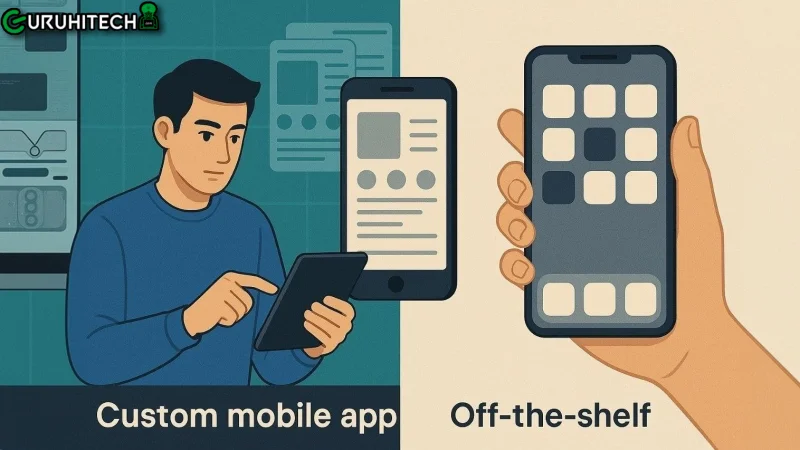
Small businesses exploring mobile apps face a fundamental choice between off-the-shelf solutions and custom development. Off-the-shelf platforms promise quick deployment and lower upfront costs, while custom development offers flexibility and competitive differentiation.
Understanding the real costs, limitations, and business implications of each approach helps businesses make decisions aligned with their actual needs rather than perceived budgets.
Understanding Off-the-Shelf Mobile Apps
Off-the-shelf mobile apps are pre-built software solutions designed to serve common business needs across multiple companies. These platforms typically operate on subscription models with tiered feature access based on pricing levels.
- Apps like Square, Shopify, or industry-specific platforms provide ready-made functionality for common use cases
- Setup involves configuration rather than development, enabling deployment in days or weeks
- Updates, security patches, and feature additions happen automatically through the platform provider
- User interfaces follow platform standards with limited customization beyond branding elements
- Data lives on vendor servers with access dependent on continued subscription payments
Understanding Custom Mobile App Development
Custom development builds mobile applications specifically for your business requirements, workflows, and competitive strategy. Development teams create unique solutions rather than configuring existing platforms.
Development Process
Custom projects begin with requirements analysis, wireframing, and technical planning before coding starts. Developers build features specific to business needs rather than adapting generic functionality. Testing ensures the app works correctly across devices and operating systems. Deployment puts the application in app stores under your business name and control.
Ownership and Control
Businesses own the source code and intellectual property of custom applications. Changes, updates, and feature additions happen on your timeline with developers you choose. Data storage, security approaches, and integration architectures align with business preferences. The application remains functional regardless of third-party vendor decisions or business model changes.
Technical Flexibility
Custom apps integrate seamlessly with existing business systems, databases, and workflows. Unique features differentiate your business rather than offering the same capabilities competitors access through identical platforms. User experiences match your brand identity, customer expectations, and operational processes exactly.
Cost Comparison Reality
Small businesses often assume off-the-shelf solutions cost less, but comprehensive cost analysis reveals more complex financial realities depending on business situations and timeframes.
Off-the-Shelf Cost Structure
Monthly or annual subscription fees range from $50-500+ depending on features and user counts. These costs continue indefinitely as long as you use the platform. Transaction fees often add 2-5% of revenue for payment processing or booking functions. Add-on features, additional users, and higher usage tiers increase costs over time. Migration costs emerge if you eventually outgrow the platform and need custom solutions.
Custom Development Cost Structure
Initial development costs range from $10,000-100,000+ depending on complexity and features. Businesses own the application after this investment rather than renting access. Maintenance costs typically run $200-2,000 monthly for hosting, security updates, and minor changes. Major feature additions require additional development budgets as business needs evolve.
Five-Year Cost Comparison
A $200/month off-the-shelf solution costs $12,000 over five years plus transaction fees potentially adding $10,000-30,000 for payment-dependent businesses. Custom development costing $30,000 upfront plus $500 monthly maintenance totals $60,000 over five years with no transaction fees. The custom solution costs more initially but potentially less long-term for businesses with significant transaction volume or complex needs.
When Off-the-Shelf Makes Sense
Certain business situations strongly favor off-the-shelf solutions over custom development. Recognizing these scenarios prevents unnecessary development expenses.
Straightforward Common Needs: Businesses requiring standard functionality like appointment scheduling, basic e-commerce, or simple service booking work well with off-the-shelf platforms. These common needs don’t require customization justifying development investment.
Limited Budget: Businesses with under $10,000 available for mobile solutions benefit from off-the-shelf platforms that spread costs over time. Subscription models enable capability access without large upfront investments.
Fast Market Entry: Launching new services or testing business models quickly favors off-the-shelf solutions that deploy in days. Custom development timelines of 2-6 months delay market entry and feedback cycles.
Non-Technical Teams: Businesses lacking technical staff benefit from vendor-managed platforms where the provider handles updates, security, and technical maintenance. Self-service configuration requires less expertise than managing custom applications.
Minimal Integration Needs: Businesses with simple technology stacks not requiring complex system integration work well with standalone off-the-shelf apps. Basic CRM connectivity or payment processing suffices without custom integration layers.
When Custom Development Is Worth It
Specific business characteristics and competitive strategies justify custom development investments despite higher initial costs.
Unique Competitive Requirements
Businesses competing through proprietary workflows, specialized services, or unique customer experiences need custom applications that off-the-shelf platforms cannot deliver. Differentiation matters more than cost savings when competitive advantage drives growth. Working with a local mobile app development company Belgium or similar specialized firms enables businesses to build applications matching their exact competitive strategy.
Complex Business Processes
Multi-step workflows, specialized data handling, or industry-specific requirements often exceed off-the-shelf platform capabilities. Custom development accommodates complex business logic that generic platforms cannot support through configuration alone. Forcing complex processes into simplified platforms creates inefficiencies costing more than custom development.
Significant Transaction Volume
Businesses processing high payment volumes or large booking quantities pay substantial transaction fees on off-the-shelf platforms. Custom applications eliminate per-transaction costs, making development investments profitable within 1-2 years for high-volume operations.
Extensive Integration Requirements
Organizations with existing ERP, CRM, inventory, or specialized business systems need mobile apps that integrate seamlessly with these platforms. Custom development creates native integrations that off-the-shelf solutions cannot achieve without clumsy workarounds or data duplication.
Data Sensitivity and Control
Regulated industries, proprietary data handlers, or businesses with unique security requirements benefit from custom applications where they control data storage, access, and security implementations. Off-the-shelf platforms store data on vendor servers with limited control over security architectures.
Key Decision Factors Small Businesses Should Evaluate
Beyond cost considerations, several factors significantly impact which approach serves business objectives better.
Business Maturity: New businesses benefit from off-the-shelf solutions that reduce risk and enable pivots, while established businesses with proven models justify custom investment. Mature operations know their requirements clearly, reducing custom development risk.
Growth Trajectory: Rapidly scaling businesses quickly outgrow off-the-shelf limitations, making early custom investment worthwhile. Slow-growth businesses may never need custom capabilities, making subscriptions cost-effective long-term.
Technical Resources: In-house technical teams manage custom applications effectively, while non-technical teams struggle with application management, favoring vendor-supported platforms. Development partnerships with similar firms provide technical expertise when internal resources lack bandwidth.
Feature Priority: Businesses prioritizing standard features quickly benefit from off-the-shelf solutions, while those needing unique capabilities require custom development. Honest assessment of truly needed versus nice-to-have features clarifies which approach fits.
Timeline Pressure: Immediate market needs favor off-the-shelf deployment, while strategic long-term plays allow custom development timelines. Consider whether 3-6 month development periods align with business cycles and opportunities.
Hybrid Approaches Worth Considering
Some businesses benefit from hybrid strategies that combine off-the-shelf and custom elements, balancing cost with capability.
Initial Off-the-Shelf, Later Custom: Start with off-the-shelf solutions to validate business models and understand requirements, then invest in custom development once needs and resources justify it. This approach reduces early risk while enabling future flexibility.
Custom Features on Standard Platforms: Some off-the-shelf platforms support custom plugins or API extensions enabling unique functionality within managed infrastructure. This balance provides some differentiation without full custom development.
White-Label Customization: Certain vendors offer white-label platforms where you customize interfaces, workflows, and branding while they manage technical infrastructure. This middle ground costs more than standard subscriptions but less than full custom development.
Off-the-Shelf vs Custom Mobile Apps Comparison
| Factor | Off-the-Shelf Solution | Custom Development |
| Initial Cost | $0-$5,000 setup | $10,000-$100,000+ development |
| Ongoing Cost | $50-$500+ monthly subscription | $200-$2,000 monthly maintenance |
| Time to Launch | Days to weeks | 2-6 months |
| Customization | Limited to platform features | Unlimited based on requirements |
| Ownership | Vendor owns platform, you rent access | You own application and source code |
Making the Right Choice for Your Business
Start by honestly assessing whether your business requires truly unique functionality or would succeed with standard features. Calculate total five-year costs including subscriptions, transaction fees, and potential migration expenses. Consider your competitive strategy and whether mobile app capabilities differentiate your business or simply enable basic operations.
Test off-the-shelf platforms through free trials before committing to understand actual capabilities versus marketing claims. Consult with custom development firms to understand what’s possible, realistic timelines, and total investment required. Many businesses discover that hybrid approaches or phased strategies serve better than binary choices between off-the-shelf and fully custom solutions.
Conclusion
Small businesses choosing between off-the-shelf and custom mobile apps should base decisions on actual requirements, realistic budgets, and honest capability assessments rather than assumptions about cost or complexity. Off-the-shelf solutions work well for straightforward needs with limited budgets, while custom development delivers competitive advantages for businesses with unique requirements or high transaction volumes.
Ti potrebbe interessare:
Segui guruhitech su:
- Google News: bit.ly/gurugooglenews
- Telegram: t.me/guruhitech
- X (Twitter): x.com/guruhitech1
- Bluesky: bsky.app/profile/guruhitech.bsky.social
- GETTR: gettr.com/user/guruhitech
- Rumble: rumble.com/user/guruhitech
- VKontakte: vk.com/guruhitech
- MeWe: mewe.com/i/guruhitech
- Skype: live:.cid.d4cf3836b772da8a
- WhatsApp: bit.ly/whatsappguruhitech
Esprimi il tuo parere!
Ti è stato utile questo articolo? Lascia un commento nell’apposita sezione che trovi più in basso e se ti va, iscriviti alla newsletter.
Per qualsiasi domanda, informazione o assistenza nel mondo della tecnologia, puoi inviare una email all’indirizzo [email protected].
Scopri di più da GuruHiTech
Abbonati per ricevere gli ultimi articoli inviati alla tua e-mail.