
Memori in Pixels: How Nostalgic Visuals Hack Modern Attention Spans
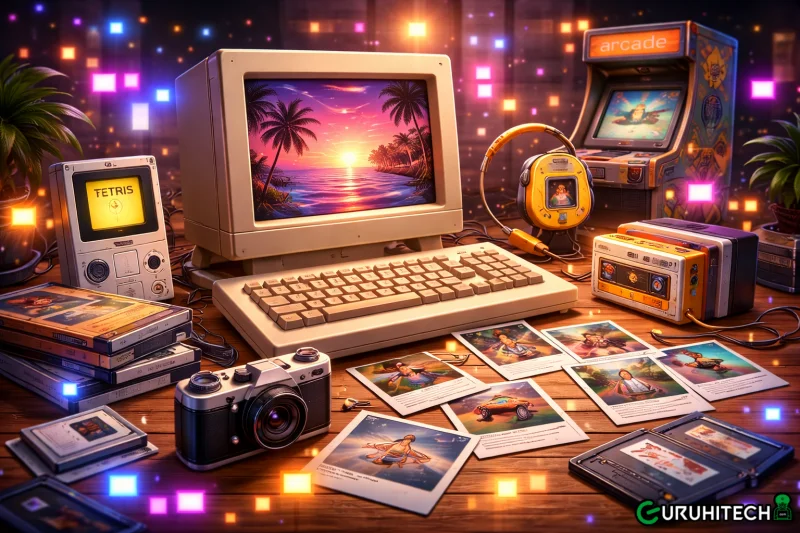
There is something wonderful about nostalgia; that fleeting, untangible pull you experience that stops your scrolling because something feels familiar. Perhaps it is the degraded film grain, the Polaroid hue, or the VHS artifact that hums quietly like a memory. In our visually overstimulated world, nostalgia not only tugs at heartstrings, but it demands attention.
And now with new tools such as Dreamina, designers can infuse vintage warmth with digital precision, turning moments filled with emotion into striking and scroll-stopping images. With the AI photo generator you can transform a simple phrase into an image that seems like a postcard from long ago, but painstakingly recreated pixel by pixel.
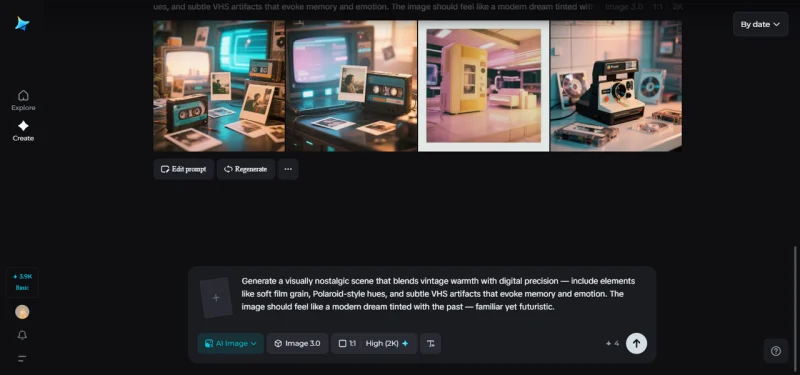
So let’s look at how retro hues, tattered textures, and familiar design cues are reinventing our ways of witnessing and remembering in our modern era.
Why nostalgia captures our eyes before our minds
Nostalgia isn’t visual alone, it’s biological. The human brain records emotional memories with vivid imagery, and nostalgic designs access those dormant visuals. When individuals encounter old-film filters or subdued color palettes, the brain engages in more than simple visual processing. It evokes recollections from the past.
This response carries a strong emotional resonance. Designers draw on it to lend a sense of authenticity and familiarity to current media forms. The approach avoids direct replication of historical styles. Rather, it interprets and conveys the concise emotional cues associated with those eras.
The real trick? Nostalgia makes digital content feel human again, imperfect, tactile, and beautifully slow in a world of hyper-speed visuals.
Nostalgia 2.0 — where memory meets algorithm
Contemporary nostalgia is not merely the recreation of the past but remixing it for the present. Designers combine retro elements with futuristic looks, a neon sign with film grain, a Polaroid effect on digital portraits, or pixelated backgrounds reminiscent of 8-bit games.
This is why digital nostalgia is addictive: it’s familiar but new. Software such as Dreamina allows you to create these contradictory aesthetics without having decades of design experience. You simply outline what you envision, and it breathes it into existence, half memory, half magic.
When logos recalls the past
Even brand identities yearn for nostalgia. A nod to the past can ground a contemporary brand, give it heritage. That’s why vintage typography, tactile textures, and timeless insignia are back in fashion.
With an AI logo generator, you can restore retro-style logos, whether it’s a worn diner sign aesthetic, an early-internet-style pixel logo, or an art deco renaissance. It’s about taking the visual language of yesterday to tell today’s stories in a warm and personal way. A nostalgic-looking brand does not appear dated; it appears trusted. That’s the subtle genius of retro branding. It reminds us of a time when things were simpler and more genuine.
Bringing back retro enchantment with Dreamina
Here’s how you can design memory-filled images in three easy steps.
Step 1: Write a text prompt
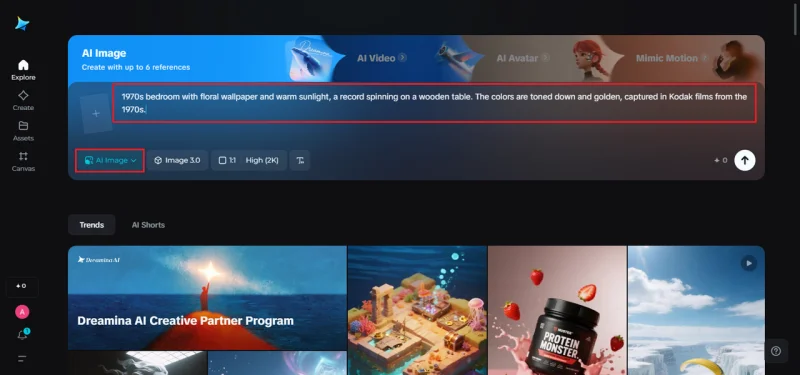
First, visit Dreamina and create a descriptive text prompt. Think of it as describing a memory to someone who has never seen one. Be sure to include the lighting, color, time period, emotion, and style.
Example:
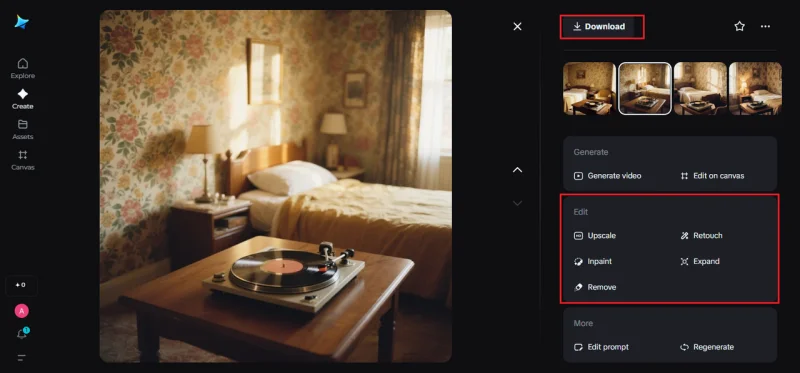
“1970s bedroom with floral wallpaper and warm sunlight, a record spinning on a wooden table. The colors are toned down and golden, captured in Kodak films from the 1970s.”
You see this type of description gives Dreamina clues not only to what you want but how it needs to feel.
Step 2: Update parameters and generate
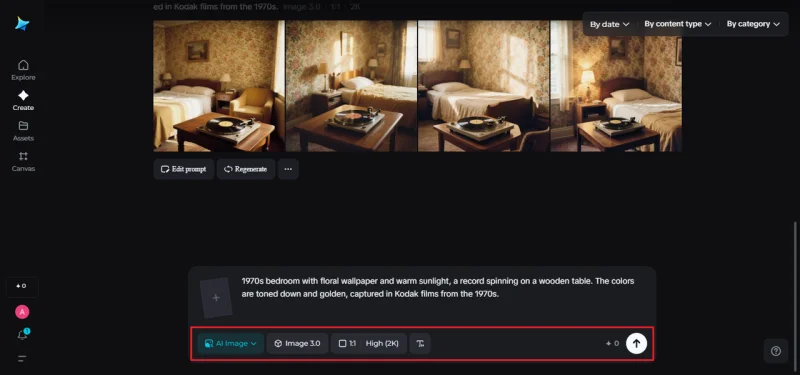
Then, select your creative options, model, aspect ratio, resolution, and size (1K or 2K). Hit Set, now click on the Dreamina icon to create your image.
In seconds, you will have your retro world on screen and glowing with the warm colors of remembrance in combination with feelings.
Step 3: Personalize and download
After Dreamina has created an image, we will use all of Dreamina’s editing tools, inpaint, expand, remove and retouch. This is helpful if you are stretching a scene, taking out a modern-day object, or adding a grain texture to feel more like a film image.
Once your work feels done, click the Download button to export. In seconds, we can build a digital time capsule that is ready to add to your business, post, or portfolio.
Redoing ancient memories with contemporary tools
The greatest nostalgic images are not imitations; they’re reinterpretations. They take yesterday’s color palette but remix it for today’s clarity and narrative. An AI image editor assists in refining this equilibrium. Fading tones, merging film grain, deepening shadows, or retouching a frame to look like vintage Polaroids is still done with professional resolution.
It’s a dialogue between epochs: the analog beauty of times past meeting the crisp accuracy of the digital era. That’s what makes nostalgic design timeless. It’s always both looking at the past and also forging ahead.
Nostalgia the future of design
Nostalgia can be a relic of the past, but it’s dictating the future of design. It provides digital creativity with something technology tends to destroy, emotion, imperfection, and narrative. And with Dreamina, that emotional narrative comes easily.
Each project is a dialogue between ages: pixels recalling film, colors imitating time, and digital software painting emotion with precision.
Conclusion
Nostalgia is not a design aesthetic; it’s an emotional trigger, a psychological hook that makes viewers stop and feel. If it’s done through washed-out color schemes, vintage fonts, or analog texture, nostalgic imagery turns feeling into participation.
And with Dreamina by your side, you can bring back those memories at the pace of imagination. It’s not copying the past, it’s preserving its warmth in pixels and breathing new life into it. Because sometimes, the future is best when it remembers where it came from.
Ti potrebbe interessare:
Segui guruhitech su:
- Google News: bit.ly/gurugooglenews
- Telegram: t.me/guruhitech
- X (Twitter): x.com/guruhitech1
- Bluesky: bsky.app/profile/guruhitech.bsky.social
- GETTR: gettr.com/user/guruhitech
- Rumble: rumble.com/user/guruhitech
- VKontakte: vk.com/guruhitech
- MeWe: mewe.com/i/guruhitech
- Skype: live:.cid.d4cf3836b772da8a
- WhatsApp: bit.ly/whatsappguruhitech
Esprimi il tuo parere!
Ti è stato utile questo articolo? Lascia un commento nell’apposita sezione che trovi più in basso e se ti va, iscriviti alla newsletter.
Per qualsiasi domanda, informazione o assistenza nel mondo della tecnologia, puoi inviare una email all’indirizzo [email protected].
Scopri di più da GuruHiTech
Abbonati per ricevere gli ultimi articoli inviati alla tua e-mail.