
Multi-Agent Systems (MAS): Collaboration, Negotiation, and Emergent Behavior in AI

AI negotiation systems are transforming machine interactions. The global AI agents market proves this transformation – growing from USD 5.4 billion in 2024 to an expected USD 230 billion by 2034. Multi-Agent Systems (MAS) stand out as one of the most promising AI developments today. These systems consist of multiple agents that cooperate or compete to reach specific goals. Research interest has surged remarkably, with scientists conducting over 300 new studies on MAS, distributed decision-making, and swarm robotics in 2024 alone.
Five core factors shape how these systems work, interact, and progress. Smart autonomous agents can sense their surroundings, review options, and take action with minimal human oversight. This capability helps optimize operations at scale. The collective behavior of MAS boosts their accuracy, adaptability, and scalability. These qualities enable them to handle complex tasks involving hundreds or thousands of agents working together.
This piece gets into various business negotiation techniques through MAS. We’ll break down advanced methods for conflict resolution and the approaches that help agents cooperate. Modern AI systems rely on essential negotiation tools and techniques to function effectively. On top of that, we’ll explore how human negotiation skills transfer to artificial intelligence. This combination creates systems with remarkable emergent properties that find practical uses in any discipline.
Understanding Multi-Agent Systems in AI
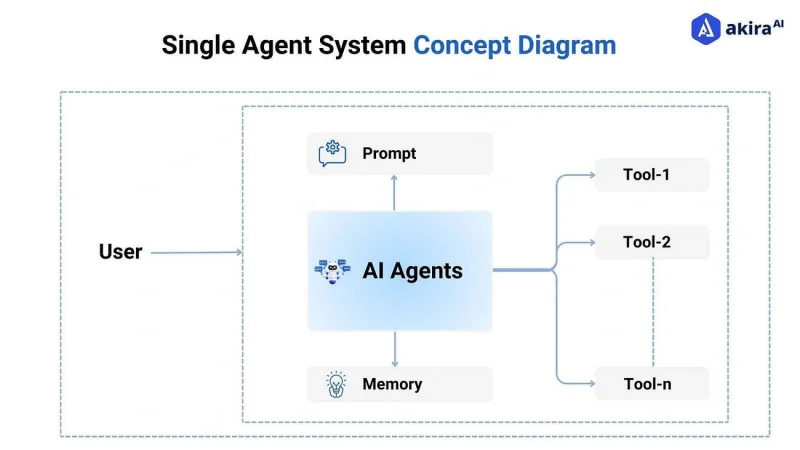
Multi-agent systems (MAS) represent a fundamental change in AI architecture that moves away from traditional single-entity approaches toward networks of interacting intelligent entities. Complex challenges find solutions through distributed problem-solving rather than centralized control.
Definition and Core Principles of MAS
Multi-agent systems consist of multiple autonomous agents that operate in shared environments. Each agent can perceive, reason, and act independently. These agents don’t work in isolation like traditional AI models. They interact with one another to complete tasks that individual entities cannot handle alone.
Three core principles form the foundation of MAS:
- Autonomy: Each agent decides independently without external control.
- Collaboration: Agents work together to solve problems better than they could alone.
- Distributed Intelligence: The network spreads knowledge and decision-making across all agents.
Agents work through several mechanisms: they perceive their surroundings or data streams, evaluate possible actions, communicate with other agents, and execute based on goals and collaboration rules. This integrated approach helps agents work together to create solutions that are quick and flexible.
MAS vs Single-Agent Systems: Key Differences
Several key aspects set multi-agent systems apart from single-agent systems:
| Aspect | Multi-agent Systems (MAS) | Single-agent Systems |
| Scalability | Many agents share tasks and handle complex environments well | <citation index=”29″ link=”https://www.codecademy.com/article/multi-agent-systems-in-ai” similar_text=”Here’s how multi-agent systems compare to single-agent systems across a few key dimensions: Aspect |
| Decision-making | Decentralized decisions let agents act independently and simultaneously | <citation index=”29″ link=”https://www.codecademy.com/article/multi-agent-systems-in-ai” similar_text=”Here’s how multi-agent systems compare to single-agent systems across a few key dimensions: Aspect |
| Communication | Agents need protocols to coordinate with each other | No internal communication exists |
| Robustness | Other agents keep working if one fails | <citation index=”29″ link=”https://www.codecademy.com/article/multi-agent-systems-in-ai” similar_text=”Here’s how multi-agent systems compare to single-agent systems across a few key dimensions: Aspect |
| Adaptability | Agents learn and adjust quickly at local levels | System needs complete reconfiguration to adapt |
These differences show why multi-agent approaches work better in dynamic, complex environments that need flexibility and reliability.
Autonomy and Decentralization in MAS
Multi-agent systems gain their strength from decentralization. Local information and predefined rules guide each agent’s independent decisions without central control. This approach removes bottlenecks and single points of failure, so systems become more flexible and reliable.
MAS uses reliable communication protocols and coordination mechanisms for decentralized decisions. Agents exchange information through messaging (using APIs or publish-subscribe systems) or by watching environmental changes. Smart grids provide a good example. Energy-producing and consuming agents negotiate distribution based on local supply and demand patterns.
Several algorithms support this decentralized coordination:
- Consensus protocols like Paxos help agents arrange their actions
- Market-based bidding systems distribute resources
- Swarm algorithms create patterns using simple neighbor-based rules
These mechanisms let agents adapt quickly without needing complete global planning. The result balances speed with reliability, making MAS valuable for complex environments that keep changing.
Collaboration and Communication Among Agents
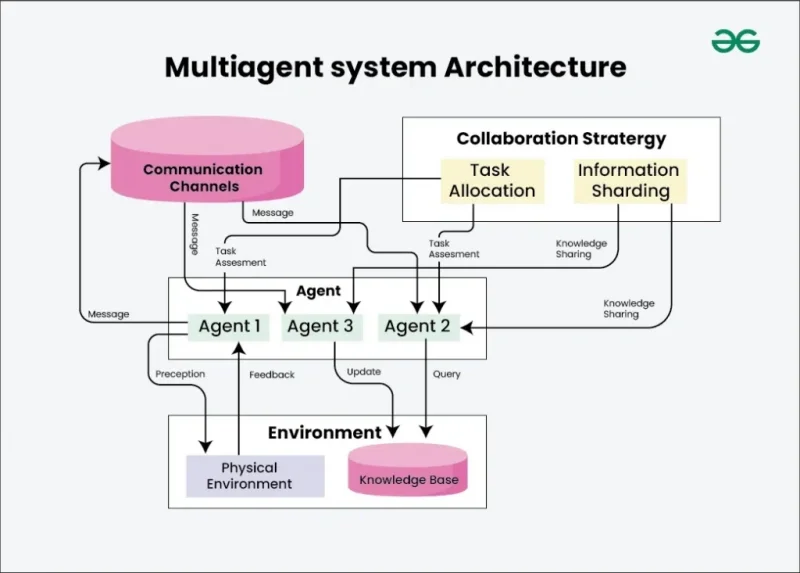
Communication serves as the foundation of any multi-agent system. It allows autonomous entities to share information, coordinate actions and resolve conflicts. A standardized language and protocol system makes MAS valuable by enabling agents to work together instead of operating alone.
Agent Communication Languages: FIPA ACL and KQML
Agents need structured communication frameworks to interact meaningfully. Two protocols have shaped how agents communicate: Knowledge Query and Manipulation Language (KQML) and Foundation for Intelligent Physical Agents Agent Communication Language (FIPA-ACL).
DARPA’s Knowledge Sharing initiative created KQML in the early 1990s. This established the foundational concepts for agent communication. FIPA-ACL later refined these ideas with better standardization and semantic clarity. Speech act theory influenced both languages. They define “performatives” (communicative acts) that express the intentions behind messages.
The languages share similar syntactic structures but handle messages differently:
| Aspect | KQML | FIPA-ACL |
| Message Categories | Divides into content and declaration messages | Treats all messages as unified communicative acts |
| Semantic Foundation | Defines through pre/post conditions | Uses modal logic with feasibility preconditions |
| Implementation | Popular in experimental research systems | Preferred for enterprise applications requiring standardization |
| Content Handling | Separates content from communication wrappers | Provides fixed parameter set with performatives |
Modern approaches often combine elements from both protocols. Some make use of information from large language models that let agents communicate through human-like expressions.
Coordination Mechanisms: Contract Net and Auctions
Agents need structured ways to coordinate actions and allocate resources beyond basic communication. The Contract Net Protocol (CNP) is one of the oldest coordination mechanisms. It works through a multi-stage process where:
- A manager agent announces available tasks
- Potential contractor agents review and submit bids
- The manager awards contracts to suitable bidders
This approach mirrors business negotiation techniques and creates a marketplace for tasks and services within the agent ecosystem.
Auction-based mechanisms are a great way to get another powerful coordination framework, especially for resource allocation. These systems let agents bid on tasks or resources based on criteria like estimated completion time, resource cost, or confidence scores. Market-based approaches optimize resource distribution while you retain control of agent autonomy.
Role of Orchestration in Agent Workflows
Orchestration becomes crucial as multi-agent systems grow complex. It helps manage interactions efficiently. Orchestration means systematically coordinating multiple AI agents through well-laid-out workflows.
Two main orchestration approaches exist:
- Centralized orchestration: A dedicated coordinator agent manages task allocation, sequencing, and resource access
- Decentralized orchestration: Agents share coordination responsibilities through direct messaging or shared workspaces
Modern orchestration platforms support various workflow patterns. These include concurrent processing (parallel task execution), sequential chains (step-by-step workflows), and group collaboration (collaborative problem-solving). Developers can create complex agent interactions without managing low-level coordination details.
The orchestrator handles critical functions like synchronizing agent activities, managing shared resources, and maintaining a consistent knowledge base across the system. This coordination layer ensures each agent contributes effectively toward collective goals and minimizes conflicts and redundancies.
Negotiation Techniques in Multi-Agent Systems
Negotiation plays a vital role in how autonomous agents interact, share resources, and solve conflicts in multi-agent environments. These systems need strong negotiation capabilities as they become more complex.
Types of Negotiation Techniques in MAS
Multi-agent systems use different negotiation approaches based on their needs and goals. Here are the five main categories:
Distributive negotiation creates competitive, win-lose scenarios where agents see resources as limited and want to get the biggest share. Agents often deal with fixed or zero-sum issues where one agent’s gain directly associates with another’s loss.
Integrative negotiation aims for win-win outcomes by finding common interests and creative solutions. Unlike distributive methods, this approach opens up possibilities and looks for ways to meet everyone’s core needs.
Competitive negotiation uses assertive and sometimes aggressive tactics like bluffing or extreme demands. This approach can work in certain situations but often damages relationships between agents.
Compromising negotiation helps agents find middle ground through mutual concessions. This works well when time is short or when agents have equal power.
Power-based negotiation uses influence and advantage to control outcomes. Relying too much on this approach might lead to poor results over time.
Strategic Competition and Game Theory Models
Game theory provides the math behind strategic agent interactions. The Nash equilibrium concept shows how agents make decisions when no one benefits by changing their strategy while others stay the same.
Cooperative game theory looks at how agents form teams to reach shared goals. AI agents in recommendation systems, to name just one example, work together by sharing user preferences to boost suggestion accuracy.
Modern frameworks include dynamic commitment systems that allow strategic flexibility while staying credible. These systems know that strict commitment strategies don’t work well in uncertain situations.
Advanced Negotiation Techniques for Conflict Resolution
Multi-agent systems need sophisticated approaches to resolve conflicts effectively:
First, agents should avoid emotional triggers that can upset power dynamics. Good techniques include taking breaks to stop negative momentum, pointing out manipulation, and staying focused on important issues.
Second, the best agents create value even during disputes. Smart agents find opportunities through shared interests and preference trading instead of seeing conflicts as battles.
Third, timing matters more than you might think. The way agents see conflicts changes over time, and regular contact between disagreeing parties often reveals new solutions.
AI negotiation systems have grown from simple frameworks into sophisticated architectures that can handle complex reasoning across multiple dimensions at once. These systems use methods that help strategies improve through competitive selection and optimization.
Emergent Behavior and System Intelligence
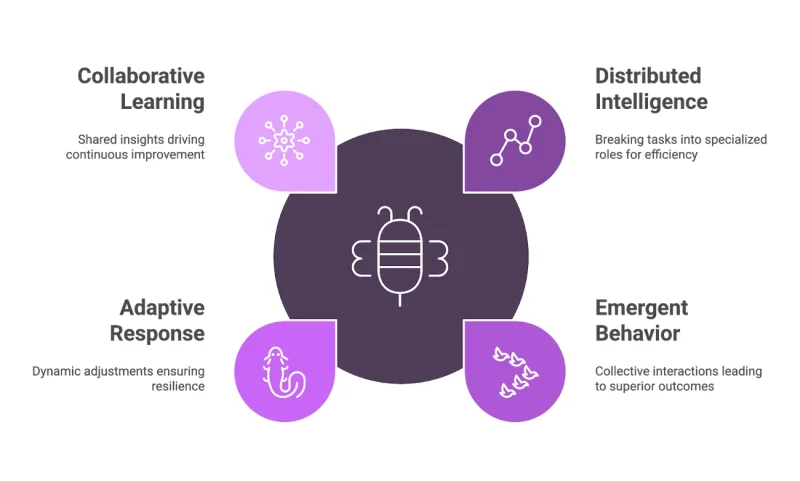
Emergent behavior is the sort of thing I love about multi-agent systems. Complex patterns emerge not from central control but from simple interactions between autonomous agents. These properties go beyond what individual agents can do, and they create system-level intelligence through decentralized processes.
Examples of Emergent Behavior in Nature and AI
Nature shows us amazing examples of emergent behavior in ant colonies and beehives. Thousands of individuals follow simple rules and achieve sophisticated outcomes without central coordination. AI systems show similar properties when multiple agents interact through simple protocols. Neural networks illustrate this concept – their processing units interact in patterns that lead to unexpected ways of solving problems. Multi-robot systems demonstrate these capabilities too. Robots share their findings immediately as they navigate different terrains, which helps them cover larger areas quickly.
Swarm Intelligence and Self-Organization
Swarm intelligence takes nature-inspired decentralized coordination and applies it to multi-agent systems. This gives us resilient frameworks to solve distributed problems. The approach employs collective behavior without central control, which makes systems more resilient and adaptable. Several algorithmic frameworks make swarm intelligence possible:
- Particle Swarm Optimization (PSO): Inspired by bird flocking, ideal for continuous optimization problems
- Ant Colony Optimization (ACO): Mimics ant foraging for discrete path-finding
- Artificial Bee Colony (ABC): Models bee foraging behaviors for function optimization
These algorithms use approaches based on natural selection that let strategies improve through competitive selection. The SelfOrg framework shows this principle at work. It lets agents organize themselves without supervision or training and builds directed acyclic graphs for quick message transmission from high-contributing agents to others.
Implications for Artificial General Intelligence
The rise of Artificial General Intelligence (AGI) might depend by a lot on controlling emergent behavior. Self-organizing systems share interesting similarities with how biological intelligence develops. They compress complex patterns into simpler rule sets. Human consciousness emerges from billions of neurons that follow simple rules. AGI might develop the same way – from networks of agents following basic interaction principles.
The biggest problem lies in finding the right balance between autonomy and coordination. Burton et al. point out that emergent behaviors create sources of uncertainty that need all-encompassing approaches to ensure safety.
Real-World Applications and Industry Use Cases
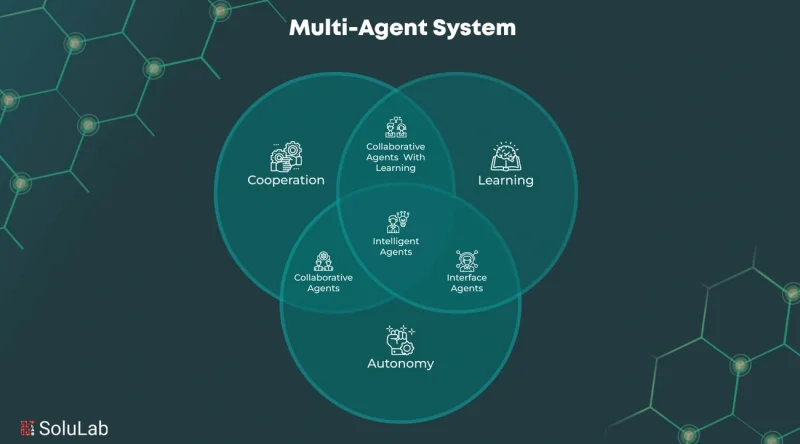
Multi-agent systems have evolved beyond theoretical concepts into real-life applications that work in a variety of sectors. These systems significantly improve efficiency and decision-making processes.
MAS in Smart Cities and Traffic Management
Smart cities now utilize multi-agent frameworks to make the best use of urban resources and boost livability. MAS-based systems help reduce traffic congestion through up-to-the-minute coordination at intersections. Research shows these traffic control systems cut waiting times by up to 30% and improve how staff work. The systems pick up signals from sensors that track traffic patterns, operating room availability, and resource distribution through IoT networks. Urban networks now perform better than the traditional fixed signal controllers.
Autonomous Agents in Finance and Trading
Financial institutions use agent systems to handle trading, compliance, risk management, and customer service. These systems watch transactions non-stop to spot anomalies and identify potential fraud with remarkable accuracy. AI agents examine extensive data—from payment histories to spending patterns—to speed up credit assessment and make it more inclusive. The latest development shows agentic AI arranges multiple agents with large language models as a shared brain that adapts continuously to financial decisions.
Healthcare, Logistics, and Defense Applications
MAS applications in healthcare range from sepsis management to chronic disease monitoring and hospital patient flow optimization. AI agents coordinate detailed patient monitoring through AI-driven interventions in healthcare settings. The military uses MAS to ensure supplies, equipment, and troops reach their destinations at the right time. These systems merge blockchain technology to make operations more secure, transparent, and efficient.
Conclusion
Multi-Agent Systems mark a fundamental change in artificial intelligence that goes beyond single-entity approaches to networks of collaborating intelligent agents. This piece explores how these systems utilize distributed intelligence, autonomous decision-making, and sophisticated communication protocols. These elements work together to solve complex problems that single agents cannot handle alone.
MAS shows clear advantages over traditional single-agent systems in flexibility, strength, and adaptability. Communication frameworks like FIPA ACL and KQML let agents interact meaningfully. The Contract Net Protocol aids effective resource allocation between them.
Negotiation techniques are the foundations of agent interaction. They range from distributive and competitive approaches to integrative and compromising strategies. Game theory provides the math behind these negotiations. This helps agents make strategic decisions while they think about what others might do.
The sort of thing I love is how simple agent interactions create complex, system-level intelligence. This mirrors what we see in nature with ant colonies and beehives, where group intelligence is a big deal as it means that individual capabilities. Swarm intelligence algorithms take these principles to build strong, adaptable systems that work without central control.
Ground applications show MAS’s value in industries of all types. Smart cities use these systems to cut traffic congestion by 30%. Financial institutions employ them for trading, compliance, and risk management. Healthcare organizations tap into the potential of MAS for patient monitoring and hospital workflow optimization.
The future holds great potential for Multi-Agent Systems as computing power grows and algorithms improve. These technologies will transform how complex systems operate. They will create more intelligent, resilient, and adaptive solutions in any discipline. Notwithstanding that, we must balance autonomy with coordination and ensure safety as emergent behaviors become more complex and unpredictable.
FAQs
Q1. What are the key differences between multi-agent systems and single-agent systems in AI?
Multi-agent systems (MAS) are more scalable, adaptable, and robust compared to single-agent systems. MAS distribute tasks among multiple agents, make decentralized decisions, and continue functioning even if one agent fails. Single-agent systems, on the other hand, have limited capacity, centralized processing, and are less flexible.
Q2. How do agents communicate in multi-agent systems?
Agents in multi-agent systems communicate using standardized protocols like FIPA ACL (Agent Communication Language) and KQML (Knowledge Query and Manipulation Language). These languages define structured ways for agents to exchange information, coordinate actions, and express intentions through various types of messages.
Q3. What are some common negotiation techniques used in multi-agent systems?
Multi-agent systems employ various negotiation techniques, including distributive (competitive), integrative (collaborative), compromising, and power-based approaches. These techniques allow agents to allocate resources, resolve conflicts, and achieve their goals while interacting with other agents in the system.
Q4. How does emergent behavior manifest in multi-agent systems?
Emergent behavior in multi-agent systems occurs when complex patterns and system-level intelligence arise from simple interactions among individual agents. This phenomenon is similar to what we observe in nature, such as ant colonies or beehives, where collective behavior produces outcomes that surpass the capabilities of individual agents.
Q5. What are some real-world applications of multi-agent systems?
Multi-agent systems have diverse real-world applications across various industries. In smart cities, they optimize traffic management and reduce congestion. In finance, they’re used for trading, risk management, and fraud detection. So in healthcare, MAS assist with patient monitoring and hospital workflow optimization. They’re also applied in logistics and defense for coordinating complex operations.
Ti potrebbe interessare:
Segui guruhitech su:
- Google News: bit.ly/gurugooglenews
- Telegram: t.me/guruhitech
- X (Twitter): x.com/guruhitech1
- Bluesky: bsky.app/profile/guruhitech.bsky.social
- GETTR: gettr.com/user/guruhitech
- Rumble: rumble.com/user/guruhitech
- VKontakte: vk.com/guruhitech
- MeWe: mewe.com/i/guruhitech
- Skype: live:.cid.d4cf3836b772da8a
- WhatsApp: bit.ly/whatsappguruhitech
Esprimi il tuo parere!
Ti è stato utile questo articolo? Lascia un commento nell’apposita sezione che trovi più in basso e se ti va, iscriviti alla newsletter.
Per qualsiasi domanda, informazione o assistenza nel mondo della tecnologia, puoi inviare una email all’indirizzo guruhitech@yahoo.com.
Scopri di più da GuruHiTech
Abbonati per ricevere gli ultimi articoli inviati alla tua e-mail.