
S&OP Software vs Demand Planning Software: Understanding the Difference
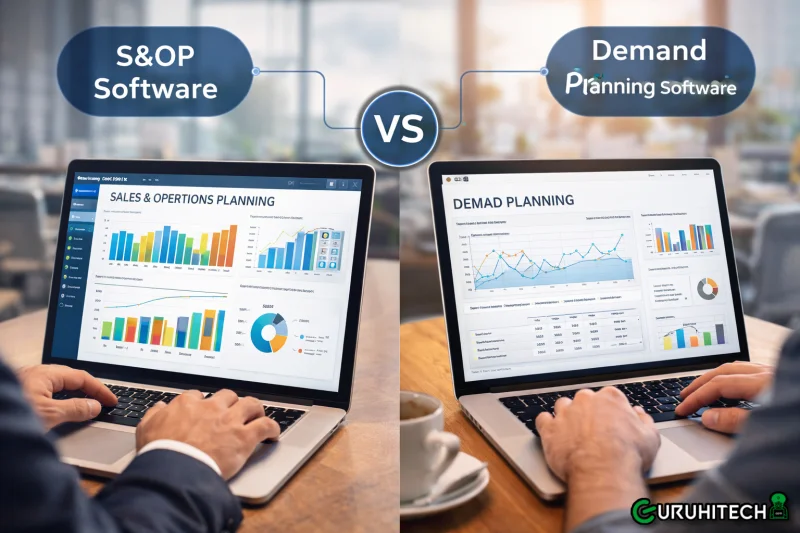
Organizations that rely on accurate forecasts and efficient supply chain coordination often hear about two essential tools: demand planning systems and S&OP systems. While they share similar goals, each serves a unique function within the broader planning process.
Defining the Core Purpose of Each System
Demand planning focuses on predicting future customer demand using historical data, market trends, and statistical models. It helps businesses align inventory and production levels with expected sales. In contrast, sales and operations planning, or S&OP, integrates multiple departments to balance demand and supply while aligning operational plans with business goals.
How Demand Planning Works
At its core, demand planning turns data into actionable insights. Forecasts are developed through quantitative analysis, often using advanced statistical algorithms. These projections guide procurement, manufacturing, and distribution decisions.
Modern tools such as demand forecasting software streamline this process by consolidating data from multiple sources and improving forecast accuracy. The output supports better resource allocation and reduces waste caused by overproduction or stockouts.
The Role of S&OP in Strategic Planning
S&OP connects operational planning with broader business strategy. It provides a structured forum for collaboration among sales, marketing, finance, and supply chain teams. This cross-functional alignment ensures that forecasts, budgets, and capacity plans work in harmony.
Using s&op software allows organizations to evaluate multiple scenarios, assess constraints, and agree on a unified plan. The result is improved visibility and better decision-making at both tactical and strategic levels.
Key Differences Between the Two
Although both systems contribute to planning accuracy, their scope and objectives differ significantly.
- Demand planning is primarily analytical, focusing on forecast generation and demand analysis.
- S&OP is more collaborative, emphasizing consensus building and alignment across departments.
- Demand planning operates on a shorter time horizon, while S&OP often covers monthly or quarterly cycles.
- S&OP uses demand forecasts as inputs but extends into supply, financial, and strategic domains.
When to Use Each Approach
Companies typically start with demand planning to ensure a reliable forecast foundation. Once forecasting processes mature, S&OP becomes the next step to integrate those forecasts into wider business decisions. Together, they create a cohesive system for managing uncertainty and balancing supply with customer needs.
Integrating the Two Systems for Better Outcomes
When demand planning and S&OP operate together, organizations gain a complete view of their operations. The forecast generated by demand planning feeds directly into the S&OP process, where leaders evaluate capacity, budgets, and performance targets.
Integration also enhances communication between departments, ensuring that sales expectations match production capabilities. This alignment helps prevent costly mismatches between supply and demand.
Building a Resilient Planning Process
The most effective supply chain strategies blend analytical precision with collaborative decision-making. Demand planning provides the data-driven foundation, while S&OP ensures strategic coherence. When supported by robust systems, businesses can adapt quickly to market changes and maintain service levels even under disruption.
Ultimately, understanding the distinction between these two solutions allows organizations to invest in the right tools and processes. Whether refining forecasts or coordinating enterprise-wide plans, both systems play a critical role in achieving operational stability and long-term growth.
Ti potrebbe interessare:
Segui guruhitech su:
- Google News: bit.ly/gurugooglenews
- Telegram: t.me/guruhitech
- X (Twitter): x.com/guruhitech1
- Bluesky: bsky.app/profile/guruhitech.bsky.social
- GETTR: gettr.com/user/guruhitech
- Rumble: rumble.com/user/guruhitech
- VKontakte: vk.com/guruhitech
- MeWe: mewe.com/i/guruhitech
- Skype: live:.cid.d4cf3836b772da8a
- WhatsApp: bit.ly/whatsappguruhitech
Esprimi il tuo parere!
Ti è stato utile questo articolo? Lascia un commento nell’apposita sezione che trovi più in basso e se ti va, iscriviti alla newsletter.
Per qualsiasi domanda, informazione o assistenza nel mondo della tecnologia, puoi inviare una email all’indirizzo [email protected].
Scopri di più da GuruHiTech
Abbonati per ricevere gli ultimi articoli inviati alla tua e-mail.