
What methods can help improve an AI draft into compelling content

In the rapidly evolving world of digital content creation, Artificial Intelligence has become an indispensable assistant. From drafting emails to outlining blog posts, tools like ChatGPT and Claude have revolutionized our workflows. However, raw AI output often suffers from a distinct “flavor”—it can be repetitive, overlyS formal, or simply lack the spark of human creativity. To truly succeed in content marketing today, you cannot simply copy, paste, and publish. You must refine.
The process begins with understanding the current landscape of content verification. Before you even begin editing, it is crucial to understand how your content is perceived by algorithms. Using a reliable AI Detector is often the first step in the quality control process.
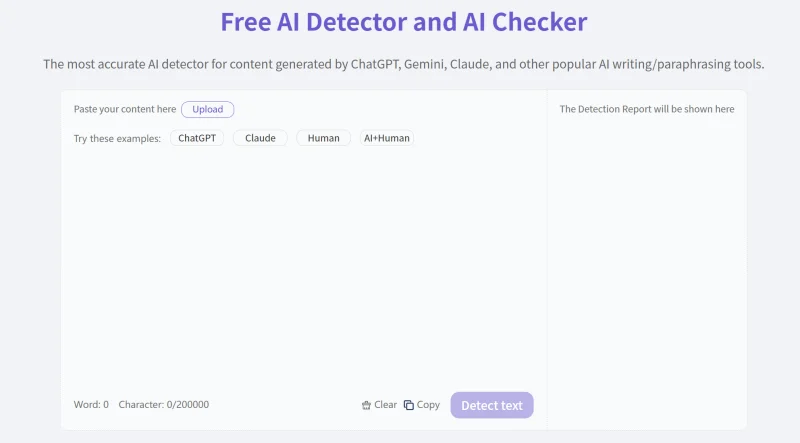
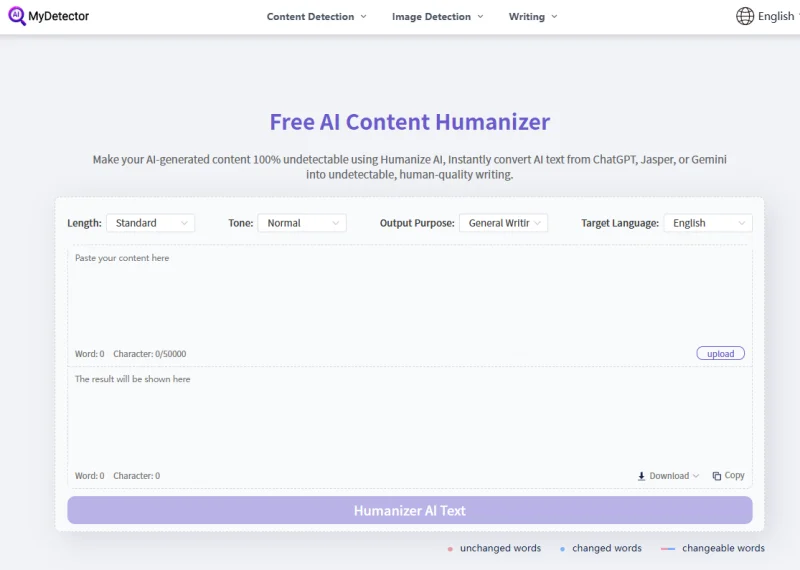
These tools analyze syntax and patterns to determine if a machine likely wrote the text. If your initial draft flags high on these checks, it is a clear signal that your content lacks the nuance required to engage real readers. This is where the concept of an AI Content Humanizer comes into play—not just as a tool, but as a mindset. You must become the humanizer, injecting personality, experience, and rhythm into the flat prose generated by the bot.
The “Garbage In, Garbage Out” Principle
Improving AI text quality actually starts before the AI writes a single word. The quality of your output is directly proportional to the quality of your prompt. A generic prompt like “Write an article about gardening” will result in a generic, encyclopedic response that feels lifeless.
To get a better starting point, you need to provide context. Tell the AI who it is writing for. Is the audience beginner gardeners or expert botanists? What is the tone? By asking the AI to adopt a specific persona—such as “an enthusiastic hobbyist with 10 years of experience”—you immediately upgrade the draft’s quality. However, even the best prompt is just the foundation. The real work happens in the post-processing phase.
Breaking the “Wall of Text” Habit
One of the most common issues with AI text is its tendency to be verbose. AI models are trained to be helpful, which often translates to over-explaining simple concepts. They love long, complex sentences with multiple clauses. To the human eye, this can be exhausting to read.
Your job as an editor is to vary sentence structure. Human writing is choppy; it has rhythm. We use short sentences for impact, we ask rhetorical questions, we break grammar rules for effect. When reviewing your AI draft, look for paragraphs that feel like a dense block of information. Break them up. If a sentence runs on for three lines, split it into two. This improves readability scores and keeps the reader moving down the page.
Injecting Personal Experience and Empathy
The biggest gap between AI and human writing is “lived experience.” An AI can describe the symptoms of the flu, but it cannot tell you how miserable it feels to miss your best friend’s wedding because of it. It can describe a product’s features, but it cannot share the frustration of trying to open the packaging.
To elevate your content, you must weave in personal anecdotes or specific scenarios. If you are writing about software, mention a specific bug that drove you crazy. If you are writing about travel, mention the smell of the street food. These sensory details act as anchors for the reader. They signal that a human being is behind the keyboard. Platforms that offer detection and refinement services, similar to the technology found at mydetector.ai, often highlight that “personal voice” is the hardest thing for AI to replicate, and therefore the best way to pass quality checks.
Eliminating the “Fluff” words
AI models have favorite words. You have likely seen them: “landscape,” “realm,” “testament,” “unleash,” and “delve.” When these words appear too frequently, they act as subconscious triggers for the reader (and for detection algorithms). They make the text feel corporate and hollow.
A massive part of quality improvement is simply “de-fluffing” the text. Go through the draft and ruthlessly cut these filler words. Instead of saying, “It is crucial to note that the importance of exercise cannot be overstated,” simply say, “Exercise is vital.” This directness respects the reader’s time and sounds significantly more confident and human.
The Verification Loop
Once you have edited for tone, structure, and vocabulary, it is time to return to the technical side. Using tools to verify your changes is a smart workflow. You might run your polished draft through a detector again.
This isn’t just about “beating” a system; it is a proxy for quality. If a detector thinks your text is human, it generally means you have successfully varied your sentence structure and vocabulary enough to sound natural. If it still says “100% AI,” you likely haven’t done enough heavy lifting.
Think of this process as a spectrum. On one end, you have raw data. On the other, you have art. Your goal is to move the slider toward art. By using better prompts, cutting fluff, and injecting personal stories, you transform a robotic draft into a piece of content that resonates, converts, and informs.
Conclusion
The goal of using AI shouldn’t be to replace writing, but to accelerate it. The highest quality text comes from a “Hybrid Model”: AI provides the structure and the raw data, and the human provides the soul and the polish.
By mastering this workflow—prompting, editing, humanizing, and verifying—you ensure that your content stands out in a sea of automated mediocrity. Whether you are using specialized tools or just your own editorial eye, the standard for quality remains the same: does this help the reader? If the answer is yes, you are on the right track.
Scopri di più da GuruHiTech
Abbonati per ricevere gli ultimi articoli inviati alla tua e-mail.