

A Complete Guide to Canon Plotters and Commercial Printers
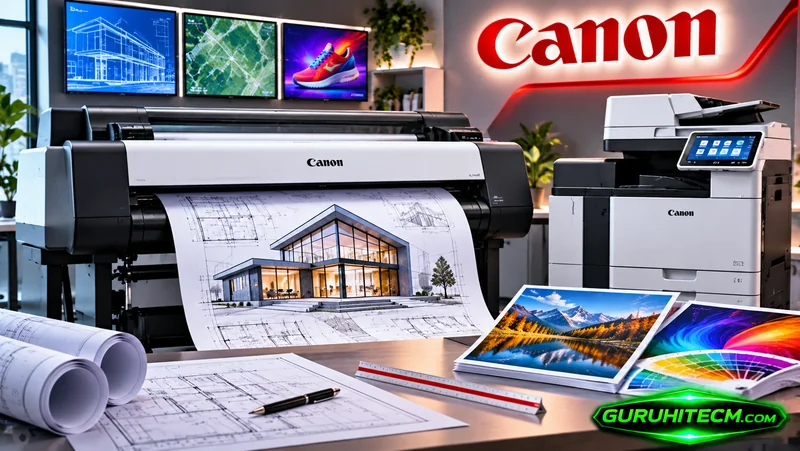
In today’s competitive business environment, high-quality printing solutions play an important role in professional communication, technical planning, and marketing. Whether you operate an architectural firm, engineering company, graphic design agency, or commercial print shop, choosing the right printing equipment can improve productivity and deliver better results.
Canon is a well-known manufacturer of professional imaging and printing equipment, offering solutions for businesses with different printing requirements. Its product range includes large-format printers for technical drawings and advanced production systems for high-volume commercial printing.
This guide explores Canon plotters and commercial printers, their key features, benefits, and how to choose the right equipment for your business.
Understanding Large-Format Printing and Canon Plotters
Large-format printing is essential for businesses that need to produce detailed images, technical drawings, architectural plans, and large-scale graphics. Unlike standard office printers, large-format devices support wider media sizes and are designed to handle complex printing requirements.
Industries such as architecture, engineering, construction, and geographic information systems (GIS) depend on accurate and consistent printing to communicate technical information effectively.
Key Features of Technical Plotters
Professional wide-format plotters are designed to produce precise technical drawings, detailed maps, and complex CAD designs. Canon’s technical printing solutions offer several features that make them suitable for demanding professional environments.
1. High-Precision Printing
Advanced printhead technology helps produce sharp lines, fine details, and accurate geometric representations. This is particularly important for architects and engineers who rely on precise technical drawings.
2. Flexible Media Compatibility
Large-format printers support different media types, including standard bond paper, coated paper, translucent media, and other specialized printing materials.
3. Seamless Workflow Integration
Modern plotters can integrate with CAD software, BIM applications, and other professional design tools. This helps businesses manage printing tasks more efficiently.
4. Efficient Ink Management
Optimized ink consumption and high-capacity ink systems can help reduce operating costs, particularly in departments that handle frequent technical printing.
Exploring Canon Commercial Printers
While technical plotters are primarily designed for engineering drawings and large-format graphics, commercial printing requires equipment capable of handling larger production volumes and diverse printing applications.
Businesses involved in publishing, advertising, marketing, and professional printing often need reliable machines that can deliver consistent quality at high speeds.
Investing in professional commercial printers allows businesses to manage more printing work in-house, improve turnaround times, and maintain greater control over production.
Canon offers production printing systems designed for professional print environments, supporting applications such as brochures, catalogs, booklets, promotional materials, and other commercial documents.
Main Benefits of Commercial Printing Systems
1. Consistent Color Quality
Professional color management technology helps maintain consistent color reproduction throughout printing jobs. This is especially important when producing marketing materials and branded publications.
2. High-Speed Printing Performance
Commercial printing systems are designed to handle demanding workloads. Their production capabilities help businesses complete large printing jobs within shorter timeframes.
3. Automated Finishing Options
Depending on the equipment configuration, finishing options may include folding, stapling, punching, and booklet production. These features reduce manual work and streamline production processes.
4. Improved Operational Efficiency
Modern production printers are designed to support efficient workflows, reduce unnecessary interruptions, and help businesses manage printing costs.
Canon Plotters vs. Commercial Printers: Understanding the Difference
Although both types of equipment serve professional printing needs, they are designed for different applications.
Canon plotters are generally suitable for businesses that require large-format technical drawings, architectural plans, engineering designs, and detailed maps.
Commercial production printers, on the other hand, are better suited to businesses that produce brochures, catalogs, marketing materials, booklets, and other high-volume printed products.
The right choice depends on your printing volume, required media size, document type, and production goals.
How to Choose the Right Canon Printing Equipment
Selecting suitable printing equipment requires an understanding of your business requirements. Before investing in a new system, consider the following factors:
Identify Your Printing Requirements
Determine whether your business primarily produces technical drawings, large-format graphics, marketing materials, or commercial documents. This will help narrow down the available options.
Consider Printing Volume
Businesses with frequent, high-volume printing requirements should prioritize production capacity, printing speed, and operational efficiency.
Evaluate Media Compatibility
Check whether the equipment supports the paper sizes, thicknesses, and media types required for your projects.
Review Operating Costs
Consider ink or toner consumption, maintenance requirements, replacement components, and overall running costs before making a purchasing decision.
Check Software and Workflow Compatibility
Ensure that the printer integrates with your existing software, network infrastructure, and document management systems.
Final Thoughts
Choosing the right printing equipment can make a significant difference in business productivity, print quality, and operational efficiency. Canon plotters provide practical solutions for technical professionals who require accurate large-format drawings, while commercial production printers support businesses handling demanding printing workloads.
By understanding the differences between these systems and evaluating your specific requirements, you can make a more informed investment decision. Whether your priority is technical precision or high-volume commercial production, selecting suitable printing technology can help your business maintain efficient workflows and deliver professional results.
Ti potrebbe interessare:
Segui guruhitech su:
- Google News: bit.ly/gurugooglenews
- Telegram: t.me/guruhitech
- Facebook: facebook.com/guruhitechfb
- X (Twitter): x.com/guruhitech1
- Bluesky: bsky.app/profile/guruhitech.bsky.social
- Rumble: rumble.com/user/guruhitech
- VKontakte: vk.com/guruhitech
- MeWe: mewe.com/i/guruhitech
- Skype: live:.cid.d4cf3836b772da8a
- WhatsApp: bit.ly/whatsappguruhitech
Esprimi il tuo parere!
Ti è stato utile questo articolo? Lascia un commento nell’apposita sezione che trovi più in basso e se ti va, iscriviti alla newsletter.
Per qualsiasi domanda, informazione o assistenza nel mondo della tecnologia, puoi inviare una email all’indirizzo [email protected].
Scopri di più da GuruHiTech
Abbonati per ricevere gli ultimi articoli inviati alla tua e-mail.