
Dechecker AI Checker: Making Confident Decisions in an AI-Heavy Writing Workflow
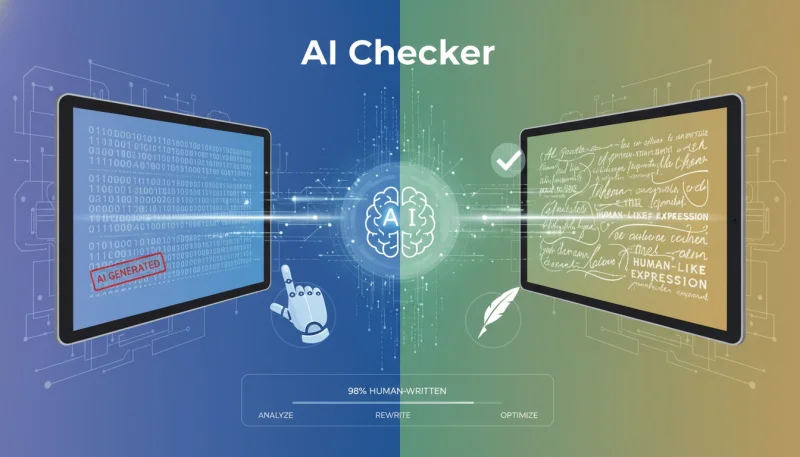
AI writing tools rarely fail outright. More often, they succeed too cleanly. The sentences line up, the logic flows, and yet something feels off. Writers hesitate before clicking “submit,” unsure whether the text will hold up under scrutiny. Dechecker exists for that pause, offering a way to evaluate, adjust, and move forward without second-guessing every line.
Why Modern Writing Feels Riskier Than Ever
Speed has outpaced certainty
Deadlines have not changed, but output expectations have. AI makes it possible to produce ten drafts where one used to exist. The tradeoff appears later, when writers wonder which version actually sounds acceptable to a human reader. This is often where an AI Checker becomes less of a tool and more of a checkpoint.
Experience no longer guarantees safety
Veteran writers used to trust their instincts. Now those instincts are challenged by machine-generated fluency. Even experienced professionals pause, reread, and question whether clarity has crossed into artificial polish.
Reputation is harder to recover than time
Publishing something flagged as AI-written can damage credibility faster than a missed deadline. Many writers would rather slow down briefly than repair trust afterward.
How Dechecker Fits Into Real Decision-Making
Treating detection as diagnosis, not judgment
Dechecker does not frame results as failure. It presents signals that help writers decide what to do next. That shift in framing reduces defensiveness and keeps the workflow moving.
Creating space for deliberate choices
Instead of reacting emotionally to suspicion, writers can look at data, weigh options, and choose whether revision is actually necessary. AI Checker supports that pause.
Reducing internal debate
Teams often disagree about whether content sounds “too AI.” Dechecker introduces a neutral reference point, cutting through subjective arguments.
Where AI Checker Adds the Most Value
Early review before final polish
Running checks before heavy editing saves time. Writers can see which sections raise concerns and avoid reworking passages that already read naturally.
Spotting patterns humans overlook
Repeated sentence length, predictable transitions, and overly balanced clauses often slip past human reviewers. AI Checker surfaces these patterns quickly.
Knowing when to stop editing
Sometimes the best outcome is confirmation that the text is fine. Dechecker helps writers recognize when further changes would add little value.
The Subtle Signals Readers React To
Rhythm matters more than correctness
Readers respond to pacing before they analyze meaning. AI-generated text often settles into a steady rhythm that feels unnatural over longer passages.
Confidence without friction feels suspicious
Human writing includes moments of hesitation, emphasis shifts, and uneven flow. When everything sounds equally certain, readers sense automation even if they cannot explain why.
Dechecker as a learning mirror
Repeated use teaches writers which constructions attract attention. Over time, instincts sharpen, and reliance on checking decreases.
Humanizing Text Without Losing Control
Choosing intervention over instinct
Not every flagged sentence needs rewriting. When multiple signals cluster in one section, targeted rewriting becomes more efficient than line-by-line edits.
Applying the AI Humanizer selectively
In those moments, the AI Humanizer helps reshape tone and cadence without altering intent. Used sparingly, it restores variation while keeping the author’s voice intact.
Comparing before and after
Writers maintain control by reviewing changes rather than accepting them blindly. The goal is improvement, not disguise.
Academic Writing Under Constant Review
Students navigating unclear boundaries
Many students use AI to explore ideas, then worry about submission. Dechecker helps them assess risk before it becomes a problem.
Educators facing evaluation fatigue
Instructors cannot manually analyze every assignment. AI Checker offers a consistent reference that supports fair review without constant suspicion.
Encouraging responsible assistance
When students see how small edits change detection results, they learn how to engage AI as a support tool rather than a shortcut.
Content Teams and Scaled Publishing
Volume exposes patterns quickly
Publishing frequently increases the chance that AI patterns repeat. Dechecker helps teams identify these trends before audiences notice.
Protecting brand voice under pressure
Marketing copy must sound intentional. AI Checker highlights areas where generic phrasing threatens differentiation.
Balancing speed with credibility
Fast content only works if readers trust it. Dechecker helps teams maintain that balance without slowing production to a crawl.
Professional and Client-Facing Documents
Risk assessment before distribution
Proposals and reports carry long-term consequences. Dechecker adds a final layer of review that protects credibility.
Supporting internal approvals
When stakeholders question tone, AI Checker results ground discussions in observable patterns rather than opinion.
Signaling responsible AI use
Clients increasingly care how AI is used. Dechecker helps organizations demonstrate thoughtful governance rather than unchecked automation.
Developing Stronger Writing Instincts Over Time
From reliance to anticipation
Frequent users gradually shift from depending on AI to anticipating how it will be perceived. They start predicting which sentences are likely to trigger AI Checker alerts and adjust them proactively. As a result, drafts often read smoother and more human-like before even being reviewed, reducing last-minute corrections and fostering a more deliberate writing process.
Improving prompts upstream
By analyzing AI Checker feedback, writers learn how to craft prompts and guide AI output more effectively. This upstream adjustment leads to first drafts that feel natural, coherent, and stylistically consistent, minimizing the need for extensive editing. Writers develop a deeper sense of how AI responds to instruction, turning trial-and-error into a streamlined habit.
Confidence replaces anxiety
With repeated use, trust in the process grows. Writers spend less time worrying about mechanical phrasing or detection flags and more time refining ideas and experimenting with tone. Confidence in handling AI-assisted drafts encourages creativity, making writing a smoother, more focused, and less stressful endeavor.
Writing Forward With AI and Accountability
AI is now embedded in writing workflows. The question is not whether it should be used, but how carefully it is managed. Dechecker supports that management quietly, without interrupting momentum.
By combining AI Checker insights with selective humanization, writers regain authority over their work. They move faster, decide with clarity, and publish with confidence, even in an environment where every sentence may be questioned.
Scopri di più da GuruHiTech
Abbonati per ricevere gli ultimi articoli inviati alla tua e-mail.