
66 Lottery: Understanding the Concept, Structure, and Risks
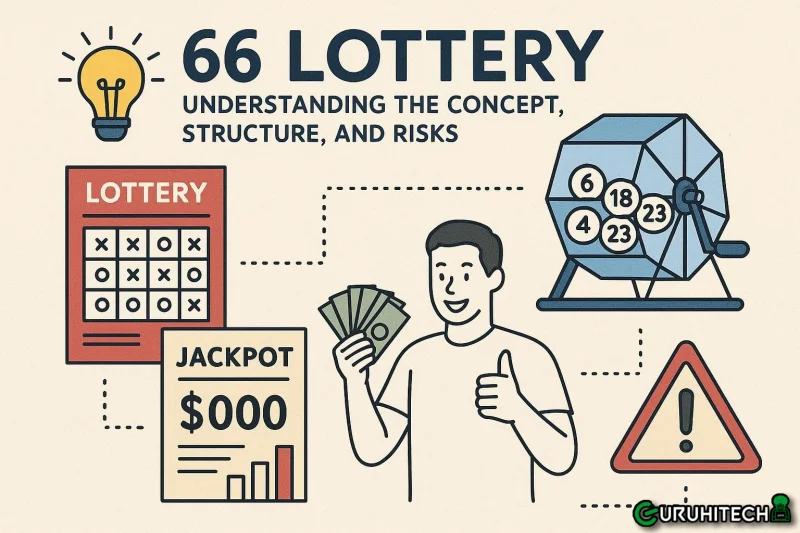
Generally, refers to a number-based lottery format where participants select numbers—often from a structured pool—and results are drawn randomly. While the specific mechanics may vary depending on the operator or region, the core principle remains the same: players purchase entries, choose number combinations, and wait for an official draw to determine winning tickets.
This article explores how a 66 Lottery-type system typically works, its structural components, probability framework, and the associated financial and behavioral risks.
Basic Structure of a 66 Lottery
In most 66-style lottery systems, the number “66” can refer to one of the following:
- A pool of 66 possible numbers
- A specific draw time (e.g., 6:06 or similar branding concept)
- A game format where players select numbers linked to a 66-number matrix
Participants usually:
- Purchase a ticket (physical or digital).
- Select a predetermined number of digits (e.g., 5 or 6 numbers).
- Wait for a scheduled draw.
- Compare results with the official winning numbers.
Prizes are awarded based on how many numbers match exactly and, in some variations, the order of selection.
Probability and Odds
Lotteries are designed around statistical probability. If a 66 Lottery uses a system where players select 6 numbers from 66 possibilities, the odds of hitting the jackpot are extremely low.This results in millions of possible combinations. Consequently, jackpot odds are typically less than 1 in several million.
Lower-tier prizes (matching fewer numbers) have better—but still statistically unfavorable—odds.
Digital Expansion and Online Platforms
With technological advancement, many lottery systems, including 66-style games, operate through digital platforms. Online participation allows:
- Instant ticket purchases
- Automated number selection (quick pick)
- Real-time draw notifications
- Digital wallet integration
However, digital accessibility increases impulsive participation risk, particularly in markets with limited regulatory oversight.
Financial and Behavioral Considerations
While lotteries are marketed as entertainment, they carry financial risk. Important considerations include:
- Negative expected value: Over time, participants statistically lose more than they win.
- Psychological reinforcement: Occasional small wins encourage continued play.
- Budget mismanagement: Repeated small ticket purchases accumulate significantly.
Financial discipline is critical. Participants should treat lottery spending as discretionary entertainment expense—not as an income strategy.
Regulation and Legitimacy
Before engaging with any 66 Lottery platform, verify:
- Government licensing
- Transparent draw procedures
- Publicly available terms and payout rules
- Secure payment infrastructure
Unregulated lottery schemes often resemble gambling scams and may not guarantee payouts.
Strategic Perspective
There is no mathematical strategy that increases jackpot probability in a fair random draw. Common myths such as “hot numbers,” “cold numbers,” or pattern analysis have no statistical advantage in truly random systems.
The only controllable factor is spending behavior.
Conclusion
The 66 Lottery represents a structured number-draw game built on probability mechanics and random selection. While it can serve as a form of entertainment, participants must understand the mathematical reality: the odds are heavily weighted against players. Responsible participation, awareness of financial risk, and verification of platform legitimacy are essential before engaging in any lottery-based system.
Scopri di più da GuruHiTech
Abbonati per ricevere gli ultimi articoli inviati alla tua e-mail.