
Dechecker AI Checker: When Writing Needs to Sound Human Again
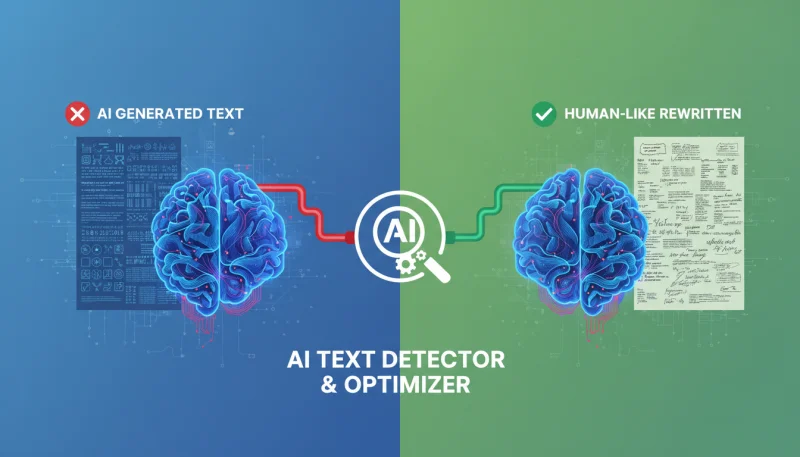
Writing with AI is no longer controversial. What slows people down now is uncertainty. A paragraph feels fine, yet something about it triggers hesitation. Is it too smooth? Too balanced? Too predictable? This is where Dechecker enters—not as a judge, but as a working companion that helps writers regain confidence before anyone else reads the text.
Why AI-Sounding Content Has Become a Real Problem
The Moment Doubt Appears
Most writers don’t worry at the first draft. The problem starts right before submission. A marketer rereads a landing page and pauses, a student scans an essay and senses it sounds “off.” A content manager delays publishing because the tone feels manufactured. That hesitation costs time and creates second-guessing that rarely improves the text on its own.
This is often the moment people turn to an AI Checker. Not to accuse the content, but to confirm whether their instinct is justified.
Detection Is About Risk, Not Blame
AI detection is rarely about morality. It’s about exposure. Schools, publishers, and search engines all respond differently to AI-written content, and inconsistency creates risk. Writers don’t want surprises after submission. They want signals early, while changes are still easy.
Using an AI Checker at this stage reframes the process. Instead of asking “Will this get flagged?” the writer asks “What needs adjustment before anyone else sees it?”
When Feedback Comes Too Late
Many revisions happen after feedback, not before. Legal teams request rewrites. Editors ask for tone changes. Clients feel something is wrong but can’t name it. By the time feedback arrives, the cost of revision is higher. Dechecker is often used earlier in the cycle to surface those issues privately.
How Dechecker Fits Into Real Writing Workflows
Editing Without Overcorrecting
Writers tend to swing between extremes. Either they trust AI too much or they rewrite everything manually out of fear. Dechecker sits in the middle. It highlights patterns rather than dictating changes. That allows writers to adjust selectively instead of flattening their own voice.
AI Checker results don’t replace judgment. They sharpen it.
Seeing Patterns Across Drafts
One overlooked benefit of repeated checking is pattern recognition. After running several pieces through Dechecker, writers start noticing the same signals appear. Overly even sentence lengths. Transitions that feel mechanical. Conclusions that resolve too neatly.
Over time, those patterns inform how drafts are written in the first place. Fewer corrections are needed because intuition improves.
Confidence Before Collaboration
Sharing unfinished work is stressful when the writer isn’t sure how it will be received. Running a draft through an AI Checker before sending it to a teammate or client reduces that anxiety. The text may still change, but the writer knows it won’t raise immediate red flags.
That confidence changes how feedback is received. Writers engage instead of defend.
Making AI Writing Feel Less Like AI
Where Human Rhythm Breaks Through
Human writing is uneven. It pauses, hesitates, and sometimes contradicts itself. AI writing tends to resolve tension too cleanly. Dechecker helps identify those overly polished sections so writers can reintroduce natural rhythm.
This doesn’t mean adding mistakes. It means allowing variation, emphasis, and occasional imbalance—the things readers subconsciously trust.
Adjusting Tone Without Losing Speed
Speed is why people use AI in the first place. The goal isn’t to slow down. Tools like the AI Humanizer within Dechecker are used when a passage technically works but feels emotionally flat. In those cases, writers often run only specific sections through the AI Humanizer, keeping the rest intact.
The result is a draft that still benefits from AI efficiency while sounding closer to how a person would naturally explain the same idea.
Writing That Survives a Second Read
Many AI-written texts sound fine on first read. Problems emerge on the second. Repetition becomes obvious. Transitions feel scripted. Dechecker is often used as a “second-read filter,” catching issues that only appear once familiarity sets in.
This is especially useful for long-form content where fatigue makes self-editing unreliable.
Academic and Learning Use Cases
Students Under Pressure
Students don’t use AI because they don’t care. They use it because deadlines stack and instructions are unclear. The fear comes later, when originality checks and AI detection policies enter the picture.
An AI Checker gives students a private way to assess risk before submission. It doesn’t replace learning, but it reduces panic and encourages revision rather than blind submission.
Learning Through Revision
When students see which parts of their writing trigger detection, they learn what “natural” academic writing actually looks like. Over time, reliance on AI decreases because confidence in personal writing increases.
This feedback loop is subtle but effective. It teaches by showing, not lecturing.
Supporting Homework Without Shortcuts
Dechecker’s role as an AI homework helper isn’t about providing answers. It’s about helping students refine what they already have. That distinction matters in educational settings where intent is closely watched.
Professional and Marketing Writing at Scale
Approval Bottlenecks
In teams, approval is often delayed not by disagreement but by uncertainty. Reviewers hesitate when something feels artificial. They can’t articulate the issue, so they ask for revisions “just in case.”
Running content through an AI Checker before review removes many of those unknowns. Fewer vague objections appear. Decisions move faster.
Brand Voice Consistency
AI-generated drafts often drift from brand voice in subtle ways. The words are correct, but the personality shifts. Dechecker helps surface those inconsistencies early, allowing marketers to realign tone before publishing.
This matters most when multiple writers contribute to the same brand.
Publishing Without Second-Guessing
Once content is live, it’s hard to pull back. Writers want confidence at the moment of publication. Dechecker supports that decision by reducing uncertainty, not by promising perfection.
Writing With Judgment, Not Fear
Tools as Reference Points
The most experienced writers don’t rely blindly on tools. They consult them. Dechecker functions best when treated as a reference point rather than a rulebook. Writers decide what to change and what to keep.
That balance preserves voice while improving reliability.
Developing Trust in Your Own Edits
Repeated use builds internal calibration. Writers begin predicting AI Checker outcomes before running them. When the tool confirms those instincts, confidence grows. When it doesn’t, the discrepancy becomes a learning moment.
Over time, the tool becomes less necessary—not because it’s ineffective, but because it has taught the writer how to hear their own work more clearly.
Writing That Feels Finished
The goal isn’t to beat detection systems. It’s to submit work that feels settled. When a draft no longer raises internal alarms, it reads more convincingly to others as well.
Dechecker supports that final moment—the point where the writer stops tweaking and decides the text is ready to stand on its own.
Where Dechecker Adds the Most Value
Early, Not Last-Minute
Using an AI Checker at the end of a rushed process limits its value. Writers who benefit most use it mid-draft, while changes are still fluid. This keeps revisions light and intentional.
Selective Use Beats Full Automation
Not every paragraph needs adjustment. Dechecker works best when writers focus on sections that feel suspicious or overly polished. Targeted revision preserves momentum.
Writing as a Skill, Not a Trick
Dechecker doesn’t replace writing skill. It reinforces it. By making patterns visible, it helps writers improve naturally instead of memorizing rules.
In an environment where AI writing is common but trust is fragile, that clarity matters.
Scopri di più da GuruHiTech
Abbonati per ricevere gli ultimi articoli inviati alla tua e-mail.