
How AI Is Changing Sports Predictions: Can Machines Beat Human Bettors?
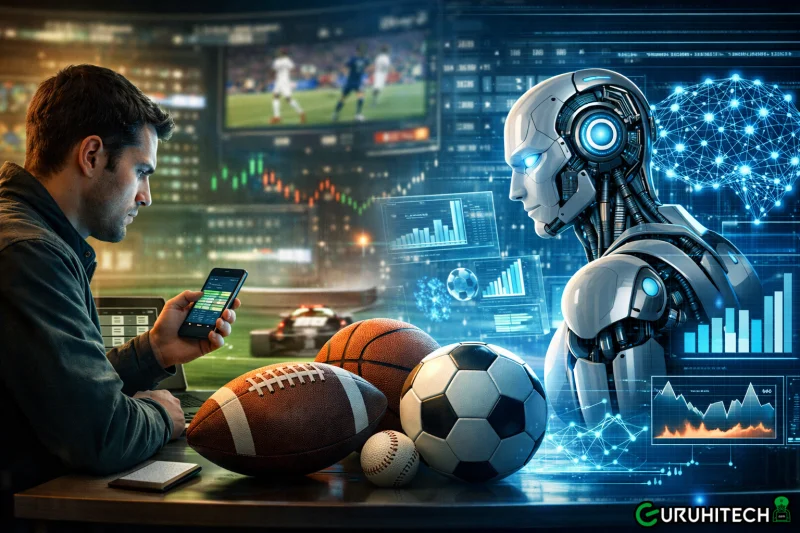
Artificial intelligence is rapidly transforming industries across the world, and sports betting is no exception. What used to be a field dominated by intuition, experience, and manual analysis has evolved into a data-driven science supported by advanced algorithms. Today, bettors and bookmakers alike rely on AI to process vast amounts of information and generate increasingly accurate predictions. But can machines truly outperform human bettors? And if so, what does that mean for the future of sports forecasting?
Below is a balanced look at how AI is reshaping predictions, where machines excel, where they still fall short, and why the future may lie in combining human insight with algorithmic analysis.
The Shift From Intuition to Data-Driven Intelligence
For decades, sports predictions relied on human expertise. Bettors studied past results, monitored injuries, and used instinctive judgment about teams or players. However, the modern sports landscape produces such a vast volume of data that no person could reasonably analyze it all manually. Each match now generates detailed information, including player movement metrics, tactical positioning, performance analytics, historical head-to-head trends, social media sentiment, and injury or fitness data.
AI thrives in this data-rich environment. Machine-learning systems can process enormous datasets in seconds, uncovering patterns that even the most experienced human bettors might miss. This ability to analyze information at scale has become a fundamental advantage for AI in sports prediction.
As the betting landscape becomes increasingly data-driven, many bettors are looking for reliable guidance on how to adapt their strategies. Resources like Statymų gidas offer clear explanations of betting fundamentals, risk management, and practical examples that help readers understand how both human intuition and AI-driven insights can be applied effectively.
How AI Models Make Predictions
Machine Learning as the Core Engine
Most sports prediction algorithms rely on machine learning, where models learn from historical outcomes. By analyzing thousands or even millions of past matches, these systems identify recurring trends and build probability models. They assess factors such as player form, team momentum, situational influences, offensive and defensive metrics, and advanced statistics like expected goals (xG). Machine learning allows AI to continuously refine its predictions as new data becomes available, improving accuracy over time.
Neural Networks and Deep Learning
More sophisticated AI systems use neural networks to interpret complex relationships between variables. These networks mimic the human brain’s structure, enabling machines to understand nonlinear interactions among players, teams, and situational factors. Neural networks are especially effective in modeling tactical shifts, predicting player fatigue, and detecting subtle changes in performance that might escape traditional analysis.
Natural Language Processing (NLP)
Not all sports data is numerical. NLP enables AI to process unstructured information such as press conferences, news reports, social-media updates, or injury announcements. By analyzing these sources, AI can gauge morale, team chemistry, rumored lineup changes, and public sentiment about key players, adding an additional layer of context to purely statistical predictions.
Real-Time Analytics
During live events, AI can update its forecasts instantly using streaming data. This capability is particularly valuable for in-play betting, where odds change rapidly and traditional human analysis would struggle to keep pace.
Where AI Outperforms Human Bettors
AI demonstrates clear advantages over human bettors, providing speed, objectivity, and precision in prediction.
Processing Power
Humans cannot process the vast amount of sports data generated today. AI can integrate multiple sources of information simultaneously, creating detailed probability models in real time. This computational power allows machines to analyze far more variables than a human could feasibly manage.
Pattern Recognition
AI excels at identifying subtle correlations within complex datasets. For example, it might detect that a team underperforms in cold weather or struggles against certain formations. Recognizing these patterns consistently is extremely difficult for human bettors, giving AI a significant predictive edge.
Lack of Emotional Bias
Human bettors are often influenced by emotions such as loyalty, overconfidence, or recent memorable performances. AI operates without sentiment or attachment, treating each match purely as a statistical problem. This detachment ensures predictions remain objective and consistent.
Micro-Event Prediction
Beyond broad match outcomes, AI can forecast micro-events, such as the expected number of corners, probability of a particular player scoring, or likelihood of specific tactical events. By analyzing these granular components, AI identifies profitable opportunities that humans might overlook, enhancing precision in betting strategies.
Where AI Still Falls Short
Despite its strengths, AI is not infallible. Sports are inherently unpredictable because they involve human decision-making, improvisation, and emotion.
Unpredictable Human Factors
AI cannot fully anticipate sudden injuries, emotional swings, leadership decisions, or last-minute tactical changes. Experienced bettors often sense these shifts intuitively, which remains a strength humans hold over machines.
Contextual Gaps
Even with data on player fitness or recent performance, AI may misinterpret context. For instance, it might know a star player is “fit,” but cannot accurately assess whether they are fully ready to perform after returning from injury.
Data Quality Limitations
Models depend on the quality of data they receive. Incomplete, outdated, or biased information can compromise predictions.
Overfitting and Misinterpretation
Sometimes AI “learns” patterns that only applied to past situations and fails to generalize to future events. Overfitting remains a challenge in developing robust models.
Can AI Actually Beat Human Bettors?
The question of whether AI can outperform human bettors depends on the type of prediction being made.
Where AI Excels
AI is highly effective in large-scale statistical forecasting, identifying value in odds, removing emotional bias, analyzing player-level metrics, and processing real-time data. Professional betting syndicates and bookmakers increasingly rely on these algorithms to set or adjust odds, giving them a notable advantage.
Where Humans Excel
Humans retain an edge in understanding psychological factors, interpreting breaking news, predicting flow in emotionally charged matches, and making intuitive judgments when data is incomplete. Experienced bettors watching a team over years can often anticipate outcomes that AI might not fully capture.
Humans + AI Win Together
The most successful bettors combine both approaches. AI handles the heavy data analysis, while humans provide context and intuition. Together, they form a strategy that is more accurate than either approach alone.
The Future of AI in Sports Predictions
Looking ahead, AI will continue to advance and reshape sports betting. We can expect hyper-personalized predictions tailored to individual betting behavior, more accurate player-performance models using biometric sensors, computer-vision-driven analysis of live game footage, fully automated micro-betting systems, and even AI competing against AI to refine predictive strategies. As these technologies mature, the line between prediction and real-time decision-making will increasingly blur.
Conclusion: A New Era for Bettors and Bookmakers
Artificial intelligence has already transformed sports predictions, bringing unparalleled speed, pattern recognition, and objectivity. While it cannot completely replicate human insight into psychology and context, AI significantly enhances forecasting accuracy and reduces risk when applied effectively. Machines can outperform humans in many areas, but the true power comes when human judgment and AI intelligence are combined. Together, they allow bettors to bridge data with intuition, achieving smarter, more strategic predictions than ever before.
Ti potrebbe interessare:
Segui guruhitech su:
- Google News: bit.ly/gurugooglenews
- Telegram: t.me/guruhitech
- Facebook: facebook.com/guruhitechfb
- Instagram: instagram.com/guruhitech_official/
- X (Twitter): x.com/guruhitech1
- Bluesky: bsky.app/profile/guruhitech.bsky.social
- Rumble: rumble.com/user/guruhitech
- VKontakte: vk.com/guruhitech
- MeWe: mewe.com/i/guruhitech
- Skype: live:.cid.d4cf3836b772da8a
- WhatsApp: bit.ly/whatsappguruhitech
Esprimi il tuo parere!
Ti è stato utile questo articolo? Lascia un commento nell’apposita sezione che trovi più in basso e se ti va, iscriviti alla newsletter.
Per qualsiasi domanda, informazione o assistenza nel mondo della tecnologia, puoi inviare una email all’indirizzo [email protected].
Scopri di più da GuruHiTech
Abbonati per ricevere gli ultimi articoli inviati alla tua e-mail.