
Outsource Live Chat Support vs In House Team: Which Is Better
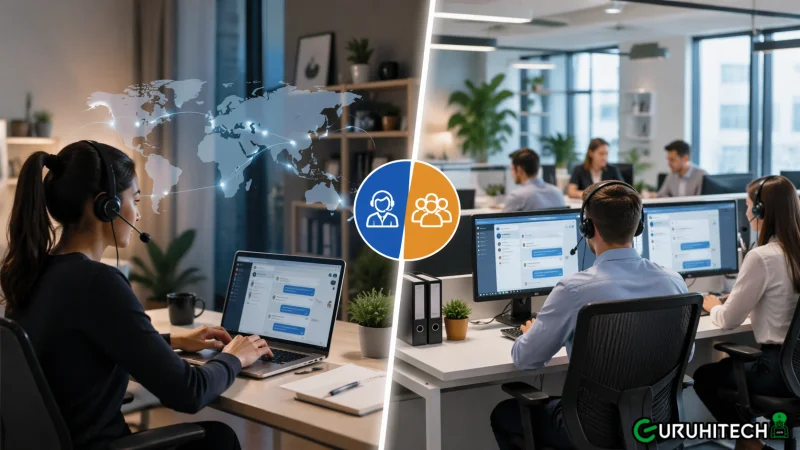
Live chat support has become a core part of customer service strategy for businesses that want faster response times, stronger engagement, and higher conversion rates. Companies that reply instantly often gain a clear advantage in customer trust and retention. Decision makers frequently compare outsourced chat support and in-house teams to determine which option delivers better results across cost efficiency, service quality, and scalability.
A clear evaluation of both models helps businesses align support operations with growth goals. This detailed guide explores cost structures, customer experience, scalability, control, and performance so you can choose the right solution with confidence.
What Is Outsourced Live Chat Support
Outsourced live chat support refers to hiring a third-party provider to manage customer conversations. These providers supply trained agents, chat tools, analytics dashboards, and performance tracking systems. Businesses share product details, brand voice guidelines, and workflows so external agents can represent the company effectively.
Service providers often operate across multiple industries, which allows them to offer flexible plans and twenty-four-hour coverage. This structure supports businesses that need immediate deployment without building internal infrastructure.
Key Features of Outsourced Support
Professional vendors provide trained chat agents who follow scripts and predefined workflows to maintain consistent responses. Dedicated account managers monitor performance and ensure service level agreements are met. Advanced chat software allows tracking of metrics such as response time, first contact resolution, and customer satisfaction scores.
Flexible pricing models allow businesses to pay based on usage, agent hours, or monthly packages, which helps manage budgets more efficiently.
What Is In-House Live Chat Support
In-house live chat support involves building an internal team that handles customer interactions directly. These agents work within the organization and collaborate with sales, marketing, and product teams to resolve queries.
Internal teams gain a deeper understanding of products, services, and customer expectations. This familiarity leads to more personalized conversations and better alignment with brand identity.
Core Benefits of Internal Teams
Direct oversight allows managers to adjust communication strategies instantly. Close collaboration with other departments improves problem-solving speed and accuracy. Strong product knowledge enables agents to provide detailed answers and build stronger customer relationships.
Companies that prioritize control and brand consistency often prefer this model.
Cost Comparison and Budget Planning
Cost plays a central role in deciding between outsourcing and in-house support. Businesses must evaluate both short-term and long-term financial impact.
Outsourced Live Chat Cost Structure
Outsourcing reduces upfront investment since there is no need for recruitment, training, or infrastructure setup. Vendors handle staffing technology and management, which lowers operational complexity. Pricing models remain flexible, which allows businesses to scale costs based on demand.
Startups and small businesses benefit from this approach because it minimizes financial risk while providing professional support services.
In-House Team Expenses
Internal teams require salaries, benefits, onboarding programs, software subscriptions, and workspace allocation. Recruitment costs increase when hiring new agents or replacing staff. Training requires time and resources to maintain consistent performance.
Larger organizations may justify these expenses since they gain full control over operations and can build long-term expertise within the team.
Customer Experience and Service Quality
Customer experience defines the success of any support strategy. Businesses must evaluate how each model impacts response quality and satisfaction.
Outsourced Support Quality
Outsourced providers use standardized processes to maintain consistent service. Agents follow scripts, quality checks, and performance metrics, which ensure reliable responses across interactions. Many vendors invest in continuous training to improve communication skills and efficiency.
Challenges may arise when agents lack detailed knowledge about specific products or services. Proper onboarding and regular updates help bridge this gap and improve accuracy.
In-House Support Quality
Internal teams deliver highly personalized interactions since they understand the brand culture and customer journey. Close collaboration with other departments allows them to resolve issues more effectively.
Quality depends on internal training programs, leadership, and performance monitoring. Companies that invest in continuous learning often achieve higher customer satisfaction and loyalty.
Scalability and Business Growth
Scalability determines how well your support system adapts to increasing demand.
Outsourced Support Scalability
Service providers can quickly increase or decrease agent numbers based on traffic volume. This flexibility helps businesses manage peak season marketing campaigns and sudden growth without delays.
Global operations benefit from outsourced support since vendors can handle multiple time zones and maintain consistent availability.
In-House Team Scalability
Internal scaling requires hiring, training, and onboarding, which takes time and resources. Sudden demand spikes may overwhelm existing staff and affect response times.
Organizations with predictable growth patterns can plan hiring cycles in advance, but fast-growing businesses may struggle to keep up with demand using only internal teams.
Control Brand Voice and Data Security
Control over communication and data plays a significant role in decision-making.
Outsourced Support Control
Service level agreements define expectations regarding response time, quality standards, and data handling. Reliable vendors follow strict security protocols and compliance measures.
Businesses must rely on external systems, which may reduce direct oversight. Regular audits and communication help maintain alignment with brand voice.
In-House Control
Internal teams offer complete control over processes, communication, and data management. Managers can adjust strategies instantly and ensure every interaction reflects the brand accurately.
Industries with strict compliance requirements often prefer this model due to higher security and direct supervision.
Final Thoughts on Outsource Live Chat Support vs In House Team
Live chat support plays a critical role in customer engagement, conversion optimization, and brand reputation. Businesses that provide quick and accurate responses gain a competitive advantage in crowded markets.
Outsourced live chat support offers flexibility, cost efficiency, and scalability, which makes it ideal for growing businesses. In-house teams provide control, personalized communication, and deeper product knowledge, which suits companies focused on long-term relationships. Many businesses trust Callmax Solutions to manage scalable support operations while maintaining service quality.
Hybrid models offer a balanced solution by combining the strengths of both approaches. Careful evaluation of your business needs, growth plans, and customer expectations will help you choose the right strategy.
Scopri di più da GuruHiTech
Abbonati per ricevere gli ultimi articoli inviati alla tua e-mail.