
The Ultimate Guide to Selecting the Right Ceramics Manufacturer
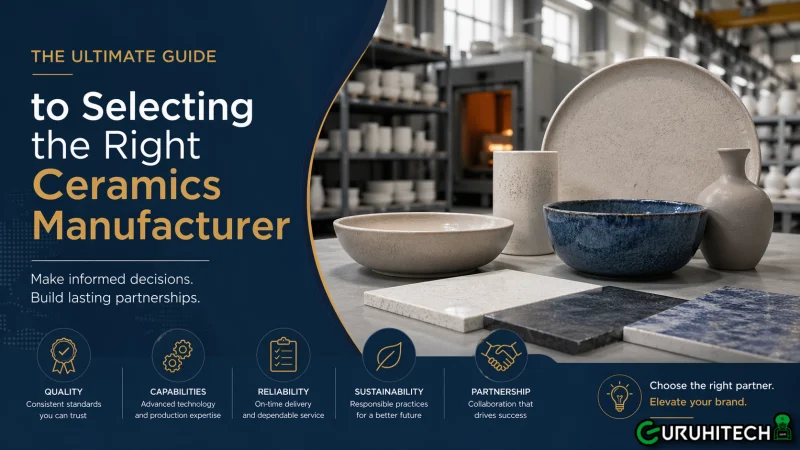
Finding the right manufacturing partner is one of the most important choices for any company. This is especially true if you rely on high-performance parts. In the world of advanced materials, this choice matters even more. Your choice of Ceramics Manufacturer directly affects your product’s performance, reliability, and cost. This guide gives a clear roadmap for engineers, designers, and buyers. It will help you navigate this critical selection process in 2026.
Key Takeaways
- Partner, Not Supplier: Find a strategic partner who offers technical know-how, not just a company that makes parts.
- Material Is Key: Match the right ceramic material to your needs. Materials like Alumina, Zirconia, or Steatite each serve different purposes. This is the first crucial step.
- Use a Vetting Process: A structured 5-step process helps you check a manufacturer’s skills, quality control, and technical support.
- Focus on Expertise: For specific needs like electrical insulation, ask targeted questions. Learn about material properties and testing procedures.
- Plan the Project: A successful partnership has clear stages. These range from initial design review and prototyping to full-scale production.
Introduction: Why Your Choice of Manufacturer Matters
In high-tech industries, the parts you use define your success. A small ceramic part can be the key to a satellite’s function. It can also determine a medical device’s safety. Choosing a Ceramics Manufacturer is a high-stakes decision. It goes far beyond a simple price comparison.
The Challenge: Moving Beyond a Supplier List
Finding a true partner takes more than just searching online lists. It demands a careful process to check their skills and experience. You need a manufacturer who understands your goals. They should help you achieve them.
What This Guide Will Cover
This guide will help you make a smart choice. We will cover the basics of technical ceramics. We will look at different material types. Then we will walk through a step-by-step process for choosing a partner. We will look closely at ceramic insulators. Finally, we will explain how to build a strong working relationship.
Understanding the Landscape: A Technical Ceramics Manufacturer
What is a technical ceramics manufacturer? They are not making pottery or tiles. They are specialists who create parts with amazing properties.
From Clay to Cutting-Edge
An advanced ceramics manufacturer uses highly pure, man-made powders. They form these powders under precise conditions. This creates parts that are incredibly hard. They can be heat-resistant or excellent electrical insulators. These properties go far beyond what traditional clay can offer.
Key Industries Served
The unique abilities of technical ceramics make them vital in many fields. A skilled Ceramics Manufacturer serves a wide range of demanding industries.
- Aerospace & Defense
- Medical & Healthcare
- Semiconductor & Electronics
- Energy & Automotive
Differentiating Between Manufacturers
The industry has many types of companies. Some are large global producers. They make standard parts in high volumes. Others are smaller, specialized firms. They act as engineering partners for custom projects. Finding the right fit depends on your project’s needs. The field includes everyone from global leaders to highly focused firms. This is noted by lists of top-tier engineered ceramics companies.
A Practical Guide to Technical Ceramic Materials
Choosing the right material is the first and most important step. Each ceramic has a unique set of properties. A good Ceramics Manufacturer will help you select the best one for your job.
Matching the Material to the Mission
Your part’s function will determine the best material. Do you need something that can withstand extreme heat? Or do you need a material that will not conduct electricity? Answering these questions will narrow down your options.
Common Technical Ceramics: A Comparative Overview
This table gives a simple look at four common materials. It shows their main features and where they are often used. This can help you start your material selection process.
| Material | Key Properties | Common Applications | Relative Cost |
| Alumina (Al₂O₃) | High hardness, wear resistance, good electrical insulation. | Seal rings, electronic substrates, grinding media. | Low-Medium |
| Zirconia (ZrO₂) | Exceptional toughness, high strength, low thermal conductivity. | Cutting tools, dental implants, oxygen sensors. | High |
| Silicon Carbide (SiC) | Excellent thermal shock resistance, high thermal conductivity, chemical inertness. | Kiln furniture, heat exchangers, mechanical seals. | Medium-High |
| Steatite | Excellent dielectric strength, low loss factor, easily machinable. | Electrical insulators, thermostat parts, resistor cores. | Low |
The 5-Step Vetting Process for Choosing a Ceramics Manufacturer
Choosing a partner should be a structured process. This 5-step method will help you evaluate potential manufacturers. It will help you make a confident choice. It moves beyond generic advice to give you a clear, actionable plan.
Step 1: Define Your Project Requirements with Precision
Before you contact anyone, know exactly what you need. Create a detailed Request for Quotation (RFQ). This document should include technical drawings. Add material specifications, required tolerances, and expected quantities. The more detail you provide, the more accurate the quotes will be.
Step 2: Evaluate Manufacturing Capabilities and Prototyping
Not all manufacturers can make every part. A key question we always ask is about their forming methods. Do they use dry pressing for simple shapes? Or do they use injection molding for complex ones? Can they CNC machine green or fired ceramics? Their capabilities must match your part’s design. For very complex projects, using ceramic manufacturing consulting services can help. These services can help you assess a supplier’s true abilities.
Step 3: Scrutinize Quality Control and Certifications
Quality is non-negotiable. Look for manufacturers with ISO 9001 certification. This shows they have a formal quality management system. Ask to see their material traceability records. Learn about their in-house testing equipment. A serious Ceramics Manufacturer will be proud to share this information.
Step 4: Assess Technical Expertise and R&D Support
This step separates a simple supplier from a true partner. A top-tier Ceramics Manufacturer will have engineers and material scientists on staff. They should review your design. They should offer “Design for Manufacturability” (DFM) feedback. This advice can improve your part’s performance. It can also lower its cost.
Step 5: Review Past Performance and Industry Reputation
A manufacturer’s history speaks volumes. Ask for case studies or client references. Make sure they are relevant to your industry. One common pitfall to avoid is partnering with a company that has no experience in your specific field. Their past success is a good indicator of your future success.
Deep Dive: What to Look for in Ceramic Insulators Manufacturers
Electrical insulation is a common and critical use for technical ceramics. When you need parts for high-voltage applications, you must look for specific know-how. Finding the right ceramic insulators manufacturers requires asking the right questions.
Beyond General Properties: The Demands of Electrical Insulation
For insulators, certain properties are vital. Dielectric strength measures a material’s ability to withstand high voltage without breaking down. Volume resistivity shows how well it resists the flow of electricity. A low loss factor is also important, especially at high frequencies.
Key Questions for Potential ceramic insulators manufacturers
When talking to a potential supplier, use these questions. They will help you gauge their expertise:
- What materials do you recommend for our voltage and frequency needs? Materials like high-purity Alumina or Steatite are good options.
- What is your standard testing procedure for checking dielectric properties?
- Can you provide examples of high-voltage insulators you have produced for other clients?
Building a Successful Partnership: From RFQ to Production
Once you have selected a Ceramics Manufacturer, the real work begins. Understanding the project lifecycle helps manage expectations. It ensures a smooth process from start to finish.
Initial Consultation & Design Review: The first step is to finalize the part design. You will work with the manufacturer’s engineering team. They will confirm that the design is manufacturable. They will also make sure it meets all your requirements.
Prototyping & First Article Inspection (FAI): Next, the manufacturer will produce a small number of prototype parts. You will test these “first articles.” This ensures they meet every specification before approving full production.
Tooling & Production Ramp-Up: For larger quantities, the manufacturer will create the necessary tooling. This includes molds or dies. This is often the longest part of the pre-production phase.
Ongoing Production & Quality Assurance: This is where a long-term relationship pays off. A reliable supplier like Zlrsmaterial becomes invaluable. They deliver consistent quality and on-time parts for the life of your product.
Conclusion: Your Strategic Partner in Innovation
Choosing a Ceramics Manufacturer is a strategic decision. It affects your product’s performance, quality, and your ability to innovate, it is not just about buying a part. It is about building a relationship.
By following a structured vetting process, you can look beyond the price tag. You can find a partner that brings technical know-how. They will provide quality assurance and a commitment to your success. This approach ensures you find a Ceramics Manufacturer that will help you succeed in 2026 and for years to come.
Frequently Asked Questions (FAQ)
What is the main difference between technical ceramics and traditional ceramics?
Technical ceramics (or advanced ceramics) are made from highly pure, synthetic raw materials. They are made under precisely controlled conditions. This achieves superior mechanical, thermal, and electrical properties. Traditional ceramics, like pottery or bricks, are made from natural clays. They are primarily valued for their aesthetic or structural use, not high-performance characteristics.
How much do custom ceramic parts cost?
Cost is highly variable. It depends on several factors. These include the type of material. For example, Zirconia is more expensive than Alumina. The complexity of the part’s geometry matters. So do the required tolerances and the production volume. Tooling costs are spread over larger quantities. Any required secondary processing like grinding or polishing also affects cost.
What are typical lead times for custom ceramic components?
Lead times can range from a few weeks to several months. Prototyping is often faster, taking 2-4 weeks. Production parts require time for tooling creation, which takes 4-8 weeks. The manufacturing process itself also takes time. It’s crucial to discuss timelines with your chosen Ceramics Manufacturer early in the process.
Can technical ceramics be machined to very tight tolerances?
Yes. While ceramics are very hard, they can be precision ground, lapped, and polished after firing. This achieves extremely tight tolerances. These are often on the scale of microns. This “hard machining” is a specialized capability. You should verify that a manufacturer offers it if your design requires it.
Which ceramic material is best for high-temperature applications?
Several ceramics excel at high temperatures. Silicon Carbide (SiC) and Alumina are excellent choices. High-purity grades of Alumina are especially good. They are often capable of operating well above 1500°C. The best choice depends on the specific environment. Consider whether thermal shock resistance or chemical inertness is also required.
Scopri di più da GuruHiTech
Abbonati per ricevere gli ultimi articoli inviati alla tua e-mail.