
How to Play Poker Online for Real Money: A Step-by-Step Beginner’s Guide
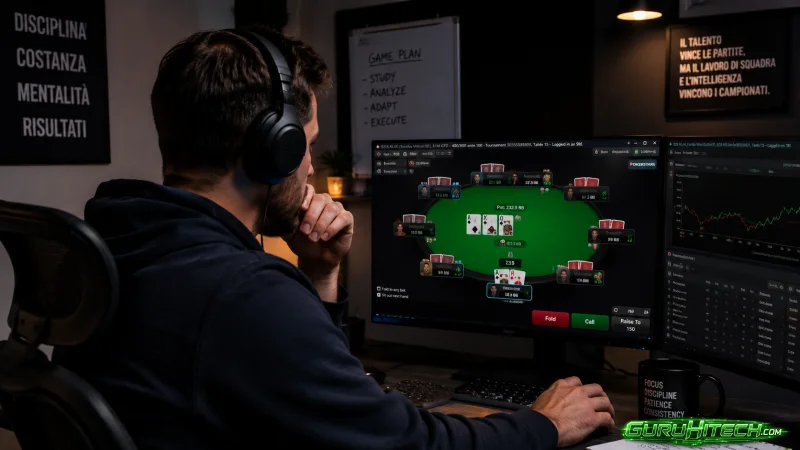
Online poker is a digital version of traditional poker played on licensed platforms, where software deals the cards and players wager real money against each other instead of the house. The most common format is Texas Hold’em, with Pot-Limit Omaha and other variants available on larger sites.
Players prefer real-money poker over free versions because decisions carry actual financial consequences. This changes how opponents fold, call, and bluff, creating a more realistic and competitive environment. It also accelerates skill development compared to play-money games.
The online poker market spans Europe, Latin America, and parts of Asia, with most traffic concentrated in regulated jurisdictions and major poker networks. As a result, choosing the right platform is one of the first and most important decisions for new players.

Poker Basics You Need to Know Before Playing
Before depositing anything, a new player should understand how a poker hand actually unfolds. The fundamentals below cover what every online poker rules sheet starts with:
- Poker hand rankings – from high card (weakest) through pair, two pair, three-of-a-kind, straight, flush, full house, four-of-a-kind, straight flush, up to royal flush (strongest).
- Blinds structure – two forced bets are posted each hand, small blind and big blind rotate clockwise, putting chips in play and forcing action.
- Betting rounds – pre-flop, flop, turn, and river. Each round gives players the option to check, bet, call, raise, or fold.
- Table positions – early (first to act), middle, late (dealer button), and blinds. Position affects every decision because acting later means more information.
- Basic rules flow – each hand begins with blinds posted and hole cards dealt, then runs through sequential betting rounds as community cards arrive, ending in a showdown or a single player winning the pot uncontested.
The mechanics are simple once you see a few hands. Each player receives two private cards, five community cards are dealt in three stages, and the best five-card combination wins. Betting rounds between each stage determine how much is at stake when those community cards arrive. A hand ends the moment every other player folds, or at showdown when remaining hands are compared.
Applying these fundamentals at real stakes turns rules into skill. BC Poker is a licensed online poker platform offering real money poker games at low stakes, sit-and-gos, and cash tables filterable by buy-in and speed. Beginners who play poker on BC Poker can apply the fundamentals above, rankings, positions, and betting rounds at limits where mistakes cost dollars, with hand histories saved for review.
Step-by-Step Guide: How to Start Playing Poker Online
To start playing poker online, it’s important to follow a structured process rather than jumping directly into games. Each step, from choosing a platform to playing your first hands, builds the foundation for a safe and controlled learning experience. The guide below breaks down this process into clear and practical stages.
Choosing a Poker Platform
Start by comparing licensed operators rather than signing up for the first site that appears. The best online poker platforms hold recognized gaming licenses (MGA, Curaçao, UKGC, Kahnawake), publish clear terms, and list software certifications from independent labs such as eCOGRA or iTech Labs. Traffic at your intended stake level matters too – a licensed room with no players is useless.
Account Registration Process
Registration requires a valid email, a secure password, and basic identity details. Most regulated platforms run KYC verification before the first withdrawal, which asks for a government ID and proof of address. Completing verification at sign-up rather than after a cash-out request saves friction later.
Depositing Real Money Safely
Deposit options typically include Visa and Mastercard, e-wallets like Skrill and Neteller, bank transfer, and, in crypto-friendly rooms, Bitcoin or USDT. Use payment methods you control directly, enable two-factor authentication on the account, and start with a deposit amount you can afford to lose entirely.
Selecting Your First Table
Filter the lobby by stakes, speed, and format. A new player should start at the lowest cash-game stakes or small-field sit-and-gos. Look for tables with a high percentage of players seeing each flop – those lineups indicate recreational play rather than experienced grinders.
First Gameplay Experience
Your opening sessions should focus on pattern recognition, not winning. Play tight in the early position, fold marginal hands, and pay attention to how opponents size their bets. Expect variance. Short-term results mean nothing across a few hundred hands, and reading too much into them is the fastest way to form bad habits.
Common Beginner Mistakes
The usual errors: playing too many hands, chasing weak draws, calling river bets out of curiosity, and moving up stakes after a single winning session. Track your results honestly – a lucky run is not a winning skill set, and confusing the two is how most beginners give back their early profits.
Beginner Strategy for Real Money Poker Games
Poker strategy for beginners does not require memorizing charts. It requires a few principles applied consistently across every session:
- Bankroll management – keep at least 20–30 buy-ins for cash games and 50+ for tournaments. Going broke is the only unrecoverable mistake.
- Tight-aggressive play style – play fewer hands, but play them with initiative. Raising and re-raising wins more pots than limping and calling.
- Avoiding emotional decisions – if you feel tilted after a bad beat, quit the session. One emotional hour can erase a month of discipline.
- Observing opponents – note who bluffs, who calls too often, who plays predictably. A few correct reads per session add up.
- Starting at low stakes – learn the game where mistakes cost dollars, not hundreds. Moving up belongs on a separate list of earned graduations.
Poker psychology comes down to managing two biases: overconfidence after wins and desperation after losses. Discipline means treating each hand as a mathematical decision independent of the last one. Risk management means the money at the table is the money you accept losing, no borrowed funds, no rent cash, no exceptions.
Safe Play and Choosing the Right Poker Platform
Licensing and regulation ensure player fund protection, dispute resolution, and independent software auditing. Licensed operators are required to separate customer funds and follow strict compliance standards. Read more about how regulatory frameworks work in the industry.
Fairness is maintained through certified RNG systems verified by independent labs, ensuring truly random card distribution.
When choosing a platform, focus on licensing, RNG certification, liquidity at your stakes, withdrawal speed, rake, and security measures against bots and collusion.
Getting Started Poker
Starting to play poker online for real money is a simple process: learn the basic rules, choose a licensed platform, deposit responsibly, and begin at low stakes while applying bankroll management. Progress comes through experience, not theory.
For beginners ready to start playing, playing poker on BC Poker provides an easy entry point with low-stakes tables and an active player pool.
Ti potrebbe interessare:
Segui guruhitech su:
- Google News: bit.ly/gurugooglenews
- Telegram: t.me/guruhitech
- Facebook: facebook.com/guruhitechfb
- Instagram: instagram.com/guruhitech_official/
- X (Twitter): x.com/guruhitech1
- Bluesky: bsky.app/profile/guruhitech.bsky.social
- Rumble: rumble.com/user/guruhitech
- VKontakte: vk.com/guruhitech
- MeWe: mewe.com/i/guruhitech
- Skype: live:.cid.d4cf3836b772da8a
- WhatsApp: bit.ly/whatsappguruhitech
Esprimi il tuo parere!
Ti è stato utile questo articolo? Lascia un commento nell’apposita sezione che trovi più in basso e se ti va, iscriviti alla newsletter.
Per qualsiasi domanda, informazione o assistenza nel mondo della tecnologia, puoi inviare una email all’indirizzo [email protected].
Scopri di più da GuruHiTech
Abbonati per ricevere gli ultimi articoli inviati alla tua e-mail.