
Inside Digital Lending: How Technology Is Transforming the Borrowing Experience
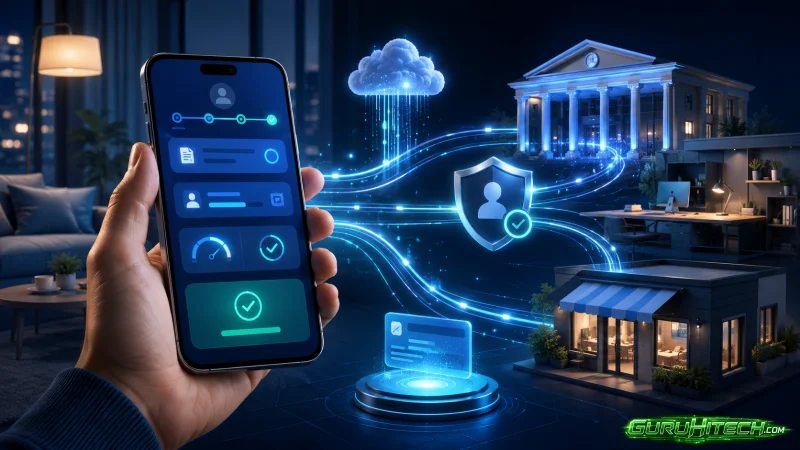
Borrowing once meant visiting a branch, completing paper forms, and waiting for an employee to review the file. Digital lending has compressed many of those steps into an online process through websites, mobile apps, retailer checkouts, and financial platforms.
Technology now influences how lenders verify identity, confirm income, estimate risk, deliver disclosures, transfer funds, collect payments, and communicate with borrowers. These tools can make credit more convenient, but they also create concerns involving privacy, automated decisions, fraud, and unclear terms.
The Loan Application Has Become a Digital Workflow
A digital application can guide a borrower through eligibility questions, document uploads, consent forms, and electronic signatures. Software can flag missing information immediately, reducing delays caused by incomplete paperwork.
Behind the screen, application programming interfaces, or APIs, can connect the lender with credit bureaus, bank-data providers, payroll systems, identity-verification services, and payment networks. Information that once had to be collected and entered manually may arrive in a structured format for automated review.
Not every digital application receives an instant decision. Inconsistent information, fraud warnings, or lender policies may still require human review. “Fast application” and “fast funding” are also different promises.
Automated Verification Reduces Manual Work
Technology can check identity documents, compare application details with external records, and confirm that an applicant controls a bank account. Some systems also analyze devices or unusual application patterns to detect fraud.
NIST’s current Digital Identity Guidelines address identity proofing, authentication, privacy, and customer experience. They reflect the need to prevent impersonation without creating unnecessary barriers for legitimate users.
Automation is not infallible. A name mismatch, new address, damaged document, or limited digital history can trigger additional checks. Borrowers should use accurate information and ask how to correct verification errors.
Alternative Data Can Change Who Qualifies
Traditional underwriting often relies on credit reports, credit scores, income, and debt. Digital lenders may supplement those sources with alternative data, including cash-flow information from bank accounts.
Cash-flow data can show recurring deposits, average balances, payment patterns, overdrafts, and the timing of income and expenses. Federal regulators have recognized that this information may automate parts of underwriting and provide another view of an applicant’s financial behavior.
This approach may help some applicants with limited conventional credit histories. It can also expose sensitive spending details. Applicants should understand what data they are authorizing a lender or service provider to access, how long access lasts, and whether permission can be revoked.
Artificial Intelligence Changes Decision-Making
Machine-learning models can examine many variables and identify patterns that simpler scoring systems may miss. Lenders may use them for fraud detection, underwriting, pricing, marketing, customer service, and account monitoring.
The potential benefit is a faster, more individualized assessment. The risk is that a complex model may be difficult to test, explain, or challenge. Historical data can reflect existing inequalities, and a model can become less reliable when conditions change.
Technology does not remove legal obligations. Regulation B requires creditors taking adverse action to provide specific principal reasons. Current official interpretations also explain that generic credit-score factors do not replace the required explanation.
NIST’s voluntary AI Risk Management Framework encourages organizations to address trustworthiness throughout an AI system’s lifecycle. In lending, that supports governance, testing, monitoring, documentation, and processes for correcting harmful outcomes.
Credit Is Becoming Embedded in Other Services
Digital credit may appear inside an online store, accounting platform, payment app, vehicle marketplace, or business-management service. The customer encounters financing at the moment a purchase or cash-flow need arises.
Buy now, pay later products are a prominent example. They commonly divide a retail purchase into a few installments at checkout. A 2025 CFPB study examined rapid growth in these loans, repeated use, loan stacking, and the difficulty of seeing a borrower’s complete unsecured debt when products are not consistently reflected in traditional credit files.
Embedded credit reduces friction, but it can encourage quick decisions. Borrowers should identify the creditor, repayment schedule, late-payment consequences, and whether several small obligations will overlap.
Faster Service Does Not Guarantee Better Terms
Digital platforms can display offers quickly, deliver disclosures electronically, and provide account access at any hour. Some borrowers can compare several products without visiting branches.
A polished interface does not prove that a loan is affordable or that the company operating the website is the lender. A site may be a lead generator that sends application information to other businesses. Search results may mix lenders, brokers, marketing affiliates, and fraudulent sites.
Borrowers should compare the annual percentage rate, finance charge, amount received, payment frequency, number of payments, and total repayment. They should also check for automatic withdrawals, repeated debit attempts, refinancing, or expedited-funding fees.
Data Security Becomes Part of the Loan Decision
Online applicants may share Social Security numbers, identity documents, income records, and bank information. Security should therefore be treated as part of product quality.
The FTC Safeguards Rule requires covered financial institutions under its jurisdiction to maintain information-security programs. Its guidance identifies controls such as risk assessments, encryption, multifactor authentication, application reviews, service-provider oversight, and incident-response planning. Coverage can include finance companies, mortgage lenders, payday lenders, and certain other nonbank financial businesses.
Borrowers should confirm that the site identifies the company, explains its privacy practices, and uses secure access methods. They should not send sensitive documents through unverified messaging accounts or give an online-banking password directly to a person.
Where Tribal Lending Appears Online
Digital marketplaces have increased the visibility of tribal loans, including installment products offered by entities describing themselves as tribally owned or affiliated. Agreements may identify a tribal entity, specify governing law, and establish a dispute forum.
The legal structure can be more complicated than the application screen suggests. Federal enforcement involving businesses connected with tribal lending arrangements has addressed allegations concerning deceptive collection practices, unauthorized withdrawals, and loans claimed to conflict with state law.
Borrowers should verify the exact lender and review the APR, total repayment, renewal terms, automatic-payment authorization, governing-law provision, and complaint process. Tribal affiliation should not be treated as proof that a loan is either unsafe or exempt from all consumer-protection requirements.
Technology Also Gives Borrowers Better Tools
Loan calculators can show total repayment. Account alerts can warn of due dates. Digital statements make it easier to track principal and interest, while comparison tools may reveal differences among offers.
These tools are only as reliable as their information. A calculator is incomplete when fees are omitted, and a comparison site may rank providers according to commercial relationships. Important terms should be verified in the credit agreement.
Borrowers should also reject promises of approval in exchange for an upfront payment. The FTC warns that advance-fee loan scams often target people with credit difficulties and may collect money or financial information without providing the promised loan.
The Bottom Line
Digital lending can shorten applications, automate verification, broaden underwriting data, and simplify account management. It can also make borrowing feel so effortless that costs and legal terms receive too little attention.
Before accepting a digital loan, borrowers should identify the creditor, verify the total cost, understand the data being collected, review automatic-payment terms, and save every disclosure. The best digital borrowing experience combines speed with transparency, security, explainable decisions, and a repayment plan that fits the borrower’s real budget.
Ti potrebbe interessare:
Segui guruhitech su:
- Google News: bit.ly/gurugooglenews
- Telegram: t.me/guruhitech
- Facebook: facebook.com/guruhitechfb
- Instagram: instagram.com/guruhitech_official/
- X (Twitter): x.com/guruhitech1
- Bluesky: bsky.app/profile/guruhitech.bsky.social
- Rumble: rumble.com/user/guruhitech
- VKontakte: vk.com/guruhitech
- MeWe: mewe.com/i/guruhitech
- Skype: live:.cid.d4cf3836b772da8a
- WhatsApp: bit.ly/whatsappguruhitech
Esprimi il tuo parere!
Ti è stato utile questo articolo? Lascia un commento nell’apposita sezione che trovi più in basso e se ti va, iscriviti alla newsletter.
Per qualsiasi domanda, informazione o assistenza nel mondo della tecnologia, puoi inviare una email all’indirizzo [email protected].
Scopri di più da GuruHiTech
Abbonati per ricevere gli ultimi articoli inviati alla tua e-mail.