
Road Ready E-Bike Checklist: Power, Compliance, and Everyday Practicality
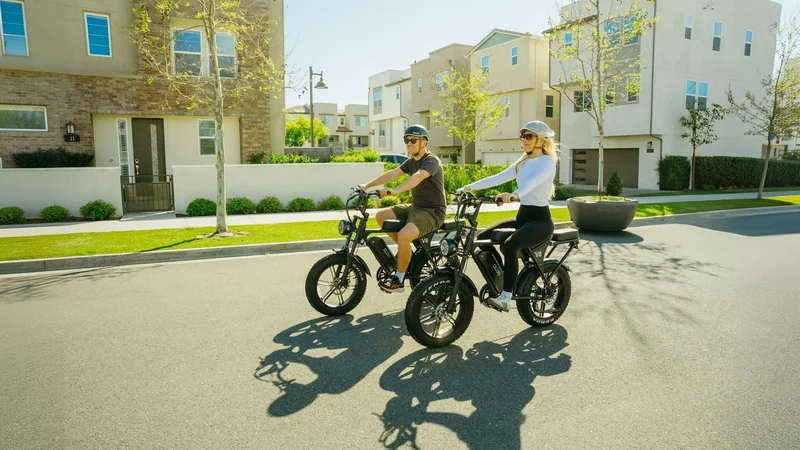
An electric bike can make everyday journeys more convenient, whether the goal is getting to work, running errands, or enjoying a weekend ride. Yet choosing a model for public-road use involves more than comparing battery sizes, motor ratings, and advertised speeds. The bike must fit the rider’s needs, handle predictably in traffic, and meet the rules that apply where it will be used.
Anyone searching for a street legal ebike should begin by understanding how electric bicycles are classified. This is particularly important when considering powerful models with wide tires, since their appearance alone does not determine whether they qualify for ordinary road or cycle-path use.
Legal Classification Comes Before Performance
Electric bikes are regulated differently across countries and, in some places, between states or provinces. Authorities may consider the motor’s continuous rated power, the maximum speed at which assistance operates, whether a throttle is fitted, and whether the vehicle can move under motor power without pedalling.
These details determine which category a particular model falls into and whether it qualifies as a street legal ebike under local regulations. A bicycle that meets the local definition of an e-bike may be permitted on cycling infrastructure, subject to other restrictions. A more powerful vehicle might instead be treated as a moped or another motor vehicle, potentially requiring registration, insurance, a licence, or approved safety equipment.
For that reason, a seller’s use of terms such as “road-ready” or “street legal” should not be treated as universal proof of compliance. Ask for the exact technical specifications and check them against the rules in your jurisdiction. If the classification remains unclear, contact the relevant transport authority before riding on public roads.
When a 2000W Motor Changes the Equation
A fat tire electric bike 2000w combines broad tires with a motor rating that is higher than the limits used for conventional e-bikes in many jurisdictions. This does not automatically establish its legal status everywhere, but it does make careful verification especially important. Motor power affects how much assistance a bike can provide, although wattage alone cannot predict its top speed or acceleration. The controller, battery, gearing, vehicle weight, and software settings also influence performance. It is useful to establish whether the advertised rating refers to continuous output or a temporary peak figure.
A high-powered model may appeal to riders who travel across challenging terrain or need strong assistance on steep inclines. For ordinary urban commuting, however, additional power may offer limited practical value if it makes the vehicle heavier, consumes more battery energy, or places it outside the local e-bike category. Choosing a model that fits the journey is usually more helpful than choosing one with the largest number in its product description.
Reading the Road-Use Specifications
Product listings can contain technical details that are easy to overlook. Before buying, examine the following information and confirm that it applies to the exact model being sold.
- Motor rating: Check the continuous rated output and any separately stated peak output.
- Assisted speed: Find the maximum speed at which the motor provides assistance, rather than relying only on the advertised maximum speed.
- Throttle operation: Determine whether the bike can move under motor power without pedalling and whether that configuration is permitted locally.
- Braking equipment: Check the brake type, maintenance guidance, and suitability for the bike’s weight and intended riding conditions.
- Lighting and visibility: Confirm the requirements for front and rear lights, reflectors, and other equipment in the areas where you plan to ride.
- Compliance documentation: Ask for relevant manufacturer documents, certification, or approval records where required by local law.
These checks are particularly useful when two bikes look nearly identical but have different motor configurations or legal classifications.
Do Fat Tires Make Sense for Urban Travel?
Wide tires are often associated with comfort and versatility. Their larger volume can help absorb some road vibration, while an appropriate tread pattern can provide useful grip on gravel and other loose surfaces. These characteristics may be attractive to riders who divide their time between paved streets and suitable unpaved routes.
There are trade-offs, however. Wider tires can create more rolling resistance depending on their construction and pressure. Some fat-tire bikes are also heavier and bulkier than conventional commuter models, making them less convenient to carry upstairs, store in a small apartment, or lift onto public transport.
Tire design should therefore match the actual journey. A rider who spends most of the week on smooth pavement may prefer a lighter, more efficient setup. Someone who regularly encounters rough paths may value additional cushioning and traction, provided the bike is appropriate for those surfaces. Regardless of tire width, keep the tires inflated within the manufacturer’s recommended range and inspect them regularly for cuts, wear, or embedded debris.
Consider the Cost of Everyday Ownership
The purchase price is only one part of owning an electric bike. Battery replacement, routine servicing, brake pads, tires, secure storage, and suitable charging arrangements can all affect long-term costs. Range estimates also deserve a careful reading. Manufacturers may calculate range under favourable conditions, while actual results depend on rider weight, terrain, temperature, wind, speed, tire pressure, and assistance settings. Frequent high-power riding can drain a battery more quickly than steady travel at modest speeds.
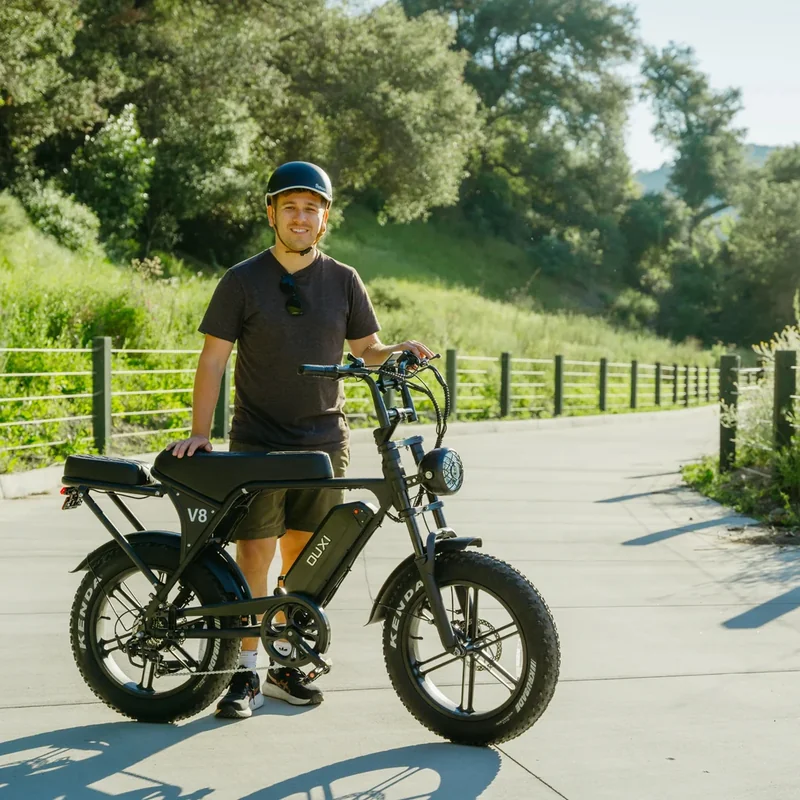
Before committing to a fat tire electric bike 2000w, consider whether replacement batteries and other essential parts are available. Review the charging instructions, warranty terms, and maintenance schedule. If possible, test the bike in a safe, permitted area to assess its weight, riding position, braking response, and ease of control. When comparing manufacturers such as OUXI, evaluate the specifications and documentation of each individual model rather than assuming all products share the same features or road-use eligibility.
Build a Safer Routine From the First Ride
Legal compliance is only one element of responsible road use. Riders should also become familiar with the bike’s acceleration and braking before entering busy traffic. Start at a manageable speed, leave adequate stopping distance, signal turns clearly, and stay alert to pedestrians, parked vehicles, and changing road conditions.
Regular inspections help catch problems before they become serious. Check the brakes, tires, lights, wheel fasteners, and battery connections according to the manufacturer’s instructions. Any unusual electrical behaviour, damaged wiring, or unreliable braking should be addressed before the next ride. A properly classified bike, sensible riding habits, and consistent maintenance work together to make everyday travel more predictable.
Conclusion
Finding a street legal ebike requires more than choosing a design that looks suitable for city streets. Motor ratings, assisted speed, throttle behaviour, safety equipment, and local regulations all influence whether a model can legally be used on public roads.
A 2000W fat-tire model may offer capabilities that suit certain riders and environments, but it should never be assumed to qualify as a conventional electric bicycle without verification. By checking the documentation, matching the design to the intended journey, and planning for ongoing maintenance, buyers can make a better-informed decision.
Frequently Asked Questions
1. Does a 2000W electric bike automatically qualify as a moped?
Not everywhere. Its classification depends on local legislation and factors such as motor output, speed, and vehicle design. Check the rules in the jurisdiction where you intend to ride.
2. Is advertised top speed the same as maximum assisted speed?
No. Maximum assisted speed refers to the point at which the motor stops providing assistance under the relevant operating mode. A bike may travel faster downhill or through rider effort without receiving additional motor assistance.
3. Are fat tires necessary for riding around a city?
No. They can be useful on rough or loose surfaces, but standard-width tires may be lighter and more efficient for many paved commutes. The best choice depends on the route and riding priorities.
4. What should I do if a seller cannot confirm road legality?
Request the exact specifications and relevant compliance documents before purchasing. If the information is still unclear, consult the appropriate transport authority rather than relying on advertising claims.
5. Can changing a bike’s controller affect its legal status?
Yes. Modifying a controller, motor, throttle, or speed settings can change the bike’s performance and may affect its legal classification or compliance. Check local requirements before making modifications.
Ti potrebbe interessare:
Segui guruhitech su:
- Google News: bit.ly/gurugooglenews
- Telegram: t.me/guruhitech
- Facebook: facebook.com/guruhitechfb
- Instagram: instagram.com/guruhitech_official/
- X (Twitter): x.com/guruhitech1
- Bluesky: bsky.app/profile/guruhitech.bsky.social
- Rumble: rumble.com/user/guruhitech
- VKontakte: vk.com/guruhitech
- MeWe: mewe.com/i/guruhitech
- Skype: live:.cid.d4cf3836b772da8a
- WhatsApp: bit.ly/whatsappguruhitech
Esprimi il tuo parere!
Ti è stato utile questo articolo? Lascia un commento nell’apposita sezione che trovi più in basso e se ti va, iscriviti alla newsletter.
Per qualsiasi domanda, informazione o assistenza nel mondo della tecnologia, puoi inviare una email all’indirizzo [email protected].
Scopri di più da GuruHiTech
Abbonati per ricevere gli ultimi articoli inviati alla tua e-mail.