
The Day I Stopped Throwing Away Soft Footage
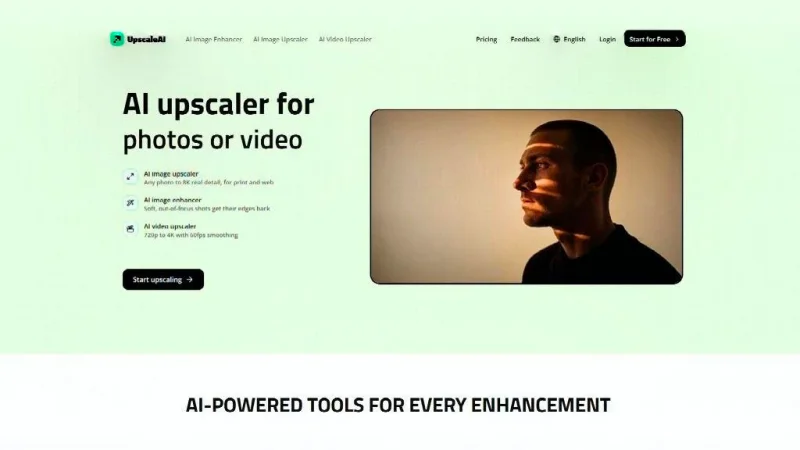
I used to delete a lot of almost-good clips. A product shot that looked fine on my phone turned soft the moment I dropped it into a 4K timeline. An old interview recorded in 720p looked muddy next to newer material. Even some AI-generated stills fell apart when I needed print-ready versions. For a long time the solution was simple: shoot again or find a different asset.
That habit started to cost real time. Reshoots are expensive when you work alone. Stock replacements rarely match the exact moment you need. So I began testing tools that claim to recover detail instead of just stretching pixels. One of them was UpscaleAI. This is the practical story of how it changed the way I handle imperfect source material.
Living with Low-Resolution Reality
Independent creators collect a strange mix of files. Phone footage. Compressed social downloads. Scanned old photos. AI art that looks sharp at thumbnail size and collapses at larger scales. Clients still expect clean, modern delivery.
I used to fight this with basic sharpening and noise reduction. The results often looked processed. Edges turned harsh. Texture disappeared. Faces sometimes gained that plastic quality that screams “edited.” The more I pushed, the worse the files felt.
First Real Test with an AI Image Upscaler
I started with a set of product photos shot on an older camera. They were usable at web size but fell apart when a client asked for larger banners. I ran them through an AI image upscaler that promised real detail recovery up to higher resolutions.
The difference was immediate on some frames. Fine fabric texture that had been lost came back without the usual over-sharpened halo. On others the improvement was modest. The tool could not invent information that was never there. That distinction mattered. It recovered what the original capture still held rather than inventing a new look.
I also tested soft portraits and slightly motion-blurred frames. The enhancer mode cleaned edges while trying to keep facial features honest. It did not replace faces, which was a relief. Group shots still needed a careful eye. When multiple faces sat at different distances, some improved more than others.
Working with Video and Mixed Sources
Later I tried the video side on a 720p interview. The goal was a cleaner 4K version with smoother motion. The upscaled file looked more stable in pans. Noise dropped without completely flattening the grain I wanted to keep. Fast hand gestures still showed occasional soft edges, so I masked those sections and left them closer to the original.
Old family footage and compressed social clips followed a similar pattern. The tool helped most when the source already had reasonable information. Heavily compressed or extremely dark files improved less and sometimes introduced new artifacts. I learned to preview carefully before committing a whole sequence.
What Actually Changed in the Workflow
The biggest shift was psychological. I stopped deleting soft clips on sight. Instead I asked a different question: does this frame still contain recoverable detail? If the answer looked promising, I ran a quick upscale test. Many assets that once felt unusable became good enough for secondary shots, B-roll, or supporting graphics.
That change reduced reshoot pressure. It also changed how I briefed clients. I could now say, “I can improve this existing file” instead of always requesting new photography. The conversation became more flexible.
I still keep original files. Upscaling is a recovery step, not a replacement for good capture. Lighting, focus, and resolution at the moment of shooting remain the foundation. The AI step simply expands what is possible afterward.
A Note on Quality Expectations
Consumer tolerance for soft or noisy video keeps dropping. Recent surveys show that a large majority of people say video quality directly affects how much they trust the brand or creator behind it. That pressure reaches independent makers as much as large teams. Clean delivery is no longer optional for many audiences.
At the same time, the tools remain imperfect. Extreme enlargement can still look synthetic if the source is too weak. Anime-style or highly stylized images sometimes need different handling than photographic ones. Text and fine lettering improve in some cases and stay soft in others. The operator still decides what is acceptable.
Practical Limits I Hit
Batch processing helped when I had many similar product shots. It saved time. On mixed sets with different lighting and focus problems, individual attention worked better. Face enhancement was useful on portraits but required checking that identity stayed consistent. Background removal and colorization existed as extra options, yet I used them less often than pure upscaling and sharpening.
Commercial use of the results felt straightforward for my own projects. I still review every important frame before client delivery. Automation does not remove responsibility for the final look.
Where This Fits Now
I no longer treat every soft file as a dead end. An AI Image Upscaler or video enhancer has become a regular checkpoint in the pipeline, especially when the alternative is a costly reshoot or a weaker stock replacement. The tool earns its place when it recovers usable detail without forcing an artificial look.
The real skill is knowing when to stop. Some files improve enough to stay in the project. Others still need to be replaced. That judgment remains human. The technology simply gives me more options before I make the call.
Ti potrebbe interessare:
Segui guruhitech su:
- Google News: bit.ly/gurugooglenews
- Telegram: t.me/guruhitech
- Facebook: facebook.com/guruhitechfb
- Instagram: instagram.com/guruhitech_official/
- X (Twitter): x.com/guruhitech1
- Bluesky: bsky.app/profile/guruhitech.bsky.social
- Rumble: rumble.com/user/guruhitech
- VKontakte: vk.com/guruhitech
- MeWe: mewe.com/i/guruhitech
- Skype: live:.cid.d4cf3836b772da8a
- WhatsApp: bit.ly/whatsappguruhitech
Esprimi il tuo parere!
Ti è stato utile questo articolo? Lascia un commento nell’apposita sezione che trovi più in basso e se ti va, iscriviti alla newsletter.
Per qualsiasi domanda, informazione o assistenza nel mondo della tecnologia, puoi inviare una email all’indirizzo [email protected].
Scopri di più da GuruHiTech
Abbonati per ricevere gli ultimi articoli inviati alla tua e-mail.