
Unveiling the World of Key Cards
Key cards, also known as access cards, have become an integral part of our daily lives. They are used in various settings, from hotels and office buildings to gyms and apartment complexes. These small, plastic cards offer a convenient and secure way to gain entry to restricted areas. In this article, we will explore the different types of key cards, how they work, their advantages, and their future trends.
Types of Key Cards
There are several types of key cards available in the market, each with its own unique features and applications. One of the most common types is the magnetic stripe card. These cards have a magnetic stripe on the back, nfc stand which stores information such as the cardholder’s identity and access privileges. When the card is swiped through a card reader, the magnetic stripe is read, and the system checks if the cardholder has the necessary access rights.
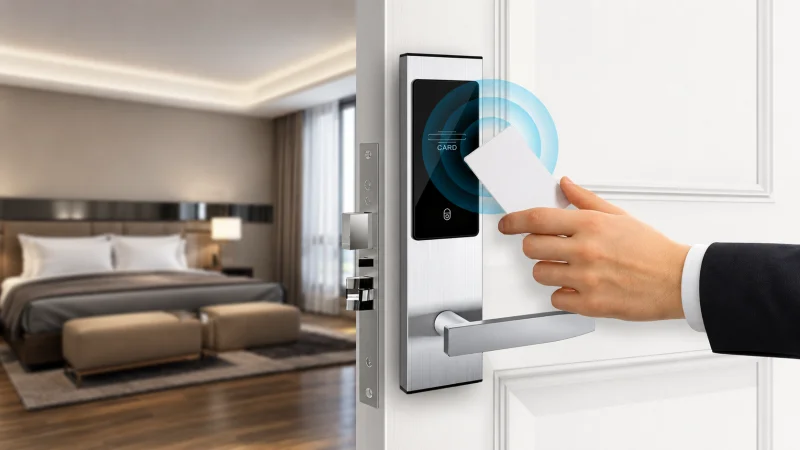
Another type of key card is the proximity card, also known as a contactless card. These cards use radio frequency identification (RFID) technology to communicate with the card reader. Instead of swiping the card, the user simply holds it near the reader, and the system automatically reads the card’s information. Proximity cards are more convenient and faster to use than magnetic stripe cards, as they do not require physical contact with the reader.
Smart cards are another popular type of key card. These cards contain a microprocessor chip that stores and processes information. Smart cards can be used for a variety of purposes, such as access control, payment, and identification. They offer a higher level of security than magnetic stripe and proximity cards, as the information stored on the chip is encrypted and cannot be easily duplicated.
Biometric key cards are a relatively new type of key card that uses biometric technology, such as fingerprint or facial recognition, to identify the cardholder. These cards offer a high level of security, as they are difficult to forge or duplicate. Biometric key cards are commonly used in high-security environments, such as government buildings and financial institutions.
How Key Cards Work
The operation of key cards is based on a combination of hardware and software. The key card itself contains a unique identifier, which is stored on the magnetic stripe, RFID chip, or microprocessor chip. When the card is presented to the card reader, the reader sends a signal to the access control system, which checks the card’s identifier against a database of authorized users.
If the card is authorized, the access control system sends a signal to the door lock, which unlocks the door. If the card is not authorized, the system may trigger an alarm or deny access. The access control system can also be programmed to restrict access to certain areas or at certain times of the day.
In addition to the card reader and access control system, key cards may also be used in conjunction with other security devices, such as cameras, motion sensors, and alarm systems. These devices can provide additional security and monitoring capabilities, helping to prevent unauthorized access and protect against theft and vandalism.
Advantages of Key Cards
Key cards offer several advantages over traditional keys. One of the main advantages is convenience. With a key card, there is no need to carry around a bunch of keys, which can be lost or stolen. Key cards are also easier to use, as they can be swiped or held near the card reader with a simple motion.
Another advantage of key cards is security. Key cards are more difficult to duplicate than traditional keys, as they use advanced encryption technology to protect the cardholder’s information. In addition, key cards can be easily deactivated if they are lost or stolen, preventing unauthorized access to the premises.
Key cards also offer greater flexibility and control. Access control systems can be programmed to grant different levels of access to different users, depending on their job responsibilities or security clearance. This allows organizations to manage access to their facilities more effectively and ensure that only authorized personnel have access to sensitive areas.
Finally, key cards can help to improve efficiency and productivity. With a key card, employees can quickly and easily access the areas they need to work in, without having to wait for someone to unlock the door. This can save time and reduce disruptions, allowing employees to focus on their work.
Future Trends in Key Cards
The future of key cards is likely to be shaped by advances in technology. One of the trends that is expected to gain popularity in the coming years is the use of mobile key cards. Mobile key cards allow users to use their smartphones as a key card, eliminating the need to carry a physical card. This technology is already being used in some hotels and office buildings, and it is expected to become more widespread in the future.
Another trend is the integration of key cards with other technologies, such as biometric authentication and artificial intelligence. Biometric authentication can provide an additional layer of security, as it uses the unique physical characteristics of the user, such as fingerprints or facial features, to verify their identity. Artificial intelligence can be used to analyze access patterns and detect potential security threats, allowing organizations to take proactive measures to prevent unauthorized access.
Finally, the use of key cards is likely to expand beyond traditional access control applications. Key cards can be used for a variety of purposes, such as payment, identification, and loyalty programs. This will make key cards even more versatile and useful, and it will help to drive the adoption of this technology in a wider range of industries.
In conclusion, key cards have revolutionized the way we access and secure our buildings. They offer a convenient, secure, and flexible way to manage access to restricted areas, and they are likely to become even more important in the future. As technology continues to evolve, we can expect to see new and innovative uses for key cards, as well as improvements in their security and functionality.
Scopri di più da GuruHiTech
Abbonati per ricevere gli ultimi articoli inviati alla tua e-mail.