

YPMFG CNC Turning Service: Shafts, Sleeves, Threads and Eccentric Parts — Why One Setup Wins
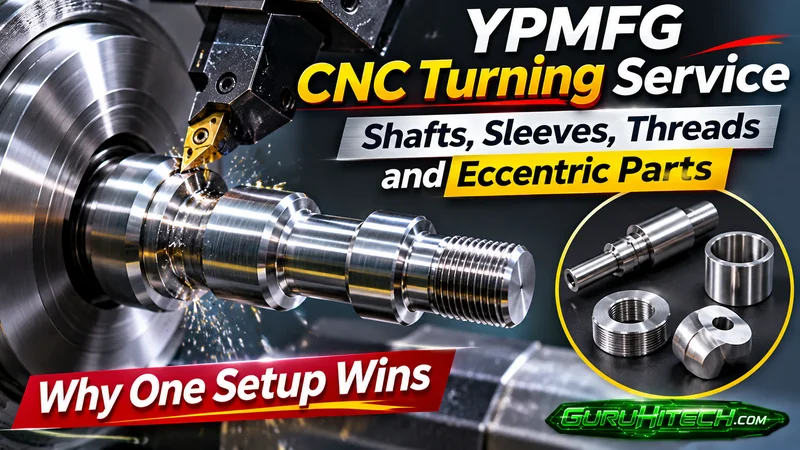
The failure mode on rotational parts is rarely a size out of tolerance. It is concentricity. Take a shaft turned on a lathe, then unclamped, moved to a mill for radial holes, then moved again to tap threads: three setups mean three re-establishments of datum, and the accumulated error shows up as runout. CNC turning— workpiece rotating while a tool feeds along a profile to generate surfaces of revolution — is what YPMFG performs on turn-mill equipment that folds turning, milling, drilling and tapping into a single setup, removing that error at the process level.
What turning produces
Outer diameters, bores, faces, tapers, spheres, threads, relief grooves and chamfers are the baseline output. With a driven tool turret and a sub-spindle, the same machine also drills radially, mills eccentrically, cuts face grooves and machines the back side. For transmission shafts, sensor probes, cylinder piston rods and coupling sleeves, the payoff of one-setup work is concrete: runout is easier to hold, tool marks are fewer, and downstream operations shrink.
Three practical gains from a single setup
First, accuracy. The datum never changes, so concentricity and face squareness follow machine geometry rather than an operator’s skill at indicating a part in. Second, lead time. Fewer setups mean less non-cutting time, and small batches that took two weeks can finish in days. Third, accountability. All critical features run inside one program, so a deviation has a short diagnostic path instead of being passed between machines.

Two hard cases: slender shafts and thin-wall sleeves
A slender shaft deflects under radial cutting force, so the middle section cuts oversize while the ends stay in tolerance. The fix is lighter depths of cut, higher spindle speed, a steady or follow rest, and multi-pass cutting with measurement in between. A thin-wall sleeve is squeezed round by the chuck and springs back oval after release — which calls for expanding mandrels, bore support or collet clamping that distributes force, plus rough and finish turning split apart so stress releases between them.
Material and thread notes
Aluminum turning welds to a dull edge and needs sharp geometry with generous coolant. Stainless work-hardens, so feed must stay continuous rather than rubbing the surface. Brass breaks chips easily but tool clearance must be sufficient or the finished surface gets scored. Titanium concentrates heat at the edge and needs high-pressure coolant at low speed. On threads, metric, imperial and pipe forms are all programmable, but runout and relief grooves must be explicit on the drawing — otherwise the assembly stage is where an incomplete thread is discovered.
From RFQ to delivery
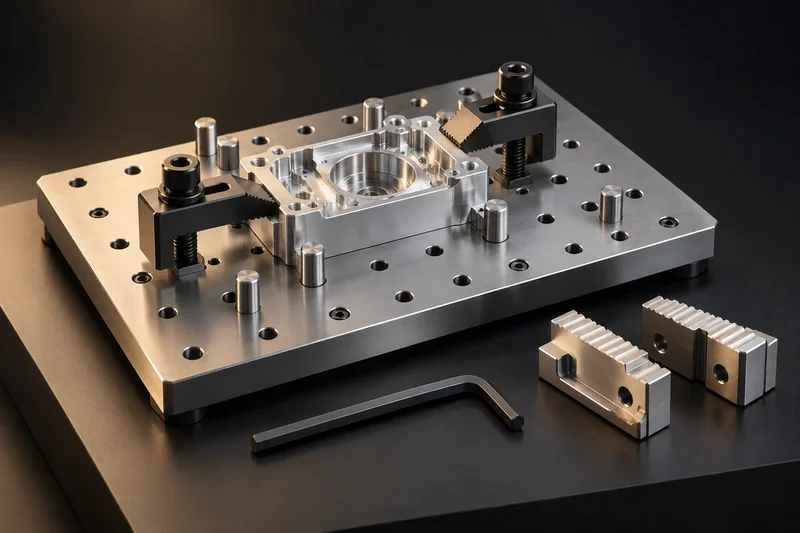
Customers supply a 2D drawing or 3D model stating material, tolerance, thread specification, heat treatment and finish. Engineers run a free DFM review checking whether the relief groove is wide enough, whether the wall can be gripped, and whether the tolerance suits the process. A quotation follows within 24 hours. Programming, material prep and first-article approval precede any batch run. Critical dimensions are fully inspected with reports issued. Finishing and packing happen in-house, ready for dispatch.
Typical parts and what gets inspected
Automotive sensor probes, motor shafts, hydraulic fittings, robot reducer input shafts, UAV propeller shafts and medical connectors are the backbone of turning work. Acceptance usually focuses on runout, fit tolerance, thread go/no-go gauges and surface roughness. YPMFG sets inspection items per part rather than applying one template, and inspection records ship with the goods.
FAQ
Can radial holes be done in the same operation? Yes — a driven turret drills radially and mills eccentrically inside the same program, with no second setup. Do you handle heat treatment? Treatment is normally subcontracted, but YPMFG owns the process hand-off and dimensional compensation, and reserves stock allowance for post-hardening finishing. Is small-batch turning expensive? Price follows machining hours; fewer setups mean setup time is not spread across a small quantity.
What a turning drawing must specify
Turning drawings fail at assembly for predictable reasons, and most of them are omissions rather than errors. A usable turning drawing states the datum for concentricity — usually the finished outer diameter or a centre, and if it is ambiguous the shop picks one and the inspector picks another. It states thread form, class and depth, plus the relief groove width and position, because a thread that runs to a shoulder without relief cannot be cut to full depth.
It states whether the part is through-bored or blind, and the corner radius at the bore bottom, since a square bottom is not producible with a standard drill. So it states surface finish per surface rather than globally, because a sealing face and a clearance diameter do not need the same roughness, and paying for both at the tighter value is pure waste.
- Mark runout callouts on diameters that mate with bearings or seals.
- Note any keyway, flat or hex that must be milled after turning, and whether it is concentric to the bore.
- Give the heat treatment and the finishing allowance if hardening follows machining.
How order size changes the economics
Turning has a distinctive cost curve. Setup, programming and first-article approval are fixed; cutting time is variable. At ten pieces the fixed portion dominates and unit price looks alarming to buyers accustomed to milling quotes. At five hundred pieces it nearly disappears.
The practical consequence is that a buyer should not compare turning quotes across suppliers on unit price alone at low volume — a shop with a fast first-article process and low setup hours will beat a cheaper hourly rate, and that difference only shows up when the fixed cost is broken out. YPMFG quotes fixed and variable elements separately on request, which lets a program manager see exactly where the breakeven sits before committing to a batch size.
Where turned parts pass and where they fail
A turned part that passes inspection can still fail the assembly. The reason is usually that the drawing controlled size but not relationship. A shaft in tolerance on every diameter can still run out of tolerance at the bearing journal if the concentricity callout was omitted, and the assembly notices before the inspection report does.
A sleeve with a correct bore diameter can still bind if the bore axis is not square to the mounting face, a threaded stud can pass a go gauge and bottom out early if the useful thread length was never specified. These are not machining defects; they are specification gaps that a shop can only resolve by asking, and a shop that does not ask will ship what the drawing literally says.
The practical fix is to review the drawing against the assembly once, before the order. Mark the features that locate the part in its final position, and put a geometric tolerance on each of those. Everything else can stay at general tolerance, and the price stays reasonable. Buyers who do this once per part family stop paying for rework on every subsequent order, which is the cheapest precision improvement available.
What turning produces
Outer diameters, bores, faces, tapers, spheres, threads, relief grooves and chamfers are the baseline output. With a driven tool turret and a sub-spindle, the same machine also drills radially, mills eccentrically, cuts face grooves and machines the back side. For transmission shafts, sensor probes, cylinder piston rods and coupling sleeves, the payoff of one-setup work is concrete: runout is easier to hold, tool marks are fewer, and downstream operations shrink.
Three practical gains from a single setup
First, accuracy. The datum never changes, so concentricity and face squareness follow machine geometry rather than an operator’s skill at indicating a part in. Second, lead time. Fewer setups mean less non-cutting time, and small batches that took two weeks can finish in days. Third, accountability. All critical features run inside one program, so a deviation has a short diagnostic path instead of being passed between machines.
Two hard cases: slender shafts and thin-wall sleeves
A slender shaft deflects under radial cutting force, so the middle section cuts oversize while the ends stay in tolerance. The fix is lighter depths of cut, higher spindle speed, a steady or follow rest, and multi-pass cutting with measurement in between. A thin-wall sleeve is squeezed round by the chuck and springs back oval after release — which calls for expanding mandrels, bore support or collet clamping that distributes force, plus rough and finish turning split apart so stress releases between them.
Material and thread notes
Aluminum turning welds to a dull edge and needs sharp geometry with generous coolant. Stainless work-hardens, so feed must stay continuous rather than rubbing the surface. Brass breaks chips easily but tool clearance must be sufficient or the finished surface gets scored. Titanium concentrates heat at the edge and needs high-pressure coolant at low speed. On threads, metric, imperial and pipe forms are all programmable, but runout and relief grooves must be explicit on the drawing — otherwise the assembly stage is where an incomplete thread is discovered.
From RFQ to delivery
Customers supply a 2D drawing or 3D model stating material, tolerance, thread specification, heat treatment and finish. Engineers run a free DFM review checking whether the relief groove is wide enough, whether the wall can be gripped, and whether the tolerance suits the process. A quotation follows within 24 hours. Programming, material prep and first-article approval precede any batch run. Critical dimensions are fully inspected with reports issued. Finishing and packing happen in-house, ready for dispatch.
Typical parts and what gets inspected
Automotive sensor probes, motor shafts, hydraulic fittings, robot reducer input shafts, UAV propeller shafts and medical connectors are the backbone of turning work. Acceptance usually focuses on runout, fit tolerance, thread go/no-go gauges and surface roughness. YPMFG sets inspection items per part rather than applying one template, and inspection records ship with the goods.
FAQ
Can radial holes be done in the same operation? Yes — a driven turret drills radially and mills eccentrically inside the same program, with no second setup. Do you handle heat treatment? Treatment is normally subcontracted, but YPMFG owns the process hand-off and dimensional compensation, and reserves stock allowance for post-hardening finishing. Is small-batch turning expensive? Price follows machining hours; fewer setups mean setup time is not spread across a small quantity.
What a turning drawing must specify
Turning drawings fail at assembly for predictable reasons, and most of them are omissions rather than errors. A usable turning drawing states the datum for concentricity — usually the finished outer diameter or a centre, and if it is ambiguous the shop picks one and the inspector picks another. It states thread form, class and depth, plus the relief groove width and position, because a thread that runs to a shoulder without relief cannot be cut to full depth.
It states whether the part is through-bored or blind, and the corner radius at the bore bottom, since a square bottom is not producible with a standard drill. Also it states surface finish per surface rather than globally, because a sealing face and a clearance diameter do not need the same roughness, and paying for both at the tighter value is pure waste.
- Mark runout callouts on diameters that mate with bearings or seals.
- Note any keyway, flat or hex that must be milled after turning, and whether it is concentric to the bore.
- Give the heat treatment and the finishing allowance if hardening follows machining.
How order size changes the economics
Turning has a distinctive cost curve. Setup, programming and first-article approval are fixed; cutting time is variable. At ten pieces the fixed portion dominates and unit price looks alarming to buyers accustomed to milling quotes. At five hundred pieces it nearly disappears. The practical consequence is that a buyer should not compare turning quotes across suppliers on unit price alone at low volume — a shop with a fast first-article process and low setup hours will beat a cheaper hourly rate, and that difference only shows up when the fixed cost is broken out. YPMFG quotes fixed and variable elements separately on request, which lets a program manager see exactly where the breakeven sits before committing to a batch size.
Where turned parts pass and where they fail
A turned part that passes inspection can still fail the assembly. The reason is usually that the drawing controlled size but not relationship. A shaft in tolerance on every diameter can still run out of tolerance at the bearing journal if the concentricity callout was omitted, and the assembly notices before the inspection report does.
A sleeve with a correct bore diameter can still bind if the bore axis is not square to the mounting face, a threaded stud can pass a go gauge and bottom out early if the useful thread length was never specified. These are not machining defects; they are specification gaps that a shop can only resolve by asking, and a shop that does not ask will ship what the drawing literally says.
The practical fix is to review the drawing against the assembly once, before the order. Mark the features that locate the part in its final position, and put a geometric tolerance on each of those. Everything else can stay at general tolerance, and the price stays reasonable. Buyers who do this once per part family stop paying for rework on every subsequent order, which is the cheapest precision improvement available.
Ti potrebbe interessare:
Segui guruhitech su:
- Google News: bit.ly/gurugooglenews
- Telegram: t.me/guruhitech
- Facebook: facebook.com/guruhitechfb
- X (Twitter): x.com/guruhitech1
- Bluesky: bsky.app/profile/guruhitech.bsky.social
- Rumble: rumble.com/user/guruhitech
- VKontakte: vk.com/guruhitech
- MeWe: mewe.com/i/guruhitech
- Skype: live:.cid.d4cf3836b772da8a
- WhatsApp: bit.ly/whatsappguruhitech
Esprimi il tuo parere!
Ti è stato utile questo articolo? Lascia un commento nell’apposita sezione che trovi più in basso e se ti va, iscriviti alla newsletter.
Per qualsiasi domanda, informazione o assistenza nel mondo della tecnologia, puoi inviare una email all’indirizzo [email protected].
Che ne pensi?
Scopri di più da GuruHiTech
Abbonati per ricevere gli ultimi articoli inviati alla tua e-mail.