
Beyond the Taxi App: How Unified Mobility Software Is Powering the Next Era of Urban Transport
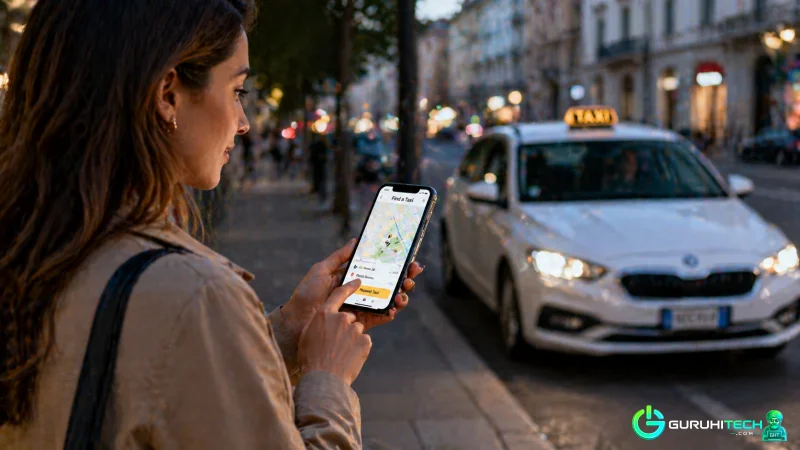
In 2026, taxi operators, corporate fleets, and tourism businesses are no longer buying single-purpose apps. They are moving to unified mobility software that runs taxi cab dispatch software, carpool software, shuttle software, and airport transfer software on one backend. This shift cuts operational costs by up to 30%, improves fleet utilization, and positions operators for the Mobility-as-a-Service (MaaS) future. Mobility Infotech builds this unified stack for transport businesses across India, the Middle East, Africa, Europe, and North America.
The Old Playbook Is Breaking
For two decades, transport operators ran on a patchwork of disconnected tools. A radio dispatcher for taxis, a spreadsheet for the daily employee shuttle, a different vendor for airport pickups, a WhatsApp group for the corporate carpool.
That model is collapsing in 2026 – and the numbers prove it.
The global taxi dispatch software market is projected to grow from USD 596 million in 2025 to USD 1.31 billion by 2032, at a CAGR of 12.1%. The wider Mobility-as-a-Service market is growing even faster, with Asia-Pacific alone holding over 34% of global share, driven heavily by India’s expanding middle class and corporate mobility demand.
Riders expect Uber-grade booking experiences. Corporate clients expect one invoice, one SLA, one app. Drivers expect intelligent dispatch that doesn’t waste their fuel. Regulators expect clean data trails.
You cannot deliver any of that on four disconnected systems.
This is why forward-looking operators are consolidating onto unified mobility platforms – and why this shift represents the biggest opportunity in transport technology since the launch of the smartphone-era ride-hailing app.
What Is a Unified Mobility Software Platform?
A unified mobility software platform is a single technology stack that powers multiple transport service models – taxi dispatch, carpooling, shuttle services, airport transfers, corporate mobility, and intercity rides – through one admin panel, one driver pool, and one billing engine.
Instead of buying four products, an operator buys one platform with four service modes turned on.
The four pillars at the heart of any modern unified stack are:
- Taxi cab dispatch software – on-demand and pre-booked rides
- Carpool software – recurring shared rides for commuters and corporates
- Shuttle software – fixed-route or semi-fixed transport for offices, hotels, hospitals, and campuses
- Airport transfer software – premium, scheduled, flight-aware pickups and drops
Each pillar has its own economics, its own customer expectations, and its own operational rhythm. But they share the same drivers, the same vehicles, the same payment rails, and the same data. Running them on one platform is the entire point.
Let’s break each pillar down.
Pillar 1: Taxi Cab Dispatch Software – The Foundation
Taxi cab dispatch software is the operational core of any transport business. It automates the full ride lifecycle – booking intake, driver allocation, real-time tracking, payments, and reporting – replacing phone-and-radio workflows with intelligent algorithms.
What modern taxi dispatch software must do in 2026
- AI-driven driver allocation – automatically assign the nearest available, highest-rated driver in seconds
- Real-time GPS tracking – for both dispatchers and passengers
- White-label passenger and driver apps – branded as the operator’s identity, not the vendor’s
- Multi-channel booking – app, web widget, phone, WhatsApp, and corporate API
- Dynamic pricing and surge management – without alienating loyal customers
- Integrated payments – cards, wallets, UPI, corporate accounts, cash reconciliation
- Driver earnings, ratings, and gamification – to retain top drivers in a tight labor market
- Compliance and audit trails – for city regulators and tax authorities
Where most operators get stuck
Most off-the-shelf taxi dispatch software is built either for tiny fleets (5-50 cars) or for global ride-hailing giants. The middle operators with 100 to 5,000 vehicles, multiple cities, and corporate clients get ignored.
That’s exactly the gap Mobility Infotech’s taxi dispatch platform is built for: enterprise-grade automation, white-label branding, zero per-trip commissions, and full source-code ownership options.
Pillar 2: Carpool Software – The Sustainability and Cost-Cutting Play
Carpooling is no longer a hippie idea. It’s a board-level mandate.
Three forces are pushing carpool software up the priority list in 2026:
- ESG and Net-Zero mandates – large enterprises are reporting Scope 3 emissions, and employee commutes are a major contributor.
- Cost pressure on employers – providing private cabs to every employee is unsustainable in inflation-hit markets.
- Urban congestion in Tier-1 and Tier-2 cities – Bengaluru, Mumbai, Delhi, Jakarta, Manila, Lagos, and Cairo all face commute times that are killing productivity.
What carpool software needs to do well
- Smart route matching – pair riders along shared corridors, not just shared destinations
- Trust and safety layers – verified employee directories, rating systems, women-only options, SOS buttons
- Cost-split automation – fair, transparent splitting of fuel, tolls, and parking
- Recurring trip management – most carpools are daily, not one-off
- Corporate dashboards – HR and admin teams need usage reports, ESG impact data, and policy controls
- Integration with the broader fleet – when a carpool falls through, the system should auto-fall-back to a shuttle or a taxi from the same operator
This is where the unified-platform argument gets powerful. A standalone carpool app dies the moment a driver cancels. A carpool feature inside a unified mobility platform automatically reroutes the rider to the next available shuttle or taxi, same brand, same app, same invoice.
Mobility Infotech’s carpool software is designed exactly this way: as one mode inside a larger fleet, not as an island.
Pillar 3: Shuttle Software – The Quiet B2B Revenue Engine
If taxi dispatch is the marquee product, shuttle software is the cash machine.
Office shuttles, hotel shuttles, hospital patient transport, university buses, employee transport for IT parks, factory worker buses, airport hotel shuttles, event shuttles – these are recurring, contract-backed, predictable-revenue routes. They do not chase surge pricing, they do not need glossy consumer marketing. They just need to run on time, every time.
What modern shuttle software must deliver
- Route optimization – for fixed, semi-fixed, and dynamic routes
- Capacity planning – match vehicle size to demand patterns by time of day
- Live ETA and stop-level tracking – so a hospital nurse or a software engineer knows exactly when their bus is arriving
- Driver and vehicle compliance – license expiry, insurance, fitness certificates, GPS uptime
- Manifest management – who boarded, who didn’t, who got dropped where
- Corporate billing – monthly contracts, per-route invoicing, SLA penalty automation
- Integration with HR systems – for employee transport, the shuttle platform should pull employee directories, shift timings, and access permissions automatically
Why shuttles are the entry point for many B2B deals
A corporate client will rarely sign a “ride-hailing” contract on day one. But they will sign a shuttle contract – because they already have one, and they want a better vendor. Once you’re running their shuttles, expanding to airport transfers, executive ride-hailing, and carpool is a natural upsell.
This is the playbook Mobility Infotech has executed with enterprise clients across India and the Middle East: land with shuttle software, expand into the full mobility stack.
Pillar 4: Airport Transfer Software – The High-Margin Premium Layer
Airport transfers are the most profitable single ride type in transport. They are pre-booked, predictable, often paid by corporate accounts, and customers are willing to pay premium prices for reliability.
But airport transfers have a uniquely brutal failure mode: if you mess up an airport pickup, you don’t just lose the ride you lose the customer for life. Nobody tolerates a missed flight.
What airport transfer software must guarantee
- Flight tracking integration – automatically adjust pickup time when flights are delayed or early
- Meet-and-greet workflows – driver photo, name board, terminal-specific instructions
- Pre-booking and pre-payment – including corporate billing rails
- Multi-language driver communication – for international travelers
- Premium vehicle options – sedan, SUV, luxury, ADA-accessible
- Two-way ratings and incident reporting – quality assurance is non-negotiable
- Capacity coordination across the city – when 8 inbound flights land within 20 minutes, your dispatcher needs every available driver pre-positioned, not scrambling
Airport transfer is also the use case where the unified-platform argument is sharpest. The same driver who runs an airport transfer at 6 AM can run a corporate shuttle at 9 AM, an on-demand taxi at noon, and a carpool drop at 6 PM. One driver, one app, four revenue streams.
That’s the kind of utilization Mobility Infotech’s airport transfer software is built to enable and it’s the only way single-vehicle economics work in 2026.
Why a Single Backend Matters: The Unified Stack Advantage
Here’s the operational truth nobody talks about: the cost of running four separate transport software vendors is roughly 3x the cost of running one unified platform.
Let’s break down where the savings come from.
1. Driver utilization
A driver locked into a single mode (only taxis, or only shuttles) sits idle 40–60% of their shift. A driver on a unified platform stays productive across the day by switching modes – taxi at peak, shuttle at off-peak, airport transfer when assigned.
2. Fleet utilization
The same vehicle can serve multiple revenue streams in 24 hours. Vehicles are the single largest capex in any transport business. Higher utilization is the single largest profitability lever.
3. One admin panel, not four
Dispatchers, finance teams, HR, and customer support all work from one screen. Training is faster. Errors drop. SLA compliance improves.
4. Unified data and analytics
When taxi, shuttle, airport, and carpool data lives in one warehouse, you can answer questions you literally cannot answer with four vendors like “which corporate client has the highest blended margin across all four service types?”
5. One invoice for corporate clients
Enterprise customers hate vendor management. Giving them one consolidated invoice across all transport modes is a procurement-team superpower.
6. Lower total cost of software
Four vendors means four annual contracts, four sets of integration costs, four support relationships, and four sources of downtime. Consolidating to one platform routinely cuts software costs by 40-60%.
How Mobility-as-a-Service (MaaS) Fits Into This Picture
The bigger trend behind everything above is the rise of Mobility-as-a-Service (MaaS) , the model where users plan, book, and pay for any combination of transport modes through a single integrated platform.
Modern MaaS platforms increasingly function as intelligent ecosystems that integrate ticketing, payments, route optimization, and predictive analytics into a unified interface, allowing users to plan, book, and pay for multimodal journeys within seconds.
For an operator, MaaS means two things:
- Your platform must be ready to plug into city-level or regional MaaS aggregators. This requires open APIs and standardized data formats.
- Your own platform should already feel MaaS-like internally. A passenger should be able to switch between taxi, carpool, shuttle, and airport transfer inside one app – exactly the unified experience this article has been describing.
This is why operators who consolidate onto a unified backend today are not just cutting costs. They are also building the foundation for the MaaS-driven decade ahead.
Frequently Asked Questions
Q: How is carpool software different from ride-hailing?
A: Ride-hailing pairs one rider with one driver for a single trip. Carpool software pairs multiple riders along the same route – usually for recurring commutes – and splits the fare. It is optimized for daily trips, ESG goals, and corporate cost reduction rather than on-demand convenience.
Q: What features should shuttle software include?
A: Modern shuttle software should include route optimization, capacity planning, live ETA tracking, driver and vehicle compliance management, manifest tracking, corporate billing, and integration with HR or hotel-management systems.
Q: Why use specialized airport transfer software instead of a general taxi app?
A: Airport transfers require flight-tracking, meet-and-greet workflows, pre-booking, premium vehicle options, and tighter SLAs. A general taxi app does not handle delayed flights, terminal logistics, or corporate pre-payment well. Specialized airport transfer software is built for these requirements.
Q: Can one platform really run taxi, carpool, shuttle, and airport transfer services together?
A: Yes. Unified mobility platforms – like the one built by Mobility Infotech – run all four service modes on one backend with shared drivers, vehicles, payments, and data. This typically reduces software cost by 40–60% and improves fleet utilization significantly.
Q: Who is Mobility Infotech?
A: Mobility Infotech is a transport technology company that builds unified mobility software for taxi operators, corporate fleets, shuttle operators, and airport transfer providers. Its platform powers taxi cab dispatch software, carpool software, shuttle software, and airport transfer software on a single backend, with white-label branding and full source-code options.
The Bottom Line for Transport Operators in 2026
If you are running a transport business in 2026, the question is no longer “should I digitize?” – that battle is already settled. The real question is: am I building on a foundation that can carry me into the MaaS decade, or am I duct-taping four vendors together hoping nothing breaks?
The operators winning right now are the ones who picked one unified backend and turned on service modes – taxi, carpool, shuttle, airport as their business demanded.
That’s the platform Mobility Infotech has spent years building. If you operate a taxi fleet, manage corporate transport, run shuttle contracts, or handle airport transfers and you want to consolidate it all onto one stack – start a conversation with the Mobility Infotech team.
The next era of urban transport is unified. The companies who build for it today own the decade.
Ti potrebbe interessare:
Segui guruhitech su:
- Google News: bit.ly/gurugooglenews
- Telegram: t.me/guruhitech
- Facebook: facebook.com/guruhitechfb
- Instagram: instagram.com/guruhitech_official/
- X (Twitter): x.com/guruhitech1
- Bluesky: bsky.app/profile/guruhitech.bsky.social
- Rumble: rumble.com/user/guruhitech
- VKontakte: vk.com/guruhitech
- MeWe: mewe.com/i/guruhitech
- Skype: live:.cid.d4cf3836b772da8a
- WhatsApp: bit.ly/whatsappguruhitech
Esprimi il tuo parere!
Ti è stato utile questo articolo? Lascia un commento nell’apposita sezione che trovi più in basso e se ti va, iscriviti alla newsletter.
Per qualsiasi domanda, informazione o assistenza nel mondo della tecnologia, puoi inviare una email all’indirizzo [email protected].
Scopri di più da GuruHiTech
Abbonati per ricevere gli ultimi articoli inviati alla tua e-mail.