
Beyond the TV: Understanding the Color Science Behind RGB Triple Laser Technology
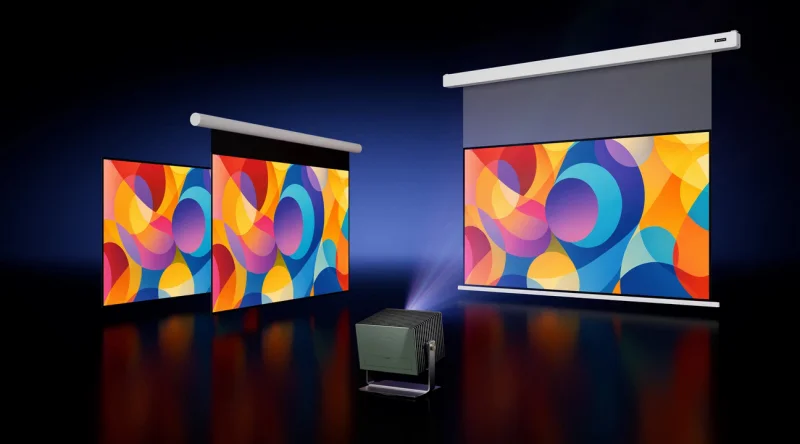
In the world of consumer electronics, marketing departments love big numbers. We went from 1080p to 4K, and now 8K is looming on the horizon. We chase higher nits of brightness and refresh rates that our eyes can barely track. But there is one critical pillar of image quality that often gets buried in the spec sheet, yet it matters more for realism than almost anything else: Color Volume.
If you have ever walked out of an IMAX theater and then watched the same movie on your laptop, you have felt the difference. It isn’t just screen size. It is the color. The red of a lightsaber or the deep azure of an ocean documentary simply looks “flatter” on standard screens.
This is where the display industry is currently fighting its most interesting battle. The shift from traditional lamp and LED projection to RGB Triple Laser systems is not just an incremental upgrade; it is a fundamental change in how we generate light.
The Problem with Traditional “White” Light
To understand why Triple Laser is a breakthrough, we have to look at how we used to build projectors. For decades, the standard method involved a single light source—usually a blue laser or a high-pressure mercury lamp—that pushed white or blue light through a spinning color wheel or phosphor filters.
Think of it like trying to make a gourmet meal using only frozen ingredients. You can get close to the taste, but the “purity” is lost in the processing. Filtering light inevitably dulls it. You lose brightness in the translation, and more importantly, you limit the spectrum of colors you can reproduce.
Enter the RGB Engine: Pure Spectral Power
RGB Triple Laser technology ditches the filters entirely. Instead, it utilizes three discrete, dedicated laser diodes: one Red, one Green, and one Blue.
This is significant because lasers produce what optical engineers call “spectral purity.” Unlike a lamp that sprays light across a messy range of wavelengths, a laser emits a very tight, specific wavelength. When you combine three of these pure light sources, you aren’t just filtering white light down; you are building the image from the ground up with precise building blocks.
This architecture allows modern high-end units to act as a premier 4k projector that solves the “brightness vs. color” trade-off. Historically, if you wanted accurate colors, you had to dim the projector. If you wanted brightness, the colors washed out. With direct laser emission, you get saturation and luminance simultaneously.
Breaking the Rec. 709 Barrier
For a long time, all content—from DVDs to streaming—was mastered in a color space called Rec. 709. It is a relatively small bucket of colors. It’s “good enough” for news broadcasts and sitcoms.
But cinema has moved on. The modern standard is DCI-P3 (used in digital theaters), and the holy grail is BT.2020.
BT.2020 is a massive color space. It includes shades of cyan, neon green, and deep crimson that traditional TVs simply cannot physically display. If you try to show a BT.2020 “Ferrari Red” on a standard OLED panel, the TV effectively says, “I can’t do that, so here is the closest dark orange I have.”
This is where Triple Laser flexes its muscles. It is currently the only display technology capable of exceeding 100% coverage of the BT.2020 color gamut. We are seeing measurements hitting 110% in lab tests.
What does this mean for the viewer? It means that for the first time, you are seeing the movie exactly as the colorist graded it in Hollywood. The “digital translation” layer is gone.
The Speckle Challenge and the Solution
Of course, no technology is perfect. The early days of laser projection were plagued by a phenomenon known as “laser speckle.”
Because laser light is “coherent” (the light waves travel in perfect unison), when they hit a rough surface like a projection screen, they can interfere with each other. This creates a grainy, shimmering pattern that looks a bit like noise or glitter overlaying the image. For purists, this was a dealbreaker.
However, recent engineering strides have largely solved this. By using multi-frequency modulation (varying the wavelength slightly at high speeds) and vibrating optical actuators within the lens assembly, manufacturers have managed to “decohere” the light just enough to kill the speckle without losing sharpness. The result is an image that retains the laser’s punch but looks as smooth as a piece of film.
Contrast and the “Black Level” Myth
There is a common misconception that projectors can’t do black. While they can’t turn off a pixel like an OLED, modern laser optics combined with dynamic tone mapping have changed the game.
High-end Triple Laser projectors now use AI-driven algorithms to analyze the brightness of every frame. If a scene is dark (like the space scenes in Interstellar), the lasers instantly modulate their power output to lower the black floor. When paired with the high brightness of the RGB lasers, the perceived contrast is staggering.
Conclusion: The Cinema Comes Home
We are living in a golden age of content. Streaming services are delivering 4K HDR streams with bitrates that were unimaginable five years ago. To watch this content on a display that can only show 70% of the color data is, frankly, a waste.
RGB Triple Laser technology bridges the final gap. It offers the size of a cinema screen with the color precision of a mastering monitor. Whether you are building a dedicated theater room or just upgrading your living room setup, choosing the best movie projector now means looking for those three discrete lasers. It is the difference between watching a movie and witnessing it.
Ti potrebbe interessare:
Segui guruhitech su:
- Google News: bit.ly/gurugooglenews
- Telegram: t.me/guruhitech
- Facebook: facebook.com/guruhitechfb
- Instagram: instagram.com/guruhitech_official/
- X (Twitter): x.com/guruhitech1
- Bluesky: bsky.app/profile/guruhitech.bsky.social
- Rumble: rumble.com/user/guruhitech
- VKontakte: vk.com/guruhitech
- MeWe: mewe.com/i/guruhitech
- Skype: live:.cid.d4cf3836b772da8a
- WhatsApp: bit.ly/whatsappguruhitech
Esprimi il tuo parere!
Ti è stato utile questo articolo? Lascia un commento nell’apposita sezione che trovi più in basso e se ti va, iscriviti alla newsletter.
Per qualsiasi domanda, informazione o assistenza nel mondo della tecnologia, puoi inviare una email all’indirizzo [email protected].
Scopri di più da GuruHiTech
Abbonati per ricevere gli ultimi articoli inviati alla tua e-mail.