
Bio-Polymer Compatibility: Is Your Equipment Ready for the Green Shift?
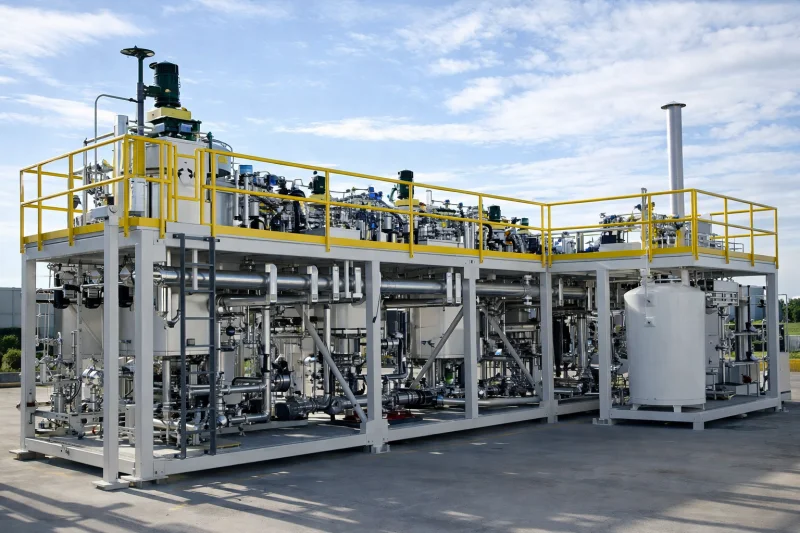
The global push toward sustainable manufacturing is no longer a future concept. It is reshaping how materials are selected, processed, and scaled across industrial production. Bio-polymers, derived from renewable resources and engineered for lower environmental impact, are rapidly gaining adoption in automotive components, electronics encapsulation, medical devices, and specialty coatings.
However, switching to greener materials involves more than changing raw inputs. It requires a careful evaluation of equipment compatibility, process stability, and long-term performance. Manufacturers relying on polyurethane processing equipment and polyurethane casting machines must ensure their systems can consistently handle the unique rheological behavior, moisture sensitivity, and thermal requirements of modern bio-based formulations without sacrificing precision or throughput.
Understanding the rise of bio-polymers in industrial processing
Bio-polymers such as bio-based polyurethanes, PLA blends, and renewable elastomers are designed to reduce carbon footprint while maintaining mechanical strength and chemical resistance. These materials often contain natural fillers, modified catalysts, and bio-derived polyols that influence viscosity, cure rates, and flow behavior. As adoption grows, processing systems must deliver tighter control over temperature, pressure, and mixing accuracy to prevent defects such as incomplete curing, void formation, or inconsistent density.
Manufacturers that previously optimized equipment for conventional petrochemical formulations may encounter new operational variables when transitioning to bio-polymers. Understanding material data sheets, shear sensitivity, and moisture tolerance becomes critical before scaling production.
Equipment compatibility challenges with bio-based formulations
One of the most common challenges is material compatibility with seals, hoses, and pump components. Bio-polymers may exhibit higher acidity or moisture absorption, which can accelerate wear or corrosion in standard components. Metering precision is another critical factor. Slight variations in ratio control can significantly impact the final material properties, especially when bio-based additives are involved.
Temperature management also becomes more sensitive. Many bio-polymers require narrower processing windows to maintain molecular stability. Equipment must support accurate heating, consistent pressure control, and stable mixing dynamics. This is where advanced polyurethane processing equipment plays a vital role by delivering programmable control systems, real-time monitoring, and repeatable dosing accuracy.
Optimizing process performance with modern dispensing technology
Modern dispensing and casting platforms are designed to accommodate evolving material profiles. High-efficiency mixing heads, servo-driven metering pumps, and closed-loop temperature control allow manufacturers to maintain uniform output even with complex bio-based chemistries. Flexible software interfaces enable operators to fine-tune parameters for different formulations without extended downtime. Incorporating precision components like kpower servo can further enhance control accuracy and responsiveness in automated dispensing systems handling sensitive bio-polymer formulations.
Well-configured polyurethane casting machines support consistent mold filling, controlled reaction kinetics, and improved surface quality, all of which are essential when working with sustainable materials that may behave differently from legacy polymers. Automation also reduces material waste and improves traceability, supporting sustainability objectives and regulatory compliance.
Preparing your production line for the green shift
Transitioning to bio-polymers should begin with a comprehensive equipment audit. Evaluate component compatibility, calibration accuracy, and thermal performance across all processing stages. Partnering with experienced equipment providers ensures access to system upgrades, customized configurations, and validation support for new materials.
Training production teams on handling bio-based materials, maintaining moisture control, and adjusting process recipes further strengthens operational reliability. When supported by high-performance polyurethane processing equipment and adaptable polyurethane casting machines, manufacturers can confidently scale sustainable production while maintaining quality, efficiency, and long-term equipment integrity.
The green shift is not a disruption when approached strategically. With the right equipment readiness and process optimization, bio-polymer adoption becomes an opportunity to improve environmental performance while strengthening manufacturing competitiveness.
Scopri di più da GuruHiTech
Abbonati per ricevere gli ultimi articoli inviati alla tua e-mail.