
Comprehensive Guide to 18 Wheeler Parking: Strategies, Safety Measures, and Efficiency Techniques for Professional Truck Drivers
Introduction
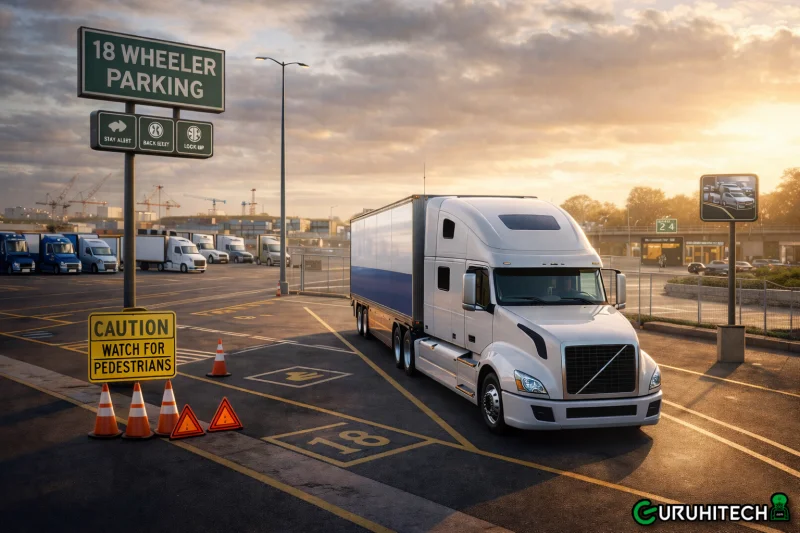
Parking an 18 wheeler is far more complex than parking a standard car or light vehicle, and it requires a level of skill, preparation, and situational awareness that is unique to professional truck drivers. The sheer size and weight of these vehicles, coupled with the demands of long-haul routes, means that drivers must approach parking with careful planning, attention to safety, and a clear understanding of best practices. In this comprehensive guide, we will explore the various challenges of 18 wheeler parking, provide practical tips for ensuring safety, and explain strategies to improve efficiency, helping drivers operate confidently in any environment.
Understanding the Unique Challenges of 18 Wheeler Parking
Parking an 18 wheeler involves navigating a combination of logistical, spatial, and environmental challenges that are not present when handling smaller vehicles. Unlike cars, these trucks require much more maneuvering space, and drivers must account for factors such as trailer length, limited visibility, turning radius, and blind spots. Parking areas that appear suitable for regular vehicles often lack the width or depth necessary to accommodate a fully loaded tractor-trailer. Additionally, certain parking situations may involve tight angles, uneven surfaces, or obstacles that complicate the process further. Drivers need to possess a high level of spatial awareness, anticipate potential hazards, and be capable of performing complex maneuvers while maintaining control of their vehicle.
Another challenge that arises in 18 wheeler parking is the unpredictability of available spaces. Truck drivers frequently need to locate parking in unfamiliar areas or during peak travel times when truck stops and commercial parking areas are full. This requires not only skill in maneuvering but also the ability to plan routes and stops in advance to ensure that parking will be available when needed. Proper preparation reduces stress, prevents delays, and ensures compliance with rest regulations that govern driver hours.
Safety Considerations for 18 Wheeler Parking
Safety is the most critical factor when it comes to 18 wheeler parking, and drivers must prioritize it at every step of the process. The potential consequences of improper parking range from vehicle damage and cargo loss to serious accidents involving other vehicles or pedestrians. One of the first steps in safe parking is thoroughly assessing the area before beginning any maneuver. Drivers should examine for obstacles, overhanging structures, low-clearance areas, and any nearby vehicles that might interfere with their movement.
Mirrors should always be properly adjusted to provide maximum visibility, and if the parking space is particularly challenging, having a spotter can make a significant difference. Spotters are especially valuable when backing into confined areas or navigating tight corners. Using signals effectively is another essential aspect of safe parking, as it communicates intentions to surrounding drivers and reduces the likelihood of collisions. Additionally, environmental factors such as inclines, uneven surfaces, or soft ground must be considered.
Parking on unstable terrain can lead to rolling or tipping, so drivers should always select the most stable surface possible. Once parked, the vehicle should be secured using the parking brake, and wheel chocks should be applied when appropriate, particularly on slopes or when the truck will remain stationary for extended periods. Ensuring proper clearance for doors, trailer swing, and maneuvering space is also critical to prevent accidental damage during loading, unloading, or departure.
Efficient Techniques for 18 Wheeler Parking
Efficiency in 18 wheeler parking is just as important as safety, particularly for drivers who need to manage tight schedules, multiple deliveries, or long-haul trips. Over time, professional drivers develop techniques to make the process smoother and faster while minimizing the risk of error. One widely used method is back-in parking, which involves reversing the truck into a designated parking space.
This technique can simplify departure, reduce trailer swing risk, and allow for easier access to loading areas. Angle parking is another common method, requiring drivers to approach slowly, align the truck carefully, and use mirrors to ensure the trailer clears obstacles. Parallel parking, while less frequent, may be required in congested urban areas or smaller commercial lots, and it demands precise steering, careful observation, and sometimes the assistance of a spotter to avoid collisions.
Many experienced drivers also use reference points on the cab and trailer to judge distance and alignment accurately, which minimizes oversteering or hitting nearby objects. Practicing these techniques regularly not only improves parking efficiency but also builds the confidence and skill required to navigate complex environments.
Planning for Long-Term and Overnight Parking
Long-term or overnight parking presents a distinct set of considerations for 18 wheeler operators. Drivers who stop for extended periods must carefully evaluate parking locations to ensure safety, convenience, and compliance with regulations. Security is a primary concern, as trucks left unattended can be targets for theft or vandalism.
Drivers should seek areas with proper lighting, controlled access, and surveillance to mitigate these risks. Space availability is equally important; the parking area must be large enough to accommodate the full length of the 18 wheeler, trailers, and any associated equipment. Accessibility for maneuvering and loading or unloading operations must also be factored into the decision-making process.
Amenities, such as access to restrooms, food services, and fueling stations, contribute significantly to driver comfort during long stops. Furthermore, adherence to local parking regulations is essential to avoid fines or other penalties. Planning long-term parking with these considerations in mind ensures driver safety, convenience, and operational efficiency, reducing stress and minimizing downtime.
Leveraging Technology for Easier 18 Wheeler Parking
Advancements in technology have made parking an 18 wheeler significantly easier and safer. Many modern trucks are equipped with rearview and side cameras, which provide clear views of blind spots and assist drivers in precise maneuvers. Parking sensors offer real-time alerts when the vehicle approaches obstacles, reducing the risk of collisions and property damage.
Additionally, specialized GPS systems and mapping applications designed for trucks help drivers locate suitable parking areas, navigate low-clearance zones, and identify optimal routes that accommodate large vehicles. These tools are especially valuable for less experienced drivers or those operating in unfamiliar locations, allowing them to approach parking situations with confidence and precision.
By integrating technology into daily operations, drivers can reduce stress, improve efficiency, and maintain high safety standards during every parking maneuver.
Environmental and Community Considerations
Parking an 18 wheeler also has implications for the surrounding environment and community. Large trucks that are parked improperly can block traffic, create congestion, or contribute to noise pollution. Drivers must remain aware of their impact and strive to minimize disruptions.
Avoiding residential areas when possible, respecting designated truck zones, and adhering to posted parking restrictions are essential practices. Minimizing engine idling while parked reduces emissions and environmental impact, contributing to cleaner air and a healthier community.
Additionally, maintaining a clean parking area, free from litter or debris, demonstrates professionalism and fosters positive relations with local communities. Responsible parking practices not only protect the driver and cargo but also enhance the reputation of the trucking industry as a whole.
Training and Skill Development
Mastering 18 wheeler parking requires consistent practice and ongoing skill development. Training programs for professional drivers often include exercises focused specifically on parking techniques, spatial awareness, and maneuvering large vehicles in confined spaces.
Drivers who invest time in skill development are better prepared to handle challenging parking scenarios, such as crowded truck stops, narrow commercial lots, or busy urban streets. Simulated practice, hands-on experience, and guidance from experienced mentors all contribute to building the confidence and expertise necessary to execute 18 wheeler parking safely and efficiently.
Conclusion
Parking an 18 wheeler is a critical skill for professional drivers, requiring careful planning, precise technique, and a commitment to safety. By understanding the unique challenges of large truck parking, following established safety measures, practicing efficient maneuvers, and leveraging modern technology, drivers can navigate parking situations with confidence.
Proper planning for long-term and overnight stops, along with consideration for environmental and community impact, ensures a responsible and professional approach to 18 wheeler parking. Mastery of these practices not only enhances operational efficiency but also safeguards drivers, cargo, and surrounding property, making it an essential component of successful trucking operations.
Scopri di più da GuruHiTech
Abbonati per ricevere gli ultimi articoli inviati alla tua e-mail.