
E-Commerce Shipping Strategies to Improve Checkout and Customer Satisfaction
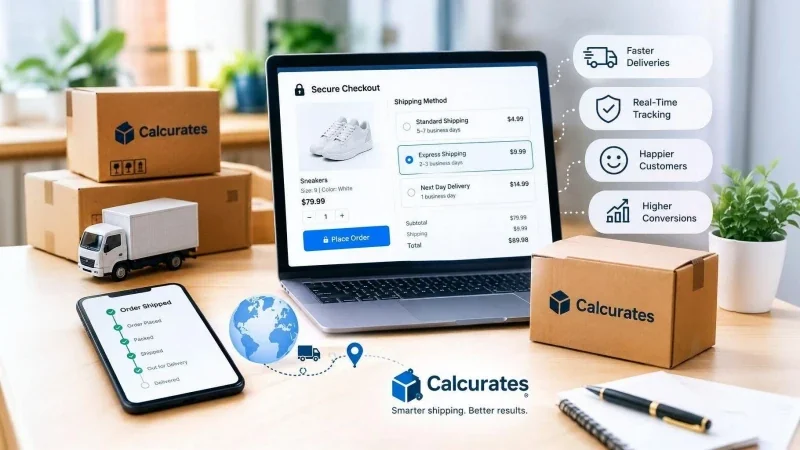
E-commerce shipping is an essential part of running a successful online store. Before customers place an order, they are interested in the delivery cost, order delivery time, and delivery options. If it’s not clear what they’re being sent or if there’s any unexpected cost at checkout, then customers can leave the cart.
These are some of the issues that online retailers can address by improving shipping maths calculations, providing appropriate shipping options, and giving clear information throughout the buying journey.Shipping management solutions such as Calcurates can help businesses automate important tasks and create a smoother checkout experience.
1. Calculate Shipping Rates Accurately
Prices for shipping are crucial for ensuring customers know the complete price of their orders before they place them. These rates can be difficult to calculate however as they are influenced by package weight, size, destination, shipping rates and speed of delivery charged by the carrier.
Retailers should keep up-to-date product measurements and review shipping costs periodically. They must also take a look at packaging materials, and ensure that carrier settings align with their services.
Businesses comparing carrier integrations may also explore ups shipping software to understand how UPS-related shipping tools can support rate calculations, service selection, and shipment management.
The best one is determined by the store’s shipping quantities, delivery locations, and current ecommerce platform.
Useful practices include:
- Keeping product weights and dimensions up to date.
- Periodic monitoring of carrier rates.
- Experimentation of cart combinations and calculations for shipping.
- Showing the shipping costs at the end of the checkout process.
A flat rate shipping price may be a good option for products that are all about the same size that will cost the same to ship, and calculated rates are better for stores that sell products of varying sizes.
Calcurates is the plugin for online stores that will calculate and show shipping rates at the checkout. Retailers can visit its [shipping solutions](https://calcurates.com/) to discover how shipping calculations can work into their current business.
2. Offer Flexible Shipping Methods
There are different expectations customers have when it comes to delivery. Some people like low priced shipping, others like shipping faster. A convenient range of shipping options can meet these preferences.
Common options include:
Standard shipping: It is an economical option if your customer doesn’t need immediate delivery.
Express shipping: Appropriate for last-minute orders.
Local delivery: Good for businesses that have clients who live near.
Store pickup: Customers can pick up their purchases from an eligible location.
The trick is to offer the right options but not too many that will overwhelm shoppers. Every method should be named, have a price, and have an approximate delivery time frame.
Retailers also need to make sure that unavailable services are not offered for certain products and destinations. By providing flexibility in shipping options, businesses can tailor their offerings to suit specific needs and requirements.
3. Display Realistic Delivery Dates
While shipping prices are important, customers also want to know when their purchase will arrive. When delivery dates are unclear, it can lead to uncertainty and raise customer service questions.
Businesses need to consider order processing time, warehouse preparation, weekends, public holidays and carrier transit times to give realistic estimates.
Consider these practical steps:
- Differentiate between processing time and transit time.
- Look at past delivery results.
- Revise estimates for destinations with periodic delays.
- If possible, show an estimated arrival time at check out.
As an example, if a product needs two days to be put together and in the warehouse, then the two-day guarantee should not be offered if it takes longer for the carrier to deliver it.
Calculating delivery dates automatically can help improve the clarity of expectations and ease the customer’s purchasing journey.
4. Create Clear Shipping Rules
Shipping details change depending upon the order quantity, product, and destination. Some locations may not be available for express delivery and some products may need special handling.
Well defined shipping rules enable retailers to identify which rates and methods need to be displayed for various orders.
Rules can be set-up with reference to:
- Weight and size of the product.
- Destination/Zone of delivery.
- Value of cart and product category.
- Carrier availability.
- Free shipping/pickup.
For instance, if a company had a free shipping limit, for purchases over a certain amount, then they can still provide express shipping for an extra fee.
Automating these conditions minimizes manual effort and eliminates displaying at checkout unsuitable delivery options. Retailers can explore the shipping management functionality of Calcurates to decide if shipping management rules can be configured to help their store.
5. Make International Shipping Transparent
If you ship internationally, you’ll need to take into account the customs paperwork, import taxes, destination-specific restrictions, and more.
Surprising costs can lead to customer disillusionment as they think the checkout price includes all delivery costs. If duties and taxes are not included in the price displayed, the retailer must inform the buyer or the customer that they will be paid separately at delivery.
Important practices include:
- Providing details of carrier availability for each destination.
- Refunding customs and import duties.
- Notifying about possible extra fees.
- Posting of appropriate duties and taxes at checkout point if applicable.
Clear information enables customers to make informed choices, and minimises the number of ‘surprises’ after customers’ orders are dispatched.
Calcurates offers shipping-related features which companies can evaluate as they consider their global checkout options.
6. Improve Pickup and Delivery Convenience
For stores that have physical locations or collection points, local pick-up might be a good option, especially for those who are not able to receive their orders at home. But if customers are to be successful in using this option, they need clear instructions.
Retailers should make it clear where pick-up can be done, how long it will take and if any ID will be required. They should also make sure that pickup availability is only displayed if products and location are available for pickup.
If delivering, make it simple to communicate both the delivery areas and processing times, as well as any restrictions that could impact an order.
These details cut down on confusion and aid clients decide on the best fulfillment alternative.
7. Simplify the Checkout Experience
The checkout process can be complex and washes out the sale. Shipping information must be readily available and accessible.
The following guidelines should help business improve checkout:
Show shipping costs on screen before giving customers a chance to pay.
- Describe delivery options in an explicit manner.
- Be realistic about when you will arrive.
- Describe other charges and conditions.
- Don’t complete unnecessary checkout steps.
- Try it on mobile and desktop.
Customers should be able to ‘see the comparison’ and understand the total order cost without having to wade through several pages.
8. Automate and Review Shipping Operations
It’s hard to keep track of rates, delivery options and shipping requirements in an online store as it grows. Carrier price changes, new products and new destinations can lead to inconsistencies.
Conditions can be applied consistently using shipping automation and relevant delivery information can be displayed. Calcurates is an eCommerce shipping solution to show online retailers their shipping rates, methods, delivery dates, pickup options, and duties at checkout.
Retailers can go to Calcurates to check out its features and services to see if they are suitable for their ecommerce platform.
Test out a variety of situations before choosing the solution, such as oversized packages, mixed-product carts, international orders, and even those free shipping options. Periodic reviews will help pinpoint configuration issues and performance enhancements.
Conclusion
Shipping and delivery for eCommerce is dependent on accurate shop prices, appropriate shipping options, attainable delivery dates, and clear checkout details. These are some practical measures that online retailers can take to help alleviate some of the confusion surrounding their online purchases, and make them more convenient.
Having effective shipping policies, coupled with the right automation, can also make business operations easier as it grows. A dependable shipping process leads to better customer trust and satisfaction in making a purchasing decision, and builds better customer relationships.
Ti potrebbe interessare:
Segui guruhitech su:
- Google News: bit.ly/gurugooglenews
- Telegram: t.me/guruhitech
- Facebook: facebook.com/guruhitechfb
- Instagram: instagram.com/guruhitech_official/
- X (Twitter): x.com/guruhitech1
- Bluesky: bsky.app/profile/guruhitech.bsky.social
- Rumble: rumble.com/user/guruhitech
- VKontakte: vk.com/guruhitech
- MeWe: mewe.com/i/guruhitech
- Skype: live:.cid.d4cf3836b772da8a
- WhatsApp: bit.ly/whatsappguruhitech
Esprimi il tuo parere!
Ti è stato utile questo articolo? Lascia un commento nell’apposita sezione che trovi più in basso e se ti va, iscriviti alla newsletter.
Per qualsiasi domanda, informazione o assistenza nel mondo della tecnologia, puoi inviare una email all’indirizzo [email protected].
Scopri di più da GuruHiTech
Abbonati per ricevere gli ultimi articoli inviati alla tua e-mail.