
Smart Factories Still Depend on Simple Parts: The Hidden Role of Industrial Heating Elements
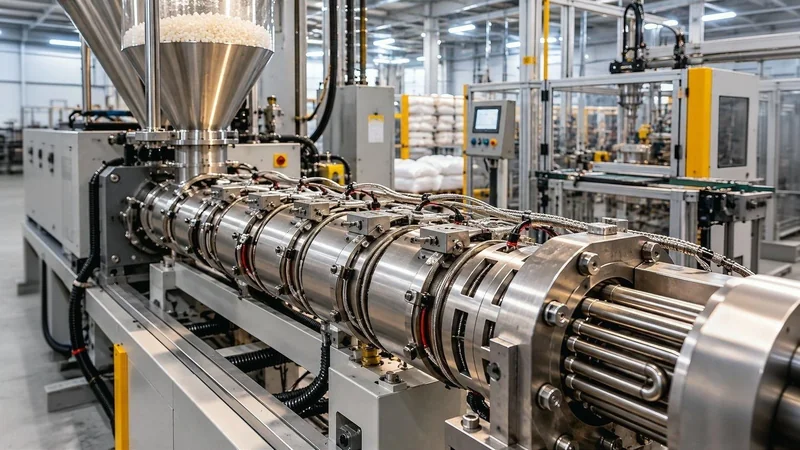
When people picture a smart factory, they tend to see robots, sensors and large screens full of production data. They rarely picture a small heater tucked inside an injection-moulding machine or a tubular element hidden in an industrial oven. Yet connected manufacturing depends on those less visible parts just as much as it depends on software.
A dashboard can report that a machine is running outside its temperature range. It cannot, by itself, make a poorly fitted heater warm a metal surface evenly. That gap between digital information and physical performance is why industrial heating deserves a place in conversations about factory modernisation.
A smart controller cannot solve every heating problem
Most electrically heated processes depend on three basic components working together: a heating element supplies energy, a sensor measures a temperature, and a controller adjusts the power. The arrangement sounds simple, but each part influences the result.
Consider a machine that uses heated tooling to shape plastic. Its control panel may show the correct set point while one area of the tool warms more slowly than another. The cause could be poor contact between the heater and its mounting surface, a sensor positioned too far from the critical area, or heat escaping through an exposed section of the assembly.
Changing the controller settings might hide the symptom for a while without correcting the underlying problem. Good automation starts with knowing what the hardware can actually deliver.
The displayed temperature is only part of the story
A temperature value is useful, but it is still a measurement from one location. In a large oven, the sensor may describe the air near a probe rather than the conditions experienced by every product on a tray. In a sealing machine, the temperature of the heating block may not perfectly reflect the surface touching the packaging material.
Timing matters too. Equipment that holds its set point during a steady run may behave differently during start-up, after a long pause or when a fresh batch of material enters the process. Engineers therefore look beyond a single number and examine warm-up time, recovery time and variation across the working area.
This is where connected monitoring becomes valuable. A record of the same machine over several shifts can reveal a slower warm-up or longer recovery cycle that would be easy to miss during a quick inspection. The data is a clue, not a diagnosis.
Different jobs call for different types of heat
Industrial heating is not one interchangeable technology. Cartridge heaters are often used where heat must be transferred into a compact metal assembly. Spiral heating elements for hot-runner systems are designed for closely fitted heating applications in plastic injection-moulding equipment. Tubular elements appear in numerous oven, liquid-heating and air-heating arrangements. The correct design depends on the machine rather than on a fashionable specification.
The way heat travels is as important as the rated power. Contact quality matters in a heated block, airflow matters in a forced-air oven, and the surrounding material affects how quickly a process responds. Electrical requirements, available installation space and maintenance access also shape the choice.
For companies assessing these components, BYM Rezistans manufactures industrial heating elements used in applications including plastic-processing machinery, packaging equipment and ovens. That range illustrates a practical point: a heater should be selected for its operating environment and mechanical fit, not simply because two products have similar wattage.
Predictive maintenance needs physical evidence
Connected machines make it easier to notice patterns. A heater that requires progressively more time to reach its normal operating condition may deserve closer attention. So might a process that develops more temperature alarms after routine cleaning or repeated changes of tooling.
But no single trend proves that an element has failed. A drifting sensor, damaged insulation, a loose connection or altered airflow can produce similar symptoms. Maintenance teams still need to examine the equipment and, where appropriate, perform electrical checks using safe procedures and qualified personnel.
The useful approach is to combine history with inspection. Record what changed, check whether the change repeats, and investigate the physical system before ordering replacement parts. The best maintenance data narrows the search; it does not replace engineering judgement.
Energy efficiency is about the whole process
A higher-rated heater is not automatically wasteful, just as a lower-rated heater is not automatically efficient. Energy use depends on how much power is drawn, for how long, and how much of that heat reaches the intended process. An undersized or poorly installed component can leave a machine running longer than necessary.
Insulation, control settings, start-up schedules and unnecessary idle heating can all influence operating costs. So can the condition of the heater itself and the equipment around it. Before replacing components in the name of efficiency, it helps to measure the current process and identify the largest source of loss.
The goal is not simply to generate less heat. It is to deliver the required heat reliably, with as little avoidable loss and disruption as practical.
Five questions to ask before upgrading a heating system
- What is the actual process temperature, and where is it measured?
- How quickly must the system warm up and recover after a production interruption?
- Does the heating element make proper contact with the area it is meant to heat?
- Are electrical ratings, dimensions and operating conditions suitable for the equipment?
- What maintenance information is available to distinguish a failing element from a sensor or control problem?
Smarter manufacturing still begins with reliable hardware
A connected factory can make decisions faster because it sees more of what is happening on the production line. That visibility is valuable, especially when teams use it to find recurring problems rather than react to every isolated alarm.
Even so, software cannot compensate indefinitely for a heater that does not fit, a sensor in the wrong place or a machine that loses heat where it should retain it. The most effective upgrades connect useful data to well-chosen components, sound installation and realistic maintenance practices. Sometimes the next improvement in a smart factory begins with a very ordinary part.
Ti potrebbe interessare:
Segui guruhitech su:
- Google News: bit.ly/gurugooglenews
- Telegram: t.me/guruhitech
- Facebook: facebook.com/guruhitechfb
- Instagram: instagram.com/guruhitech_official/
- X (Twitter): x.com/guruhitech1
- Bluesky: bsky.app/profile/guruhitech.bsky.social
- Rumble: rumble.com/user/guruhitech
- VKontakte: vk.com/guruhitech
- MeWe: mewe.com/i/guruhitech
- Skype: live:.cid.d4cf3836b772da8a
- WhatsApp: bit.ly/whatsappguruhitech
Esprimi il tuo parere!
Ti è stato utile questo articolo? Lascia un commento nell’apposita sezione che trovi più in basso e se ti va, iscriviti alla newsletter.
Per qualsiasi domanda, informazione o assistenza nel mondo della tecnologia, puoi inviare una email all’indirizzo [email protected].
Scopri di più da GuruHiTech
Abbonati per ricevere gli ultimi articoli inviati alla tua e-mail.