
Lynote.ai: Why AI Productivity Today Is About Verification, Not Just Generation
Only a couple of years ago, AI writing tools were mainly used to speed up drafting. Today, they have become part of everyday work for students, developers, marketers, researchers, and technical writers. Creating text is no longer the difficult part—making sure that text is accurate, readable, and trustworthy has become the real challenge.
The conversation around AI is gradually shifting. Instead of asking whether AI can write, more people are asking whether AI-generated content is reliable enough to publish, submit, or share with others. That change explains why verification tools have become almost as important as generation tools.
The New Workflow of AI-Assisted Writing
Most people don’t start with a blank page anymore.
They collect information from different sources, ask AI to organize their ideas, edit the output, verify important facts, and finally polish the writing before publishing it. The writing process has become more collaborative, with AI handling repetitive tasks while humans remain responsible for judgment and accuracy.
This workflow is especially common in technical fields where documentation, tutorials, product guides, and research summaries need to be both efficient and dependable.
Using multiple online tools for every step can quickly become frustrating. One platform generates text, another checks grammar, another summarizes videos, and another analyzes AI-written content. Besides slowing down productivity, constantly switching tabs often breaks concentration.
That’s one reason integrated AI workspaces have started attracting more attention.
One Platform, Multiple Practical Tools
Rather than focusing on a single feature, Lynote.ai brings together several tools that solve problems encountered throughout the writing process.
Users can summarize YouTube videos, translate documents, generate transcripts, refine AI-generated content, and review text before publication without jumping between different websites. While each feature is useful on its own, the biggest advantage is having everything available in one place.
For students, this means spending less time managing tools and more time understanding course material. For professionals, it means a smoother workflow when preparing reports, documentation, or presentations.
The platform isn’t trying to replace human thinking. Instead, it reduces repetitive work so users can spend more time reviewing ideas and improving the final result.
Why AI Detection Has Become Part of Quality Control
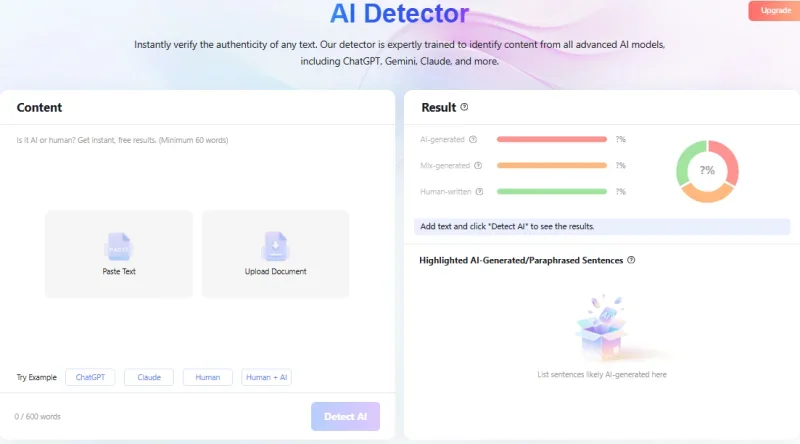
AI detection is sometimes misunderstood as a tool designed to “catch” people using artificial intelligence. In reality, its role is becoming much broader.
Editors may want to review whether an article relies too heavily on predictable AI phrasing. Teachers may use detection reports as one piece of a larger academic integrity process. Businesses may check important documents before they are published under a company brand.
No detector is perfect, and none should be treated as the final authority. Still, they provide useful signals that help writers identify sections worth revising.
Running content through a best free ai detector before publishing can reveal passages that sound repetitive or overly formulaic. Even experienced writers occasionally overlook these patterns after spending hours editing the same document.
Detection works best when viewed as another editing tool rather than a pass-or-fail test.
Natural Writing Still Requires Human Judgment
Large language models are excellent at organizing information, but they tend to produce sentences with similar rhythm and predictable transitions. Readers may not consciously notice these patterns, yet they often make articles feel less engaging.
Good editing adds variation.
An experienced editor shortens some sentences, expands others, rearranges ideas, and introduces examples that make abstract concepts easier to understand. These small changes give writing personality without sacrificing clarity.
Technology can support that process as well.
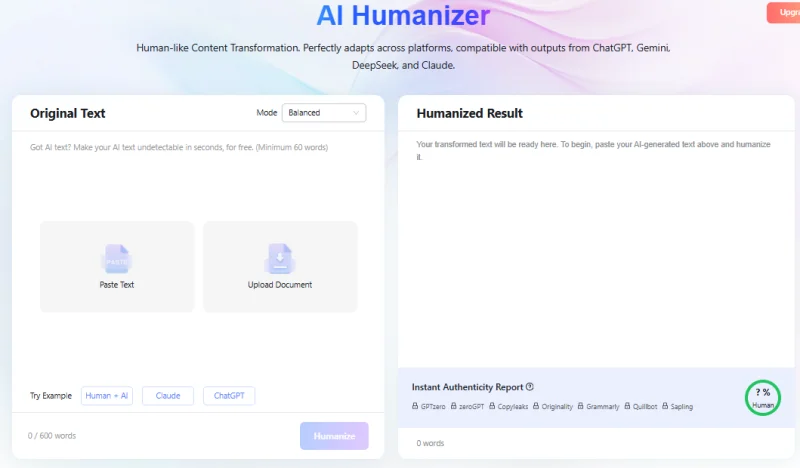
Using the best ai humanizer isn’t about disguising AI-generated content. It’s about improving readability by reducing repetitive wording and making ideas flow more naturally. Human review remains essential, especially for technical, legal, or academic material, but refinement tools can significantly reduce editing time.
AI Is Becoming a Learning Companion
Beyond writing, AI is increasingly helping people learn.
Students often use video summaries before watching lengthy lectures. Researchers translate foreign-language papers to determine whether they deserve deeper reading. Software developers generate transcripts from conference talks to review technical details later.
These tasks don’t require replacing human expertise. They simply remove repetitive work that previously consumed valuable time.
Platforms that combine these capabilities into one environment create a more efficient learning experience than relying on several disconnected applications.
The Direction AI Productivity Is Taking
The first generation of AI software focused on producing more content, the next generation is focusing on producing better content.
That means helping users verify information, improve readability, organize research, and maintain consistent quality throughout an entire project. Speed remains important, but accuracy, transparency, and usability have become equally valuable.
This shift is particularly relevant for professionals whose work is reviewed by clients, editors, educators, or colleagues. A quickly generated draft is useful, but a carefully reviewed document builds trust.
Final Thoughts
Artificial intelligence has already changed how people write, study, and process information. The biggest productivity gains now come not from generating more words, but from improving the quality of those words before they reach readers.
Lynote.ai reflects that evolution by combining practical AI tools—including document translation, video transcription, summarization, AI detection, and writing refinement—into a single workflow. Instead of encouraging blind automation, it supports a more balanced approach where AI accelerates routine work while users remain in control of the final result.
As AI continues to mature, the platforms that stand out will be those that help people communicate more clearly, learn more efficiently, and publish content they can confidently stand behind.
Ti potrebbe interessare:
Segui guruhitech su:
- Google News: bit.ly/gurugooglenews
- Telegram: t.me/guruhitech
- Facebook: facebook.com/guruhitechfb
- Instagram: instagram.com/guruhitech_official/
- X (Twitter): x.com/guruhitech1
- Bluesky: bsky.app/profile/guruhitech.bsky.social
- Rumble: rumble.com/user/guruhitech
- VKontakte: vk.com/guruhitech
- MeWe: mewe.com/i/guruhitech
- Skype: live:.cid.d4cf3836b772da8a
- WhatsApp: bit.ly/whatsappguruhitech
Esprimi il tuo parere!
Ti è stato utile questo articolo? Lascia un commento nell’apposita sezione che trovi più in basso e se ti va, iscriviti alla newsletter.
Per qualsiasi domanda, informazione o assistenza nel mondo della tecnologia, puoi inviare una email all’indirizzo [email protected].
Scopri di più da GuruHiTech
Abbonati per ricevere gli ultimi articoli inviati alla tua e-mail.