

Playard Basics Every New Parent Should Know Before Buying
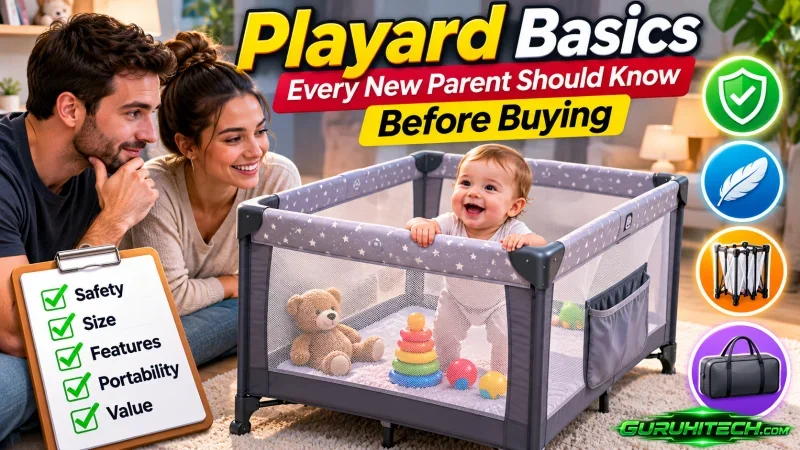
Few pieces of baby gear work as hard as a playard. It can be a bassinet in the early weeks, a contained play space during dinner prep, a travel bed at a hotel, and a quiet spot for naps at grandma’s house. That flexibility explains why so many families end up owning one, and why so many first-time parents are unsure what to look for when they shop for it.
The right choice depends on where and how you plan to use it. A model that suits a spacious nursery may be awkward in a small apartment, and a travel-friendly option may feel too light for daily use. This guide explains what a playard really is, how to set it up for safe sleep, where it fits in different rooms, how to handle setup and storage, and how to keep it clean and in good condition. By the end, you should be able to pick one with confidence and use it safely from the first night.
What a Playard Is and Why Families Keep One
A playard, sometimes called a play yard or portable crib, is a freestanding enclosure with mesh or fabric sides and a built-in floor. Most fold down into a carry bag, which is what makes them useful in so many places. Some come with extras such as a raised newborn insert, a changing surface, or a canopy, while others keep things simple.
Parents tend to keep a playard for three reasons. First, it creates a safe spot to set the baby down for a few minutes when you need to answer the door, use the bathroom, or stir a pot on the stove. Second, it travels easily, which means your baby sleeps somewhere familiar even when everything else changes. Third, it works across several stages, from newborn naps to toddler play, so it often outlasts gear that suits only one period.
It is worth knowing what a playard is not. It does not replace supervision, and it is not a place for long stretches of daytime confinement. Babies still need floor time, interaction, and movement to develop, so think of it as a safe base rather than the main attraction.
Setting Up for Safe Sleep
Safe sleep guidance is consistent across health organizations, and it applies fully to playards. Put your baby to sleep on their back, on the firm, flat mattress or pad that came with the playard. Do not add extra padding, blankets, pillows, bumpers, or soft toys, even if the surface seems thin. A firm base is part of what keeps the sleep space safe.
Before you place your baby inside, run through a short setup check:
- Make sure every side is fully raised and the locking mechanism has clicked into place.
- Check that the floor sits flat, without folds or gaps.
- Keep the playard away from windows, blind cords, heaters, and other furniture.
- Follow the age, weight, and height limits in the manual, and stop using it once your child outgrows them.
If you use a bassinet insert or a changing attachment, remove it before the baby is too heavy or active, and never leave a baby unattended on a changing surface. Dress the baby for the room temperature rather than adding loose bedding.
Choosing a Spot, Room by Room
Because a playard moves so easily, you will probably use it in more than one place. Each location has its own considerations.
In the bedroom or nursery
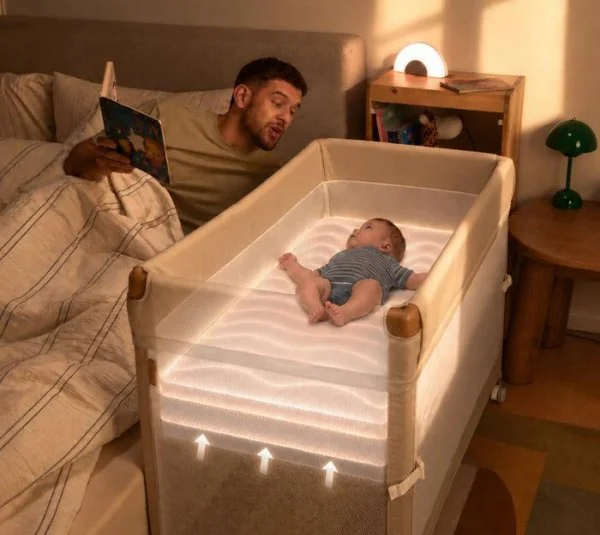
Many families keep the playard in the parents’ room during the early months, since it is easy to reach at night and takes up less space than a full crib. Place it on a flat, stable area with enough room around it to open and close the sides. Keep the baby’s sleep area clear of dangling cords, curtains, and wall hangings that could fall in.
In the living area
During the day, a playard in the living room lets the baby watch the household from a safe spot. Pick a place you can see from the kitchen or sofa, away from stairs and heavy foot traffic. Offer a few safe toys, rotate them now and then, and take the baby out regularly for floor play. Older babies who can pull themselves up should have anything removed that could be used as a step.
On the road
For travel, a lightweight, easy-folding playard is a big advantage. Set it up on arrival and check that it is stable before the baby goes in. Grandparents, friends, and relatives often like having one on hand, since it saves them from buying a crib they would only use occasionally.
Setup, Folding, and Storage
Practice assembling the playard at home before you need it on a trip. Many parents find that folding is harder than unfolding, and a hotel hallway is a poor place to learn. Read the instructions, watch a demonstration if the maker offers one, and note which parts need a firm push or a pull on a release strap.
When you fold it, make sure the carry bag is dry and clean, because damp fabric can develop mildew. Store the playard in a dry place away from heat and heavy objects that could bend the frame. Before each use, give the frame a gentle shake to check that all joints are secure. If something feels loose, stop and review the instructions rather than forcing it.
Cleaning and Keeping an Eye on Wear
Messes are guaranteed. Wipe the mesh and fabric with a damp cloth and mild soap, and use only the cleaning methods suggested by the manufacturer. Many mattress covers can be removed and washed, while the pad itself usually needs to be spot-cleaned. Let everything dry fully before folding.
Inspect the playard every few weeks. Look for torn mesh, loose stitching, bent frame parts, and cracked plastic, and stop using it if you find damage. Register the product if the maker offers registration, so you receive notice of any recall, and check recall lists before using a second-hand model. Momcozy, among other brands that design baby products for new parents, includes a manual with each playard, and keeping it with the carry bag makes future checks easier.
A Safe Base That Grows With Your Family
A playard earns its place by doing several jobs reasonably well: a safe place for naps, a contained spot for short play breaks, and a portable bed that follows your family from home to hotel. The safest approach is to use only the mattress that comes with it, keep the sleep space bare, and follow the age and weight limits in the manual.
Think about where you will use it most, practice setup before you need it, and give it a quick inspection now and then. Do that, and a playard can serve as a reliable, flexible part of your baby’s first years, and a handy piece of gear for the next child or the next visiting relative.
Ti potrebbe interessare:
Segui guruhitech su:
- Google News: bit.ly/gurugooglenews
- Telegram: t.me/guruhitech
- Facebook: facebook.com/guruhitechfb
- X (Twitter): x.com/guruhitech1
- Bluesky: bsky.app/profile/guruhitech.bsky.social
- Rumble: rumble.com/user/guruhitech
- VKontakte: vk.com/guruhitech
- MeWe: mewe.com/i/guruhitech
- Skype: live:.cid.d4cf3836b772da8a
- WhatsApp: bit.ly/whatsappguruhitech
Esprimi il tuo parere!
Ti è stato utile questo articolo? Lascia un commento nell’apposita sezione che trovi più in basso e se ti va, iscriviti alla newsletter.
Per qualsiasi domanda, informazione o assistenza nel mondo della tecnologia, puoi inviare una email all’indirizzo [email protected].
Che ne pensi?
Scopri di più da GuruHiTech
Abbonati per ricevere gli ultimi articoli inviati alla tua e-mail.