
Mission Platforms and Multi-Drone Operations in Modern UAV Ecosystems
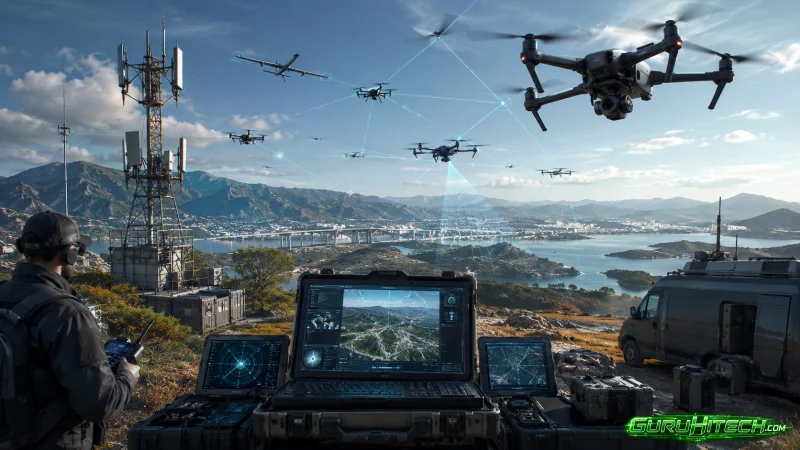
The evolution of UAV technology is no longer defined only by flight hardware, but by the intelligence layer that controls missions. Today, industries are rapidly adopting autonomous missions powered by advanced mission platforms and mission operation software, enabling scalable and data-driven aerial operations.
Mission platform as the core of UAV intelligence systems
At the center of modern UAV transformation is the mission platform-a centralized environment that connects planning, execution, and monitoring into a unified system. Instead of manually controlling each UAV, operators define mission objectives, and the platform automatically orchestrates operations.
This shift is what enables scalable autonomous missions, especially in industries that require repeatable, precise, and large-scale aerial workflows.
What defines a mission platform in UAV operations?
A mission platform is a software-based system designed to manage the full lifecycle of UAV missions. It acts as the operational “brain” that connects human intent with automated execution.
Key capabilities typically include:
- Map-based mission planning and route design
- Automated waypoint generation and optimization
- Real-time UAV tracking and telemetry monitoring
- Integration with sensors and payload systems
- Live mission control and adjustment features
- Post-mission data analysis and reporting
In platforms like SkyTrack, the mission platform does more than execution. It introduces intelligence into operations by allowing UAVs to adapt dynamically during flight, based on real-time conditions.
Why mission platforms are essential for autonomous missions
Without a centralized mission platform, autonomous UAV operations would remain fragmented and difficult to scale. Each drone would require manual oversight, limiting efficiency and increasing operational complexity.
A strong mission platform provides:
- Unified control of multiple UAVs
- Standardized workflows across missions and teams
- Reduced human error during flight execution
- Real-time coordination across operations
This foundation is critical for industries that depend on consistent aerial data, such as agriculture monitoring, infrastructure inspection, and environmental mapping.
Mission operation software enabling intelligent UAV ecosystems
As UAV operations become more complex, mission operation software plays a critical role in connecting planning with live execution. It transforms UAV control from manual piloting into structured, automated mission management.
This software layer is what allows mission platforms to support dynamic decision-making during autonomous missions, ensuring UAVs can respond to real-world conditions in real time.
How mission operation software powers UAV systems
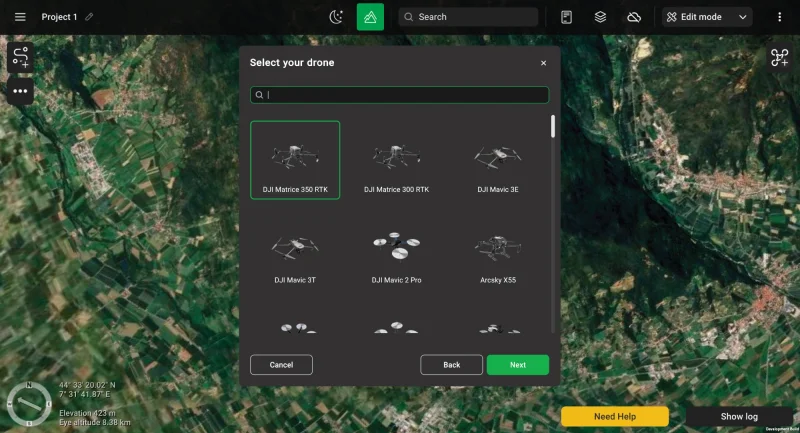
Mission operation software is a digital control environment that manages UAV missions from start to finish. It integrates planning tools, live monitoring, and data systems into a single interface.
Its core functions include:
- Mission creation and configuration through digital maps
- Live UAV telemetry and status tracking
- Dynamic flight adjustments during execution
- Sensor calibration and payload integration
- Multi-mission coordination and scheduling
- Data aggregation and post-mission insights
In systems inspired by SkyTrack, this software becomes the operational backbone of UAV fleets, ensuring consistency and intelligence across all missions.
The role of mission operation software in real-time control
One of the most important advantages of mission operation software is its ability to support real-time decision-making.
Instead of pre-programmed static routes, UAVs can:
- Adjust flight paths based on weather or obstacles
- Re-route during mission execution
- Synchronize with other drones in the same environment
- Stream live telemetry to operators for instant oversight
This makes UAV operations significantly more flexible and reliable, especially in unpredictable environments.
Multi-drone operations and scalable autonomous UAV systems
As industries scale their UAV usage, single-drone workflows are no longer sufficient. This has led to the rise of multi-drone operations, where multiple UAVs work together under a unified mission platform to complete complex tasks efficiently.
This model depends heavily on mission operation software to coordinate drones, distribute tasks, and ensure safe, synchronized execution of autonomous missions.
How multi-drone operations work in UAV ecosystems
In a multi-drone environment, UAVs operate as a coordinated system rather than independent units. The mission platform assigns tasks and manages execution across all drones in real time.
A typical workflow includes:
- Centralized mission planning for multiple UAVs
- Automatic task distribution based on drone capability
- Coordinated flight paths to prevent overlap or collision
- Simultaneous data collection from different perspectives
- Unified data aggregation for analysis and reporting
This structure enables faster execution and more comprehensive data coverage compared to single-drone operations.
Benefits of multi-drone UAV operations in real-world applications
The adoption of multi-drone operations brings significant advantages across industries:
- Faster coverage of large geographical areas
- Increased data accuracy from multiple viewpoints
- Higher operational resilience if one UAV fails
- Reduced mission time through parallel execution
These benefits make multi-drone systems especially valuable in large-scale mapping, disaster response, surveillance, and industrial inspection.
The future of UAV ecosystems with mission platforms
The future of UAV technology is moving toward fully integrated ecosystems where mission platforms, mission operation software, and autonomous missions work together seamlessly.
In this future:
- UAV fleets operate collaboratively with minimal human input
- Mission platforms act as centralized intelligence hubs
- Autonomous missions become the default operating model
- Real-time data continuously flows into enterprise systems
This transformation will redefine how industries use UAVs, shifting from manual operations to fully autonomous, scalable aerial intelligence systems.
In conclusion, autonomous missions are reshaping how UAV systems are designed, deployed, and scaled across industries. By reducing reliance on manual control, they enable drones to operate intelligently, consistently, and efficiently within complex environments. When combined with mission platforms and multi-drone systems, autonomous missions unlock a new level of operational performance and scalability. This shift marks the foundation of next-generation UAV ecosystems driven by automation and real-time intelligence.
Ti potrebbe interessare:
Segui guruhitech su:
- Google News: bit.ly/gurugooglenews
- Telegram: t.me/guruhitech
- Facebook: facebook.com/guruhitechfb
- Instagram: instagram.com/guruhitech_official/
- X (Twitter): x.com/guruhitech1
- Bluesky: bsky.app/profile/guruhitech.bsky.social
- Rumble: rumble.com/user/guruhitech
- VKontakte: vk.com/guruhitech
- MeWe: mewe.com/i/guruhitech
- Skype: live:.cid.d4cf3836b772da8a
- WhatsApp: bit.ly/whatsappguruhitech
Esprimi il tuo parere!
Ti è stato utile questo articolo? Lascia un commento nell’apposita sezione che trovi più in basso e se ti va, iscriviti alla newsletter.
Per qualsiasi domanda, informazione o assistenza nel mondo della tecnologia, puoi inviare una email all’indirizzo [email protected].
Scopri di più da GuruHiTech
Abbonati per ricevere gli ultimi articoli inviati alla tua e-mail.