
OEM Diaper Manufacturing: A Step-by-Step Guide for New and Growing Brands
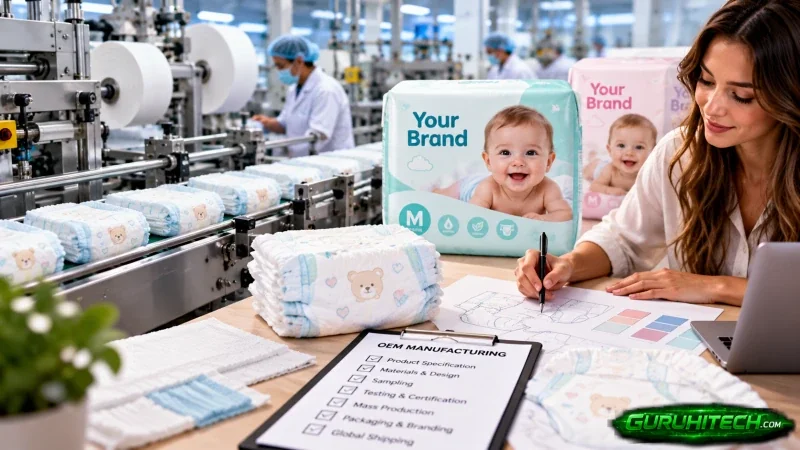
Launching a diaper brand without owning a factory is possible, and it is how most private-label diaper brands start. The route is OEM (original equipment manufacturing): you bring the brand, the target market and the product requirements, and a factory produces the diapers under your name.
It sounds simple, but the details decide whether your first container makes you money or becomes an expensive lesson. This guide covers the whole process.
OEM vs ODM: What’s the Difference?
The two terms are often mixed up, and the difference matters for cost and control.
- OEM: You provide the specification (size, absorbent core, materials, design), and the factory builds to it. You have more control, but you also carry more of the product-development work.
- ODM: The factory offers existing, proven designs and you choose from them, adding your own branding and packaging. It is faster and lower risk, which suits first-time brands.
Many suppliers work with a mix of both: start with an existing platform, then adjust materials, print and packaging to fit your market.
Step 1: Define Your Product and Market
Before approaching any factory, write down:
- Product type: tape diapers, pull-up pants, newborn, night-time, or a range
- Target market and tier: value, mid-range or premium, and the country you will sell in
- Key selling points: ultra-thin, extra soft, breathable, high absorbency, eco-friendly materials
- Sizes: the size range and weight bands your market expects
- Expected volume: first order and a realistic six-month forecast
The clearer your brief, the more accurate the quote. A vague request tends to produce vague, misleading pricing.
Step 2: Understand the Materials
A diaper is a layered product, and each layer affects performance and cost:
- Topsheet: the soft nonwoven layer that touches the skin
- Acquisition layer: moves liquid quickly away from the surface
- Absorbent core: fluff pulp and super absorbent polymer (SAP), which largely decide absorbency
- Backsheet: the outer layer, either breathable film or cloth-like nonwoven
- Elastics, tapes and waistbands: control fit and leakage
- Wetness indicator and print: optional features that add appeal and cost
When you compare quotes, ask exactly which materials are used in each layer. Two diapers with the same price can have very different cores.
Step 3: Choose the Right Factory
This is the most important decision in the whole process. Look for:
- Experience with your target market. A factory that already exports to similar countries understands labeling and quality expectations.
- Control over core materials. Some factories produce their own pulp cores and nonwovens, which can improve consistency and reduce supply risk. Others buy in everything.
- Capacity and lead times. Check that they can scale with you.
- Communication. Fast, clear and honest answers before the order are a good sign.
If you want a factory that handles both private-label production and wider product development, a diaper OEM manufacturer with its own branded product lines and export experience can be a practical place to start your shortlist.
Step 4: Verify Certifications and Compliance
Ask for documentation and check it independently:
- ISO 9001 for quality management
- OEKO-TEX Standard 100 for skin-contact materials, with a certificate number you can verify
- Chemical compliance such as REACH for the EU
- Market-specific rules. For example, standard baby diapers in the EU do not need a CE mark, but you must meet the General Product Safety Regulation (GPSR). Other markets have their own labeling and registration requirements.
Step 5: Sampling and Minimum Order Quantity
Diaper production lines are expensive to set up for each design, so MOQs are often tens of thousands of pieces per size and design. That is a lot to commit before testing the market.
Ways to reduce your risk:
- Order samples of each size and test them against a well-known brand
- Ask whether the factory offers pilot or trial runs with smaller quantities
- Test on real babies where possible, checking leakage, fit, softness and wetness feel
- Confirm that the production batch matches the approved sample
Step 6: Design Packaging and Branding
Packaging is part of the product. Plan for:
- Bag or carton design that matches your brand and target market
- Required labeling: size, weight range, count, materials, manufacturer details and language requirements
- Printed designs on the diaper itself, which usually affect minimum quantities
- Carton and container loading, since diapers are bulky and your packaging design changes freight cost per piece
Step 7: Production, Inspection and Shipping
Once the sample is approved and the deposit paid, production starts. Good practice includes:
- A written specification signed by both sides
- In-process and final inspection, ideally with a third-party check for your first order
- Clear Incoterms (FOB, CIF and so on) and a named freight handler
- Agreed remedies if a batch fails inspection
What Drives the Price?
Don’t compare quotes only on unit price. The main cost drivers are:
- Quality and quantity of pulp and SAP in the core
- Nonwoven and film quality
- Elastic and tape quality
- Size, packaging and printing
- Order volume
- Freight and customs
A very low quote usually means cost has been cut somewhere you can’t see until a baby wears the diaper.
Common Mistakes to Avoid
- Choosing the factory on price alone
- Skipping certificate verification
- Ordering large before sampling
- Leaving the specification vague or verbal
- Ignoring local labeling requirements
- Not testing against a benchmark brand
The Bottom Line
OEM diaper manufacturing lets a small team build a real brand, but only if you treat it as a process: define your product, understand the materials, pick the factory carefully, verify documents, test samples and plan packaging and logistics. Take your time at the start and your first container is far more likely to be the beginning of a stable business.
Ti potrebbe interessare:
Segui guruhitech su:
- Google News: bit.ly/gurugooglenews
- Telegram: t.me/guruhitech
- Facebook: facebook.com/guruhitechfb
- Instagram: instagram.com/guruhitech_official/
- X (Twitter): x.com/guruhitech1
- Bluesky: bsky.app/profile/guruhitech.bsky.social
- Rumble: rumble.com/user/guruhitech
- VKontakte: vk.com/guruhitech
- MeWe: mewe.com/i/guruhitech
- Skype: live:.cid.d4cf3836b772da8a
- WhatsApp: bit.ly/whatsappguruhitech
Esprimi il tuo parere!
Ti è stato utile questo articolo? Lascia un commento nell’apposita sezione che trovi più in basso e se ti va, iscriviti alla newsletter.
Per qualsiasi domanda, informazione o assistenza nel mondo della tecnologia, puoi inviare una email all’indirizzo [email protected].
Scopri di più da GuruHiTech
Abbonati per ricevere gli ultimi articoli inviati alla tua e-mail.