
Proxy-Seller Review and Analysis: A Complete Breakdown for 2026

Proxy-Seller is one of the most well-rounded mid-market proxy providers operating right now. It covers all five major categories under a single account — datacenter IPv4, datacenter IPv6, ISP, residential, and mobile — with transparent pricing and a responsive support team. It is not the cheapest option in any single category, and it is not the enterprise heavyweight you would pick for a multi-petabyte scraping operation. For the wide middle ground — small businesses, marketers, scrapers, account managers, SEO teams — it lands in a sweet spot many competitors miss.
The 2026 release brought sharper pricing, an expanded residential pool exceeding 20 million IPs, and a refreshed dashboard.
What Proxy-Seller actually is
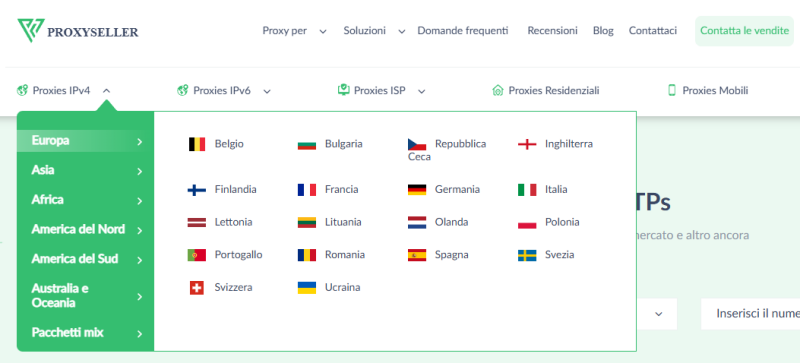
Proxy-Seller is a private proxy provider headquartered in Cyprus, launched in 2014. The catalogue covers:
- Datacenter IPv4 proxies — fast, cheap, server-hosted IPs for tasks that do not require residential authenticity.
- Datacenter IPv6 proxies — even cheaper, with a much larger pool, suited to platforms that recognise IPv6.
- ISP proxies — static IPs assigned by real internet service providers, offering residential trust with datacenter speed.
- Residential proxies — rotating IPs from genuine home devices, with city and country targeting and a 20M+ pool.
- Mobile proxies — 4G, 5G, and LTE addresses pulled from real carrier networks like Vodafone, T-Mobile, and Orange.
Every IP is allocated to a single customer rather than shared across accounts — a meaningful detail for anything involving social platforms or anti-bot detection. The service supports SOCKS5 and HTTP(S) protocols across all proxy types, with authentication via either username and password or IP whitelisting.
Compliance is treated seriously. The provider publishes adherence to GDPR, CCPA, the ePrivacy Directive, and ISO/IEC 27001 — paperwork that matters in regulated industries or when passing legal review.
Pricing
The pricing model is refreshingly straightforward. No tiered feature unlocks, no surprise overage fees, and no opaque enterprise quote-only structure. Where each category sits in 2026:
- Datacenter IPv4 starts around $0.08 per IP for cheaper European geos and climbs to $0.90+ for premium locations like the United States or Brazil. Mixed-country bundles begin at roughly $0.70–$0.75 per IP.
- Datacenter IPv6 is the budget option — pennies per IP — with the trade-off that fewer websites support the protocol.
- ISP proxies range from about $1.05 per IP for mixed regions up to $1.75 for specific markets like Germany or Singapore.
- Residential bandwidth scales from around $3.50 per gigabyte at the entry tier down to about $2.20 at 100 GB. Pay-as-you-go, no mandatory monthly subscription.
- Mobile proxies carry the expected premium for carrier-grade IPs, with shared and dedicated tiers depending on how much isolation is needed.
Three discount mechanisms stack: volume (up to ~40 percent on larger orders), duration (up to ~12 percent for longer rentals), and promotional codes published by partner sites. A 24-hour replacement window covers non-working IPs, and a longer refund window handles serious issues like geo-mismatched allocations. Crypto payments are supported alongside cards and PayPal.
Against enterprise providers in the $8–$25 per gigabyte bracket, Proxy-Seller is a bargain. Against rock-bottom budget options, it is mid-tier. The value comes from the breadth of catalogue rather than from any single lowest price.
Performance and infrastructure
The platform advertises speeds up to 1 Gbps and 99 percent uptime, with infrastructure spanning roughly 400 networks and 800 subnets across 220+ countries. Real-world speeds depend on geography, target site, and time of day, but the numbers are believable in practice.
Datacenter IPv4 connections are quick and stable — SERP scraping at thousands of requests per hour holds up without dramatic failure rates. ISP proxies sit between datacenter and residential in both price and behaviour: they pass anti-bot checks more often than pure datacenter IPs because they are registered to real ISPs, while still delivering near-datacenter latency. For e-commerce price tracking and SEO monitoring, this category is often the practical sweet spot.
Residential proxies show success rates above 90 percent on standard scraping targets, with the usual caveat that picky platforms — Nike, Ticketmaster, and similar high-defence sites — can flag IPs from any commercial pool. The rotating pool offers sticky sessions of up to 24 hours, which is generous for workflows needing stable identities across longer flows. Mobile proxies, sourced from real carriers, behave like genuine mobile users on platforms that scrutinise device signals.
One independent technical review flagged DNS leak issues on certain residential routes and noted that some IPs are classified as Corporate rather than Residential by fingerprinting services. For most use cases this does not matter; for clean-fingerprint operations against high-defence targets, it is worth testing before committing to a large purchase.
Use cases that fit
- Web scraping and data collection. Residential and ISP proxies handle the bulk of public-data extraction.
- SEO and SERP tracking. ISP proxies can hold for weeks against Google before rotation is needed — unusual and very useful for keyword monitoring at scale.
- Social media account management. Mobile and residential IPs work for Instagram, TikTok, Facebook, and similar platforms that aggressively profile traffic.
- Ad verification. Country and city targeting allow checking which creatives appear in specific markets.
- E-commerce price intelligence. ISP proxies deliver the stability needed for continuous monitoring without the residential price tag.
- Multi-account management. Dedicated IPs across all categories mean fingerprints are not shared with anyone else.
Dashboard and developer experience
The customer dashboard handles auto-renewal, repeat purchases, IP rotation links, and live usage statistics in a single panel. It is functional rather than beautiful, but it does the job without forcing support tickets for routine operations.
The REST API, documented at docs.proxy-seller.com, ships with examples in Python, PHP, JavaScript, Go, and Java. Coverage includes purchasing, renewal, list retrieval, IP rotation, and usage queries — essentially the full lifecycle, which is more than many providers expose.
Customer support
Support runs 24/7 via live chat, and this is one area where Proxy-Seller noticeably outperforms its price tier. Public reviews repeatedly mention response times under three minutes, technical staff who actually understand the product, and a willingness to swap proxies between geos during the first day so customers can test before committing.
The Trustpilot rating sits around 4.4 out of 5 across hundreds of reviews. Negative feedback clusters around two themes: occasional geo-mismatched IPs (mostly resolved through replacements or refunds) and a wish for more payment options like Stripe.
Where it falls short
The residential pool, while sizeable, is smaller than what enterprise giants like Bright Data or Oxylabs offer. Workloads that genuinely need hundreds of millions of IPs to maintain rotation diversity will eventually outgrow this provider. For most users this ceiling is theoretical.
Residential plans do not include a free trial. Datacenter trials are available, but residential bandwidth requires a paid commitment, falling back on the 24-hour replacement window if something goes wrong. Several competitors offer no-card trials.
Mobile proxies are expensive — as they are everywhere, given the nature of carrier-grade IPs — but if a use case can be solved with residential or ISP proxies instead, the savings are substantial.
Bottom line
Proxy-Seller in 2026 is a mature, transparent, mid-market proxy provider that does most things well and avoids the worst habits of the industry. It is recommended for anyone running a mix of scraping, account management, SEO tracking, ad verification, or e-commerce monitoring who wants a single account that covers all major proxy types without enterprise-tier pricing. It is less suited to workloads so large or specialised that they require the deepest possible IP pool, or to budgets where pennies per gigabyte make the difference.
A decade in this market is a long time, and the 2026 version is the most polished iteration the platform has shipped to date.
Ti potrebbe interessare:
Segui guruhitech su:
- Google News: bit.ly/gurugooglenews
- Telegram: t.me/guruhitech
- Facebook: facebook.com/guruhitechfb
- Instagram: instagram.com/guruhitech_official/
- X (Twitter): x.com/guruhitech1
- Bluesky: bsky.app/profile/guruhitech.bsky.social
- Rumble: rumble.com/user/guruhitech
- VKontakte: vk.com/guruhitech
- MeWe: mewe.com/i/guruhitech
- Skype: live:.cid.d4cf3836b772da8a
- WhatsApp: bit.ly/whatsappguruhitech
Esprimi il tuo parere!
Ti è stato utile questo articolo? Lascia un commento nell’apposita sezione che trovi più in basso e se ti va, iscriviti alla newsletter.
Per qualsiasi domanda, informazione o assistenza nel mondo della tecnologia, puoi inviare una email all’indirizzo [email protected].
Scopri di più da GuruHiTech
Abbonati per ricevere gli ultimi articoli inviati alla tua e-mail.