
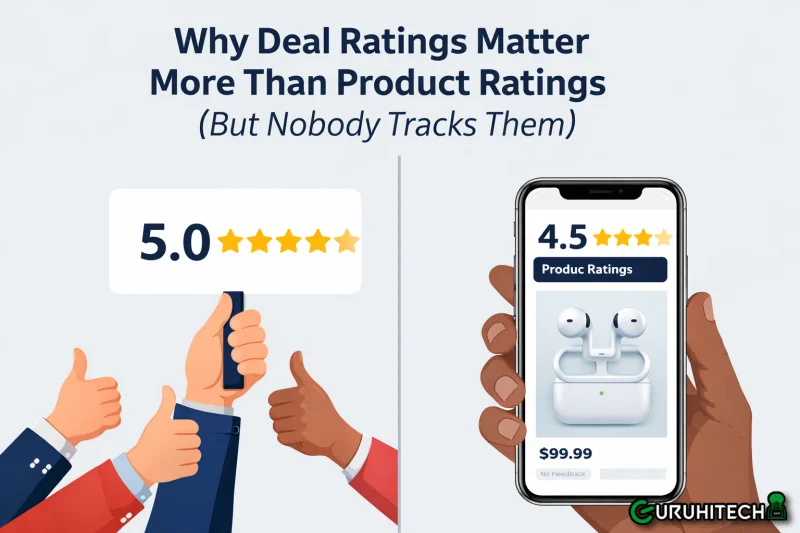
Why Deal Ratings Matter More Than Product Ratings (But Nobody Tracks Them)
I spent twenty minutes last Tuesday night hunting for a laptop deal I’d seen on three different coupon sites. Same discount, same product, same store. Only one worked. The other two? Dead links and a ‘code expired’ message that made me want to throw my phone across the room.
Here’s what nobody talks about: we obsess over product reviews but completely ignore the quality of the deals themselves. You can browse available deals on dozens of sites right now and find the same promo code listed everywhere. But which sites actually verify their codes? Which ones update when deals die? Nobody knows, because we don’t rate deals the way we rate products.
This is backwards. According to research from PowerReviews, 93% of shoppers say product reviews influence their purchase decisions. We spend hours reading whether that air fryer actually works or if those jeans fit true to size. But when it comes to the coupon codes and deals that supposedly save us money? We just cross our fingers and hope.
The Missing Feedback Loop
Product ratings work because they close a loop. You buy something, you experience it, you leave a review. The next person benefits. Simple.
Deals don’t work that way. When a coupon code fails, most people just shrug and move on. Nobody goes back to RetailMeNot or Honey to leave a one-star review saying ‘this code is fake’. There’s no infrastructure for it. The feedback loop is broken.
Research from wecantrack found that two in five shoppers face technical issues when applying coupons at checkout. And one in five users missed better deals because they focused on using one specific coupon. This is the normal shopping experience in 2026.
What ‘Deal Quality’ Really Means
When I say deal quality deserves its own rating system, I’m not talking about how much you save. That’s just math. I’m talking about the actual user experience of trying to use that deal.
Does the code actually work? Is it still valid or did it expire last month? How many hoops do you jump through? Do you need to create an account, add three items, spend over $50, and sacrifice your firstborn? Is the ‘free shipping’ deal actually worse than buying direct because the base price is inflated?
22% of shoppers have accidentally let their carts expire, losing their coupon savings. That’s not user error. That’s friction, complexity, and sites that make redeeming deals harder than it needs to be.
Think about ease of use. The best product in the world is worthless if the box won’t open. Same with deals. A 30% discount that requires signing up for three newsletters, downloading an app, and waiting for a confirmation email that never arrives isn’t a deal. It’s a time tax disguised as savings.
The Trust Problem
Fake reviews plague product ratings, everyone knows this. Amazon alone has hundreds of millions of reviews, with experts estimating up to 42% might be fake.
But fake deals? That’s worse. According to the Federal Trade Commission, consumers reported losing more than $12.5 billion to fraud in 2024 which is a 25% jump from the previous year. The online shopping fraud category saw over 387,000 reports in 2024 alone.
Some coupon sites list expired codes for months. Others post ‘deals’ that were never valid to begin with. There are entire fake coupon sites designed to harvest your email or worse.
The wecantrack study revealed that 72% of users trust coupon websites to provide valid deals. But that trust is misplaced when there’s no accountability.
Why Nobody’s Building This
Coupon aggregators don’t want ratings. Sites like RetailMeNot make money whether the code works or not. A rating system would expose that half their deals are dead.
Retailers definitely don’t want ratings. Many retailers intentionally let codes float around semi-broken as a way to price discriminate without actually offering universal discounts.
Users don’t stay engaged long enough. Successfully use a code? You’re done. Code fails? You’re frustrated and moving on. Either way, you’re gone.
The whole ecosystem is designed for one-way information flow.
What a Deal Rating System Could Look Like
Imagine if every deal had ratings for three things: Validity (does it work right now?), Ease (how hard is it to actually use?), and Value (is the promised savings real?).
Simple five-star ratings, just like products. But instead of rating a blender, you’re rating the experience of getting 15% off that blender.
Validity ratings would solve the biggest problem immediately. Verified users could mark codes as working or dead in real-time. If 20 people in the last hour tried a code and it failed, that code gets flagged automatically.
Ease ratings would highlight deals that aren’t worth the hassle. That ‘50% off’ requiring two hours on customer service chat? One star. The instant-apply code? Five stars.
Value ratings would catch misleading deals. Sometimes a ‘30% off’ promotion is applied to artificially inflated prices. Real users could flag when deals are technically valid but practically worthless.
The Behavioral Cost of Bad Deals
Here’s something from wecantrack research that stuck with me: 38% of users feel coupons sometimes make them prioritize cost over quality.
Bad deal systems make this worse. When you spend 30 minutes hunting for a working code, sunk cost fallacy kicks in. You complete the purchase even if the deal is mediocre or the product isn’t quite right.
Nearly 50% of shoppers admitted they’ve experienced regret after bulk buying because of a coupon. The deal became the decision-maker instead of actual need or quality.
If we had deal ratings, you’d know upfront: this code has a 60% success rate and takes an average of 8 minutes to get working. Armed with that knowledge, you might decide the deal isn’t worth it and just buy at regular price.
The Economics Nobody Wants to Admit
Retailers and deal sites benefit from deal friction. Not all friction: if nothing ever worked, people would stop trying. But enough to segment customers by effort.
Some shoppers will jump through hoops for 10% off. Others won’t bother. The retailer gets full price from the second group while appearing generous to the first.
63% of users don’t compare products once they find a coupon. Once you’ve got that code working, you’re bought in. The deal itself becomes a trap that reduces competition.
A deal rating system would expose this, which is exactly why it doesn’t exist prominently.
Moving Forward
The irony is that better deal ratings would probably increase overall shopping efficiency and satisfaction. People would buy more if they trusted the deals more. But we’re stuck in a weird equilibrium where nobody wants to be first.
Product review sites exist because early adopters like Consumer Reports saw a need and built infrastructure before the internet. Online reviews grew organically from that foundation. Deal ratings need someone to build that foundation now.
Until then, we’re all just clicking codes and hoping. We research products for hours and make deal decisions in seconds based on nothing. We’ve built sophisticated systems to evaluate whether a $20 gadget is worth buying but no system at all to evaluate whether the supposed $5 discount on that gadget is even real.
That’s the gap. Someone should fill it. Because right now, the people losing out aren’t just individuals wasting time on bad codes, it’s the entire concept of deals itself, slowly losing credibility because nobody can tell the good from the garbage.
Ti potrebbe interessare:
Segui guruhitech su:
- Google News: bit.ly/gurugooglenews
- Telegram: t.me/guruhitech
- Facebook: facebook.com/guruhitechfb
- Instagram: instagram.com/guruhitech_official/
- X (Twitter): x.com/guruhitech1
- Bluesky: bsky.app/profile/guruhitech.bsky.social
- Rumble: rumble.com/user/guruhitech
- VKontakte: vk.com/guruhitech
- MeWe: mewe.com/i/guruhitech
- Skype: live:.cid.d4cf3836b772da8a
- WhatsApp: bit.ly/whatsappguruhitech
Esprimi il tuo parere!
Ti è stato utile questo articolo? Lascia un commento nell’apposita sezione che trovi più in basso e se ti va, iscriviti alla newsletter.
Per qualsiasi domanda, informazione o assistenza nel mondo della tecnologia, puoi inviare una email all’indirizzo [email protected].
Scopri di più da GuruHiTech
Abbonati per ricevere gli ultimi articoli inviati alla tua e-mail.