
Why Sydney’s Fastest-Growing Buildings Create the Hardest Passive Fire Questions
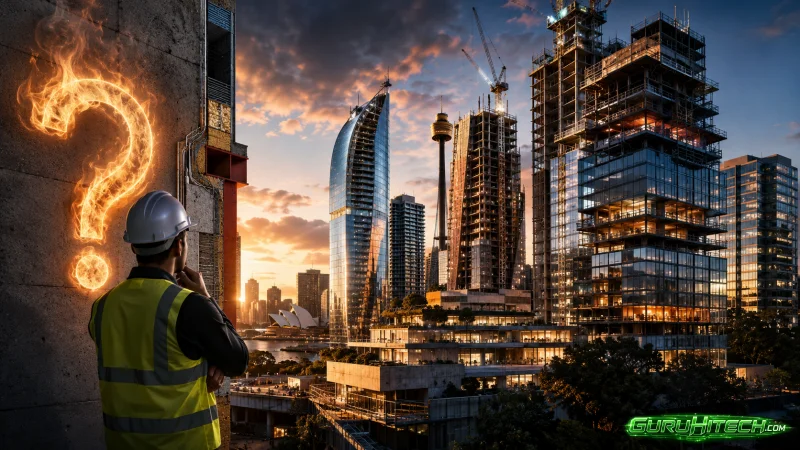
Sydney is building upward, outward, and sideways all at once. Towers climb. Hospitals expand. Student housing grows denser. Logistics sites become more complex. Apartment buildings squeeze more services into tighter footprints. From the street, all that growth can look slick and efficient. But behind the polished façades, the passive fire questions get harder, not easier.
That is the contradiction. Newer, bigger, faster-growing buildings often look more advanced, yet they can create the most demanding fire-protection puzzles of all. If you are reading about passive fire across Sydney, you are really reading about the invisible barriers, compartments, penetrations, shafts, doors, and rated elements that are meant to hold their nerve when a building is under pressure. And if the job of passive protection is to stop the spread of fire and smoke, then the challenge rises sharply as buildings become taller, busier, and packed with more systems than ever before.
Bigger buildings, tighter tolerances
Let me explain.
A simple building gives passive fire fewer chances to fail. There are fewer services pushing through walls, fewer risers, fewer plant rooms, fewer tenancy changes, and usually fewer strange little compromises hidden behind ceilings. Fast-growing Sydney buildings are the opposite. They are layered, service-heavy, and constantly adapting. One floor might be residential, another commercial, another plant space, another back-of-house area supporting retail or health uses. Even when the building class is clear on paper, the lived complexity is much higher.
That matters because passive fire is not only about having thick walls or rated doors. It is about maintaining the fire-resisting performance of the whole building fabric. NSW’s Fire Safety Schedule framework says the schedule must include the essential and critical fire safety measures that apply to a building and be tailored to the building’s specific use and risk profile. In other words, a more complex building carries a more tailored, more demanding fire-safety story.
Complexity loves tiny weak spots
Here is where it gets interesting. Passive fire rarely fails in one dramatic, movie-style moment. It tends to fail through small, ordinary changes.
A new cable route here. An extra pipe there. A revised ceiling setout, a shifted wall, a contractor cutting a neat opening because the services need somewhere to go. Each change feels harmless. Together, they can nibble away at compartmentation and create weak points no one notices until much later.
And that is why fast-growing buildings create harder passive fire questions. They generate more change. More services, more penetrations, more coordination challenges between trades, more opportunities for someone to say, “That bit was handled by another contractor,” which is construction-speak for “I’m not touching that problem.”
The building may be new, but the hidden risk is often born from speed and complexity, not age. That is worth sitting with for a second.
Passive fire gets harder when a building becomes a machine
Many modern Sydney buildings behave less like static structures and more like machines. They are full of moving parts, smart systems, HVAC networks, access control, data infrastructure, lift interfaces, security overlays, and plant that would have sounded excessive twenty years ago.
That is great for performance and convenience. It is not great for simplicity.
The more services you thread through a building, the more passive fire must hold its shape around them. The more a building relies on vertical shafts and interdependent systems, the more important fire-resisting construction becomes. NSW’s fire-safety certification framework keeps coming back to “essential fire safety measures” for exactly this reason. It recognises that building safety is not a decorative layer added at the end. It is built into how the building functions and how it is later assessed through annual fire safety statements and other compliance mechanisms.
So yes, the building may be faster, smarter, and more profitable. It may also be much easier to compromise quietly.
Strata towers and shared ownership make the questions even messier
Apartment growth adds another wrinkle. Once a building is in strata, the responsibility picture becomes more crowded. Committees, managing agents, contractors, owners corporations, and individual lot owners all touch the life of the building in different ways.
NSW’s strata safety guidance now makes it clear that apartment buildings must have certain fire safety systems inspected, tested and serviced in line with AS 1851-2012 from 13 February 2026, unless a performance solution applies. That does not solve the passive fire puzzle on its own, but it does sharpen the ownership conversation. Someone has to know what exists, what has changed, and where the weak spots might be.
And honestly, shared ownership is brilliant at producing shared uncertainty. Everybody assumes somebody else knows more than they do. Sometimes nobody does.
The hardest question is often the simplest one
When a fast-growing building gets complicated, the hardest passive fire question is often not technical. It is embarrassingly simple: what is actually there now?
Not what was designed, not what was approved at concept stage, not what the drawings showed before the value engineering, service revisions, and fit-out changes rolled through. What is there now, and does it still do what the building depends on it to do?
That question is where growth exposes weakness. Not because growth is bad, but because speed is unforgiving. Fast development rewards momentum. Passive fire rewards discipline. Those two mindsets do not always get along.
So what should owners and managers take from this?
Probably this: the hardest passive fire questions do not appear because Sydney is growing. They appear because growth produces buildings with more interfaces, more trades, more changes, and more opportunities for tiny compromises to hide in plain sight.
The Fire Safety Schedule must reflect the building’s use and risk profile. Annual statements must cover the essential measures that apply. Owners now carry a clearer responsibility under the post-2026 framework to maintain those measures properly and fix defects promptly. None of that is abstract. It is the practical language of a city trying to grow without letting complexity outrun control.
And that, really, is the heart of it. Sydney’s fastest-growing buildings create the hardest passive fire questions because they are the buildings most likely to look complete while still hiding uncertainty. They are polished, impressive, and full of movement. But passive fire does not care about appearances. It cares about continuity, containment, and whether the invisible boundaries still hold when they have to.
Scopri di più da GuruHiTech
Abbonati per ricevere gli ultimi articoli inviati alla tua e-mail.