
Ensuring Secure Cloud Connectivity in Multi-Cloud Environments
Key Takeaways
- Understanding the importance of secure cloud connectivity in modern enterprises.
- Exploring strategies to mitigate risks associated with multi-cloud environments.
- Highlighting the role of advanced platforms in enhancing cloud security.
Table of Contents
Introduction
In today’s digital landscape, enterprises are increasingly adopting cloud solutions to enhance agility and scalability. However, ensuring secure and efficient connectivity across diverse cloud environments remains a significant challenge. The Versa SASE platform by Versa Networks offers a comprehensive solution that integrates security and networking services, effectively addressing these challenges. By combining multiple functions into a unified framework, organizations can simplify network management while maintaining consistent protection across users and locations. This approach also supports evolving business needs by enabling secure access to applications and data regardless of where employees or devices are connected.
The Importance of Secure Cloud Connectivity
As enterprises migrate to the cloud, secure connectivity becomes paramount. A robust cloud infrastructure ensures data integrity, confidentiality, and availability, which are critical for maintaining trust and compliance. Comprehensive solutions that integrate security and networking services can help organizations effectively address these challenges.
Cloud connectivity underpins modern digital transformation initiatives, enabling organizations to access mission-critical applications and services from anywhere, at any time. Secure connectivity guarantees that sensitive data transactions, whether internal collaborations or customer-facing services, are protected from malicious attacks and unauthorized access. Moreover, regulatory requirements worldwide mandate strict data protection and privacy policies, underscoring the importance of robust cloud security architectures. Enterprises that can demonstrate their cloud environments are protected gain a significant trust advantage with customers and partners alike.
The rapid shift to remote and hybrid work environments has further amplified the need for secure connectivity across public, private, and hybrid clouds. Employees are accessing corporate assets from a wide range of devices and networks, often far from traditional on-premises security controls. This shift necessitates cloud-native security solutions that are both scalable and adaptable to changing business needs.
As awareness of data breaches and compliance violations continues to rise, executives and IT leaders are increasingly prioritizing investments in advanced cloud security. Developing a holistic cloud security strategy not only addresses current threats but also anticipates future challenges. This proactive mindset is shaping a new era of digital enterprise, where robust protection forms the foundation for ongoing innovation and customer confidence.
Challenges in Multi-Cloud Environments
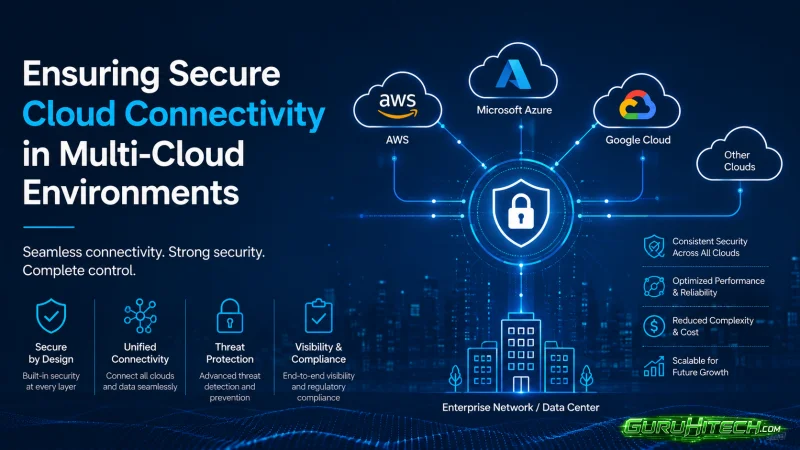
Adopting a multi-cloud strategy offers flexibility but introduces complexities. Businesses often face the “Single-Cloud Trap,” where reliance on a single provider can lead to operational risks during outages or cyberattacks. Additionally, integrating multiple cloud services can result in fragmented security policies and increased vulnerability.
Managing security across multiple cloud platforms, such as AWS, Azure, and Google Cloud, requires careful coordination of identity management, network segmentation, and compliance frameworks. Each provider can have unique configuration standards, which—if misaligned—can inadvertently expose sensitive resources. Furthermore, tracking and controlling data flow between different environments becomes increasingly strenuous as organizations scale up their cloud usage.
Another challenge is achieving visibility across cloud workloads. Without end-to-end transparency, cyber threats may go undetected for longer periods, increasing potential damage. Legacy tools, designed for on-premises systems, often lack the flexibility needed for seamless integration with cloud-based operations, further complicating organizations’ security posture.
Strategies for Enhancing Cloud Security
To mitigate these risks, enterprises should consider the following strategies:
- Implementing Zero Trust Architecture: This approach ensures that every access request is authenticated and authorized, regardless of its origin.
- Utilizing Secure Access Service Edge (SASE): SASE combines network security functions with WAN capabilities to support dynamic, secure access needs.
- Regular Security Audits: Conducting periodic assessments helps identify and address vulnerabilities promptly.
Beyond these foundational strategies, organizations should leverage advanced security orchestration and automation tools to facilitate rapid response to threats. Automated incident response can dramatically reduce attackers’ dwell time, containing breaches before they escalate. Maintaining up-to-date threat intelligence feeds and incorporating them into security solutions ensures that defensive mechanisms are responsive to the latest tactics, techniques, and procedures (TTPs) used by adversaries.
Employee training is also a critical aspect of enhancing cloud security. Human error remains a leading cause of data breaches, often due to phishing attacks or misconfigured cloud services. Establishing a culture of security awareness, combined with regular simulation exercises, can help fortify the first line of defense against sophisticated cyber threats.
Another forward-looking strategy involves fostering collaboration between internal IT teams and external security partners. Engaging with managed security service providers (MSSPs) can provide additional oversight, expertise, and advanced threat detection capabilities. This multi-layered security approach enables organizations to adapt quickly to new risks and address gaps in their internal resources or knowledge base.
The Role of Advanced Platforms
Advanced platforms play a crucial role in enhancing cloud security by integrating networking and security capabilities into a unified framework. These solutions provide centralized management, unified security policy enforcement, and real-time analytics, making them particularly valuable for large enterprises with global operations.
With comprehensive visibility into network traffic and user behavior, organizations can quickly identify suspicious activities and enforce consistent security controls regardless of location or device. Common capabilities such as next-generation firewalls, secure web gateways, and cloud access security brokers (CASBs) help strengthen security for organizations adopting cloud-first strategies.
By leveraging AI and machine learning, advanced platforms can proactively detect and remediate threats before they escalate into full-scale incidents. This intelligence-driven approach improves resilience and helps organizations stay ahead of an evolving threat landscape.
Integration with cloud-native DevOps tools can further streamline security operations and reduce administrative overhead. The availability of APIs and flexible deployment models enables organizations to automate routine security functions while keeping pace with the speed and scale of modern cloud-native development. This seamless integration empowers IT teams to maintain strong security practices even as business requirements and digital infrastructures continue to evolve.
Conclusion
Ensuring secure cloud connectivity is essential for modern enterprises navigating the complexities of multi-cloud environments. By adopting strategic security measures and leveraging advanced platforms, businesses can safeguard their data and maintain operational resilience.
Ultimately, the ability to securely connect, manage, and protect resources across the cloud spectrum is a key differentiator in today’s competitive market. Enterprises that invest in comprehensive and integrated solutions, such as Versa SASE, are better positioned not only to prevent loss and disruption but also to innovate rapidly and confidently in the digital age. As the cloud landscape continues to evolve, a proactive and adaptive approach to security and connectivity will remain foundational to sustainable business success.
Scopri di più da GuruHiTech
Abbonati per ricevere gli ultimi articoli inviati alla tua e-mail.