
Headless Umbraco: When to Go API-First (and When You Don’t Need To)
Introduction
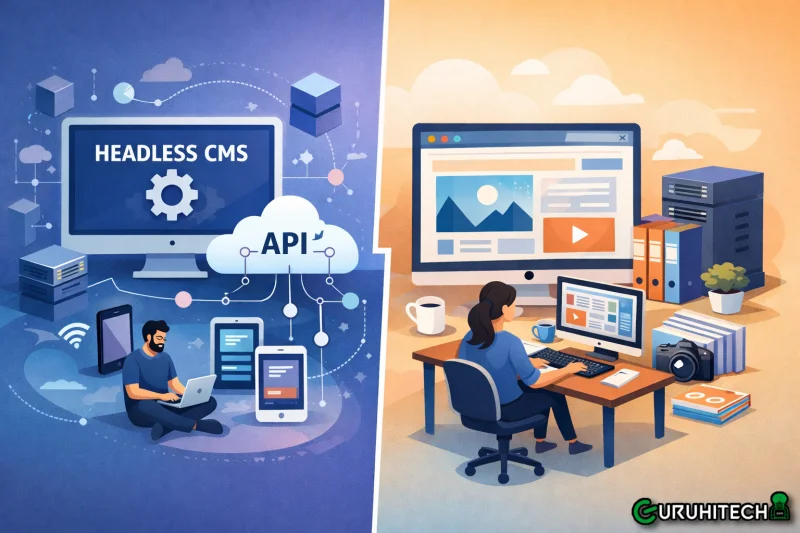
Headless CMS is no longer an experiment.
It’s established, understood, and widely implemented. That alone changes how the conversation should start.
The question is no longer whether a CMS can be used in a headless or API-first way. Most modern platforms, including Umbraco, have supported that model for years. What has changed is the cost of choosing it for the wrong reasons.
Teams still default to headless because it feels future-proof, flexible, or technically progressive. In practice, those benefits only materialize under specific operating conditions. Outside of them, API-first architectures often introduce complexity where none previously existed, especially for editorial teams.
This is not an argument against headless Umbraco. It is an argument for being deliberate.
The most effective Umbraco implementations are not defined by architecture trends, but by how closely they reflect how teams actually work: across content, frontend, and delivery.
What “API-First” Actually Means in Umbraco Today
In practice, API-first in Umbraco does not mean abandoning the CMS interface or committing to a fully decoupled build from day one.
It means the platform treats content access as a first-class concern, not a secondary one. Content can be created, structured, secured, and then consumed consistently through APIs without requiring the frontend to mirror back-office assumptions. That distinction matters more than the architectural label.
For some teams, this results in a fully headless setup with multiple consumers pulling from the same content source. For others, it simply means the option exists and that distribution requirements extend beyond a single website.If you are evaluating whether a decoupled setup is right for your organization, this detailed guide on Headless CMS Development can help clarify when the model makes strategic sense.
More importantly, Umbraco does not force this choice upfront. API-first capability exists alongside traditional delivery models, which allows teams to evolve gradually rather than redesign everything at once. Content models can remain stable while consumption patterns change.
This flexibility is the real value. API-first is not a mandate in Umbraco. It is a viable direction – one that only pays off when the operating model supports it.
When Going Headless with Umbraco Makes Sense
- When content has outgrown a single destination:
There’s usually a moment when teams realise they’re no longer thinking in pages. Content is being reused, reshaped, or requested by other teams for other surfaces. That’s when the friction shows up. Not because the CMS can’t handle it, but because it was never meant to be the final stop.
- When frontend work no longer fits CMS release cycles:
Some teams move their frontend regardless of backend readiness. New frameworks, performance work, redesigns, they happen on their own timelines. When that’s already the reality, keeping the CMS tightly coupled starts to feel like an unnecessary dependency rather than a safeguard. For enterprises managing scale and traffic across multiple properties, architecture decisions should also align with performance strategy. If that is part of your roadmap, this resource on optimizing Umbraco for high traffic enterprise websites offers additional perspective.
- When presentation changes faster than the content itself:
In many projects, the words don’t change much. The way they’re delivered does. Layouts shift, channels multiply, and presentation logic gets replaced more often than content models ever do. That imbalance is usually where API-first delivery begins to make sense.
- When APIs are already how systems communicate:
If integrations are already central to how the platform operates, extending that approach to content delivery is usually incremental. Using Umbraco in a headless way then feels like continuity, not reinvention.
Headless tends to work best when it mirrors existing operating patterns rather than introducing new ones.
When Headless Is Unnecessary (and Adds Cost)
When the CMS is where most of the work actually happens:
Some teams live inside the CMS. Drafts, revisions, reviews, approvals, that’s where time is spent. In those setups, separating content from presentation often creates distance rather than flexibility. Editors lose context, and feedback cycles get longer, not shorter.
When frontend ownership isn’t clearly defined:
Headless works best when someone clearly owns the frontend and its direction. When that ownership is shared, temporary, or secondary to other priorities, API-first setups tend to drift. Over time, small changes take longer because no one is quite sure where they belong.
When previewing content matters:
In fully decoupled builds, previewing content in context is rarely straightforward. For teams that rely on seeing how content lands before publishing, this friction becomes noticeable fast. What looked clean architecturally starts to feel slow operationally.
When coupling removes clarity:
Sometimes, coupling is doing useful work. For many sites, keeping content and delivery closer together in Umbraco makes responsibility clearer and day-to-day decisions easier.
In these cases, headless doesn’t fail. It just doesn’t pay back what it costs.
The Trade-offs Teams Discover Too Late with Headless Builds
- Preview stops being a given
At some point, someone asks to see content exactly as it will appear before it goes live. In headless setups, that request is rarely trivial. What used to be a built-in expectation often turns into tooling, workarounds, or partial previews that only solve part of the problem.
- Editorial feedback loops get longer
When content and presentation live in different places, feedback has to travel further. Editors describe what they want, developers interpret it, and adjustments come back later. The separation is clean architecturally, but slower operationally.
- Ownership boundaries blur over time
Feedback has to go further when the information and presentation are in distinct areas. Editors say what they want, developers figure it out, and changes come back later. The division is tidy from an architectural standpoint, but it slows things down.
- Flexibility becomes maintenance
At first, it seems apparent what everyone needs to do. As systems develop, simple adjustments bring up old questions: is this work on the content, the frontend, or the integration?
These trade-offs don’t make the wrong choice. They make it a deliberate one.
Conclusion
Headless is no longer a differentiator. It’s simply one of several valid ways to run a CMS.
With Umbraco, the advantage is not choosing API-first by default, but having the option available when operating reality demands it. For some teams, headless removes friction and restores momentum. For others, it introduces distance where clarity once existed.
The strongest implementations are not defined by architectural trends, but by alignment between content, delivery, and the people responsible for both.
Choosing deliberately, rather than early or late, is what keeps that alignment intact.
Ti potrebbe interessare:
Segui guruhitech su:
- Google News: bit.ly/gurugooglenews
- Telegram: t.me/guruhitech
- Facebook: facebook.com/guruhitechfb
- Instagram: instagram.com/guruhitech_official/
- X (Twitter): x.com/guruhitech1
- Bluesky: bsky.app/profile/guruhitech.bsky.social
- Rumble: rumble.com/user/guruhitech
- VKontakte: vk.com/guruhitech
- MeWe: mewe.com/i/guruhitech
- Skype: live:.cid.d4cf3836b772da8a
- WhatsApp: bit.ly/whatsappguruhitech
Esprimi il tuo parere!
Ti è stato utile questo articolo? Lascia un commento nell’apposita sezione che trovi più in basso e se ti va, iscriviti alla newsletter.
Per qualsiasi domanda, informazione o assistenza nel mondo della tecnologia, puoi inviare una email all’indirizzo [email protected].
Scopri di più da GuruHiTech
Abbonati per ricevere gli ultimi articoli inviati alla tua e-mail.