
How Flexible Packaging Supports the Electronics Industry
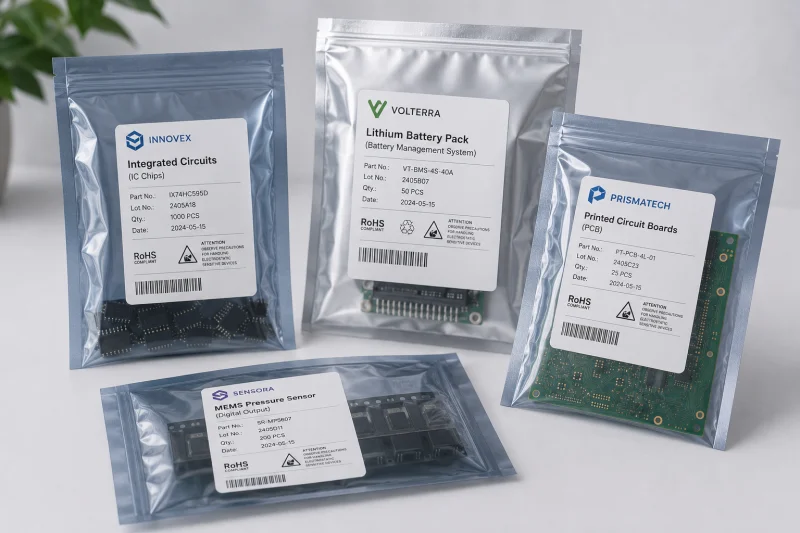
The electronics industry is moving fast. Devices are getting smaller, more advanced, and often more expensive. At the same time, products are shipped across countries and continents, passing through multiple hands before they reach the end user.
That raises a simple question. How do you protect something so small and sensitive throughout that entire journey?
This is where flexible packaging plays a growing role. Companies like EONSEN Pack in China, a reliable custom flexible packaging manufacturer in China, are helping manufacturers address these challenges by providing solutions designed for protection, efficiency, and adaptability. It’s no longer just about wrapping a product. It’s about supporting the entire lifecycle of modern electronics.
Electronics Are Getting Smaller and More Sensitive
Electronics today are far more compact than they used to be. From smartphones to semiconductors and precision components, manufacturers are constantly pushing for smaller, lighter designs without sacrificing performance. This trend is especially visible in industries like consumer electronics, automotive electronics, and new energy systems.
But smaller doesn’t mean tougher. In many cases, it means the opposite. These components are more exposed to risks like moisture, static discharge, dust, and even minor physical impact. For example, a small amount of humidity can affect circuit performance, while static discharge can damage components without leaving visible signs.
That shift makes it clear that traditional rigid packaging isn’t always enough. While it offers basic protection, it doesn’t always adapt well to different shapes, sizes, or handling conditions. As electronics continue to evolve, packaging needs to become more flexible and responsive as well.
How Flexible Packaging Protects Electronic Components
Flexible packaging works because it can be engineered around the exact needs of electronic components. Instead of relying on a standard format, manufacturers can design packaging structures that address specific risks.
For example, moisture barrier layers help prevent humidity from reaching sensitive parts, which is especially important during long storage periods or overseas shipping. Anti-static or ESD features reduce the risk of electrostatic discharge, which can damage circuits even without visible signs. In addition, multi-layer film structures improve puncture resistance and tensile strength, helping protect components from pressure, vibration, and handling stress.
In real-world applications, these features are used across different stages. Semiconductor components may require high-barrier, anti-static bags for storage. PCBs often need protective films during transport. Even during production, components are packaged to prevent contamination and damage between processes. Solutions provided by manufacturers such as EONSEN Pack are often designed to meet these varied requirements without adding unnecessary bulk.
Supporting Global Shipping and Complex Supply Chains
Electronics rarely stay in one place. Components and finished products move across regions, often passing through warehouses, distribution centers, customs checks, and multiple handling points before reaching their final destination. Each step introduces new risks.
Flexible packaging helps manage these challenges in a practical way. Its lightweight structure reduces shipping costs, which becomes significant when moving large volumes internationally. Its space-efficient design allows better use of cartons and containers, improving load efficiency and reducing wasted space.
At the same time, durability remains critical. Flexible packaging can withstand compression, friction, and repeated handling during transit. This reduces the risk of damage and product loss, which can disrupt supply chains and increase costs.
When viewed from a broader perspective, packaging decisions directly affect supply chain performance. The right solution supports smoother operations, fewer delays, and more predictable delivery outcomes.
Adapting to Fast-Changing Manufacturing Needs
Electronics manufacturing operates on tight timelines. Product cycles are short, new models are introduced frequently, and even small delays can affect production schedules.
Packaging needs to keep pace with this environment. Flexible packaging allows for faster development and production, making it easier to adjust when product designs change. Custom sizes, materials, and formats can be created to match specific components, whether for small precision parts or larger assemblies.
Another key factor is compatibility with automation. Many flexible packaging formats are designed to integrate directly into automated production lines, helping maintain speed and consistency without requiring major adjustments.
In many cases, manufacturers depend on experienced suppliers like EONSEN Pack to provide not just materials, but practical solutions that support efficiency, consistency, and production continuity.
The Shift Toward More Sustainable Packaging Solutions
Sustainability is becoming increasingly important in electronics manufacturing. Companies are under pressure to reduce environmental impact, meet regulatory requirements, and align with customer expectations.
Flexible packaging is evolving to support these goals. One approach is the use of recyclable mono-material structures, which make it easier to process packaging after use. Another is reducing overall material thickness without sacrificing performance, helping lower resource consumption and shipping weight.
At the same time, protection cannot be compromised. Electronics still require strong barriers against moisture, static, and physical damage. The challenge is finding solutions that deliver both performance and sustainability.
More manufacturers are now adopting packaging designs that strike this balance, making sustainability a practical part of the supply chain rather than an added burden.
Packaging as a Quiet Driver of Industry Growth
Packaging doesn’t always get much attention in the electronics industry, but it plays a bigger role than it seems. From protecting sensitive components to supporting efficient logistics and production, it quietly keeps everything moving.
When done right, packaging helps reduce damage, improve supply chain efficiency, and make it easier for manufacturers to scale as demand grows. It becomes part of the system, not just an afterthought.
As electronics continue to evolve, packaging will need to evolve alongside it. The connection between the two will only grow stronger, driven by the need for better protection, greater flexibility, and more practical, high-performance solutions.
Ti potrebbe interessare:
Segui guruhitech su:
- Google News: bit.ly/gurugooglenews
- Telegram: t.me/guruhitech
- Facebook: facebook.com/guruhitechfb
- Instagram: instagram.com/guruhitech_official/
- X (Twitter): x.com/guruhitech1
- Bluesky: bsky.app/profile/guruhitech.bsky.social
- Rumble: rumble.com/user/guruhitech
- VKontakte: vk.com/guruhitech
- MeWe: mewe.com/i/guruhitech
- Skype: live:.cid.d4cf3836b772da8a
- WhatsApp: bit.ly/whatsappguruhitech
Esprimi il tuo parere!
Ti è stato utile questo articolo? Lascia un commento nell’apposita sezione che trovi più in basso e se ti va, iscriviti alla newsletter.
Per qualsiasi domanda, informazione o assistenza nel mondo della tecnologia, puoi inviare una email all’indirizzo [email protected].
Scopri di più da GuruHiTech
Abbonati per ricevere gli ultimi articoli inviati alla tua e-mail.