
Nano Banana Pro AI Helps Images Survive Second Use

The first use of an image is usually easy. It sits in the original frame, at the original size, under the generous conditions in which it was generated. The second use is where the truth comes out. The image gets cropped, enlarged, repurposed, compared with other assets, or asked to match a visual standard it did not originally have to meet. That is where Nano Banana Pro becomes interesting. It appears to be built for people who care about what happens after the first result, not just the moment the result appears.
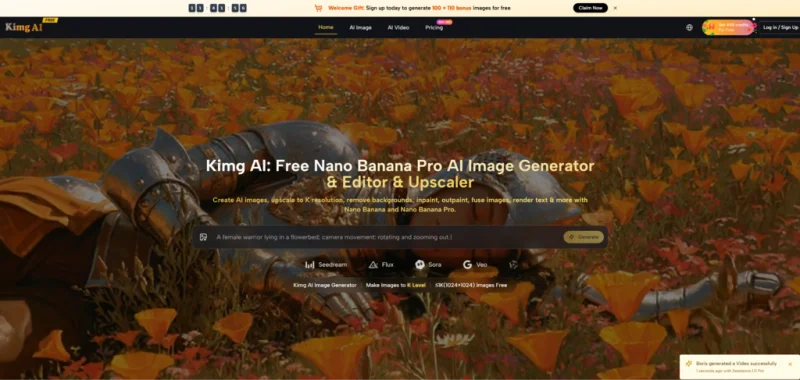
This is an important distinction because many AI image discussions still focus on surprise. The more useful question is durability. Can an image remain believable after revision, resizing, or closer inspection? Can it function as part of an ongoing visual system rather than as a one-time output? Kimg AI seems to answer that question by placing its flagship image model inside a workflow that includes model comparison, reference guidance, editing controls, and high-resolution generation.
Most Visual Work Fails After The Draft Stage
Creative tools often look strongest when they are judged at draft level. A fast result feels exciting, and the platform appears productive. Yet draft-level success is not the same as production readiness. Once an image has to carry brand intent, material realism, or continuity across related outputs, the weaknesses become more obvious.
That is why the platform’s structure matters. The official pages do not frame image generation as a single isolated act. They place it inside a more complete creative sequence: choose a model, guide it with prompts and references, generate or transform the image, then edit, expand, or upscale depending on need.
Why The Model Matters More In Later Stages
Nano Banana Pro is presented as the premium image model for users seeking the highest visual quality. The wording on the site emphasizes realism, micro-detail, advanced rendering, calibrated color depth, and professional-grade 4K, 8K, and 16K output.
Whether every generation reaches that ideal will naturally vary, but the positioning tells you what the model is trying to optimize. It is not just chasing fast image abundance. It is chasing a higher-quality base asset.
What A Better Base Asset Actually Means
A stronger base image becomes useful in several practical ways:
- it crops more cleanly
- it enlarges with less visual collapse
- it supports editing with fewer visible seams
- it feels less fragile when shown in larger formats
- it can anchor later visual variations more effectively
That is why the second-use idea matters. It reveals whether the original output had enough structural quality to keep working.

This Platform Makes References Part Of The Logic
One of the clearest signals of practical intent is support for multiple reference images. The official pages state that Nano Banana and Nano Banana Pro support up to four reference images, and the image workflow descriptions explain that the system analyzes composition, color, and subject structure before generating a new version.
That is a more useful setup than prompt-only generation when the user already has a visual direction in mind.
Why Reference-Led Workflows Feel More Reliable
Reference images do something important: they narrow the gap between intention and interpretation. A prompt might say “elegant,” “cinematic,” or “premium,” but those words still leave room for drift. References give the model something more concrete to align with.
This can help when the user wants to preserve:
- the shape of a product
- the identity of a character
- the visual tone of a campaign
- the composition logic of a source image
- the relationship between realism and stylization
That kind of control is often more valuable than having endless prompt freedom.
Why This Changes Who The Tool Is For
When reference support is strong, a platform becomes more relevant to users who already work with visual standards. Designers, marketers, founders, content teams, and brand builders often care less about raw surprise and more about dependable direction. In that sense, Nano Banana Pro AI feels aimed at a more intentional kind of user.
Why Intentional Users Usually Get Better Results
The users who benefit most are often the ones who arrive with clearer expectations. They are not asking the tool to invent everything. They are asking it to help realize something more precisely. The platform appears well suited to that habit because it treats references as part of the official workflow, not as a side feature.
The System Looks Stronger Because It Supports Repair
One reason many image tools lose value over time is that they act as if the first output should be enough. Real visual work rarely behaves that way. A promising image still needs cleanup, extension, replacement, or selective correction.
Kimg AI appears to understand that. Its official descriptions include background removal, inpainting, outpainting, text rendering, and upscale options. That means the platform expects users to continue working on an image after generation.
Repair Is Often More Important Than Raw Generation
This is a different philosophy from simple one-click creation. Instead of treating imperfection as failure, the platform seems to treat imperfection as a normal part of the process. That is a useful shift because the strongest creative workflows are usually revision workflows.
When repair tools are built into the same system, the user can move more naturally from draft to final use.
Where This Makes The Biggest Difference
Repair-friendly workflows matter most in situations where visual quality carries business or creative weight.
| Practical Situation | Common Problem | Why The Workflow Helps |
| Product imagery | surfaces or edges feel artificial | editing and high-detail output |
| Character-led content | identity shifts between versions | reference consistency |
| Social and landing assets | one image must fit several crops | upscale and repair flexibility |
| Brand visuals | tone drifts too far from source style | guided prompting with references |
| Presentation use | large display reveals hidden flaws | stronger detail retention |
This is not only about making better pictures. It is about reducing the cost of getting them into usable condition.
The Official Process Is About Guidance, Not Complexity
Despite the number of capabilities around it, the actual image process remains fairly simple on the page. It can be described in three steps without stretching the truth.
Step One Begins With Model Selection
The user starts by choosing the model that best fits the intended result. This is meaningful because the platform separates faster or different-generation paths from the more premium Nano Banana Pro route.
Step Two Uses Prompt And Image Inputs Together
The next step is to write a prompt and, if needed, upload source or reference images. The platform then analyzes the image composition, color, and subject before generating a new version based on the user’s instructions.
Step Three Refines The Result For Reuse
Once the image exists, the user can continue with editing, enhancement, and upscale tools. That last stage is where the workflow becomes especially practical, since it turns the result into something more reusable.
A Calm Comparison Shows Why It Stands Out
The strongest case for Nano Banana Pro AI is not that it magically removes uncertainty. It does not. The better case is that it gives users more levers for handling uncertainty productively. Instead of forcing all creative intent through one prompt box, it allows direction through references, control through model choice, and improvement through editing.
That Makes The Platform Easier To Trust
Trust in a tool rarely comes from perfect outputs. It usually comes from whether the tool behaves sensibly when things are imperfect. Kimg AI appears to make a stronger argument there than platforms that only emphasize fast generation.
Where A Balanced Reading Still Helps
A realistic user should still expect some normal limits:
- prompt clarity still affects quality
- reference choice still shapes consistency
- some outputs will need multiple attempts
- the best-looking route may not be the fastest one
These limits do not reduce the platform’s value. They simply explain how to use it with better judgment.
Why Better Judgment Usually Beats Bigger Claims
In my observation, a platform becomes genuinely useful when it supports informed iteration. Users do better when they know that quality comes from selection, comparison, and refinement rather than from pure luck. Nano Banana Pro AI seems designed around that reality.
Nano Banana Pro AI Fits Work That Continues To Evolve
The most compelling thing about this model is not only that it aims for premium image quality. It is that the wider platform treats image generation as the beginning of a creative asset, not the end of one. That mindset matters because most worthwhile images do not live only once. They get reused, reshaped, and asked to do more.
Seen that way, Nano Banana Pro AI is less about spectacle and more about endurance. It appears most valuable when an image needs to keep working after the first draft, after the first crop, and after the first round of excitement has passed. That is a more demanding standard, and it is also a more useful one.
Ti potrebbe interessare:
Segui guruhitech su:
- Google News: bit.ly/gurugooglenews
- Telegram: t.me/guruhitech
- Facebook: facebook.com/guruhitechfb
- Instagram: instagram.com/guruhitech_official/
- X (Twitter): x.com/guruhitech1
- Bluesky: bsky.app/profile/guruhitech.bsky.social
- Rumble: rumble.com/user/guruhitech
- VKontakte: vk.com/guruhitech
- MeWe: mewe.com/i/guruhitech
- Skype: live:.cid.d4cf3836b772da8a
- WhatsApp: bit.ly/whatsappguruhitech
Esprimi il tuo parere!
Che ne pensi di questa notizia? Lascia un commento nell’apposita sezione che trovi più in basso e se ti va, iscriviti alla newsletter.
Per qualsiasi domanda, informazione o assistenza nel mondo della tecnologia, puoi inviare una email all’indirizzo [email protected].
Scopri di più da GuruHiTech
Abbonati per ricevere gli ultimi articoli inviati alla tua e-mail.