
The Untold Stories of Associate Cricket Nations and Their Fight for Recognition
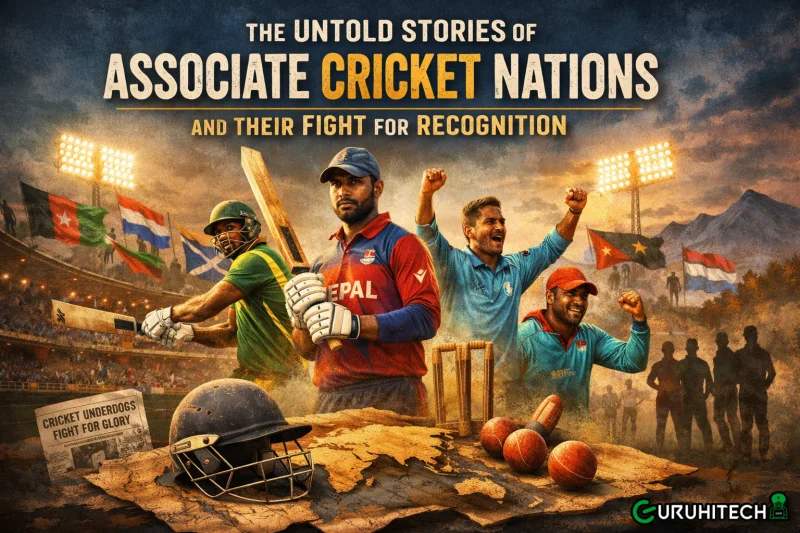
When cricket fans discuss the sport’s global landscape, the conversation typically centres on a familiar group of nations — India, Australia, England, Pakistan, South Africa, New Zealand, Sri Lanka, and a handful of others. But beneath this established hierarchy lies a vibrant ecosystem of associate cricket nations where the sport is played with passion, often against significant odds, and where every step toward international recognition represents a hard-fought achievement.
The stories of associate nations are cricket’s most underreported narratives — stories of players who hold day jobs while training for international matches, of cricket boards operating on budgets that wouldn’t cover a single IPL franchise’s catering bill, and of communities where cricket provides identity, purpose, and connection.
What It Means to Be an Associate Nation
The ICC’s membership structure divides nations into Full Members and Associate Members. Full Members play Test cricket and have permanent seats on the ICC Board. Associate Members have limited representation and must compete through qualification pathways to participate in major ICC events. This structural distinction has profound implications for funding, playing opportunities, and development support.
For an associate nation, qualifying for a World Cup is not just a sporting achievement — it is a transformational event. The media exposure, the development funding, and the legitimacy that come with World Cup participation can accelerate a country’s cricketing development by years. Conversely, failing to qualify can mean returning to relative obscurity and limited competitive opportunities.
Success Stories That Inspire
Several associate nations have produced performances that have captured the imagination of the cricket world. Afghanistan’s rise from refugee camps to Test cricket status is one of sport’s most remarkable stories. Nepal’s passionate cricket culture has produced players who have caught the eye of IPL scouts. The Netherlands defeated England in the 2023 ODI World Cup, proving that on any given day, quality cricket can come from unexpected sources.
The United States’ victory over Pakistan at the 2024 T20 World Cup was another landmark moment. It demonstrated that cricket’s competitive landscape is widening, and that associate nations are no longer satisfied with mere participation — they want to compete. Coverage by platforms like comprehensive cricket news platform has been important in ensuring these stories reach a wider audience, giving associate cricket the visibility it deserves alongside coverage of established nations.
The Challenges Are Real
Despite these successes, associate nations face systemic challenges that limit their development. Funding from the ICC, while improved in recent years, remains a fraction of what Full Members receive. Infrastructure — from pitches to training facilities to administrative capacity — is often inadequate. And the limited calendar of competitive fixtures means that players have fewer opportunities to develop against quality opposition.
Player retention is another significant challenge. As noted by Cricket Europe, talented cricketers from associate nations often face a choice between pursuing their cricket career — with limited financial rewards and uncertain international schedules — and securing stable employment in other fields. The absence of professional domestic cricket structures in most associate nations means that even the most talented players cannot earn a living from the sport.
The Pathway to Progress
Improving the prospects of associate cricket requires structural changes at the ICC level. More competitive playing opportunities, increased development funding, and a clearer pathway from Associate to Full Member status would all help. The expansion of World Cup formats to include more teams has been a positive step, but the gap between qualification and competitiveness remains wide.
Investment from established cricket nations — through bilateral series, development partnerships, and coaching exchanges — can also accelerate progress. According to reports from the ICC Associate Members, several Full Members have established development programmes in associate nations, though the scale of these initiatives varies significantly.
Why Associate Cricket Matters
Associate cricket matters because the sport’s long-term health depends on genuine global participation. A sport dominated by a handful of nations risks stagnation, both competitively and commercially. The energy, passion, and fresh perspectives that associate nations bring to cricket enrich the sport in ways that cannot be quantified by market size or broadcast revenues.
Every cricket-playing nation was once new to the sport. The countries that now dominate were once learning the game themselves, developing their own traditions and pathways. Supporting associate nations is not charity — it is an investment in cricket’s future, ensuring that the sport continues to grow, diversify, and inspire new communities around the world.
About the Author
This article is a guest contribution. The views expressed are those of the author and do not necessarily reflect the editorial position of the host publication.
Scopri di più da GuruHiTech
Abbonati per ricevere gli ultimi articoli inviati alla tua e-mail.