
Transforming Creative Concepts Into High Definition Visual Realities With Image to Image
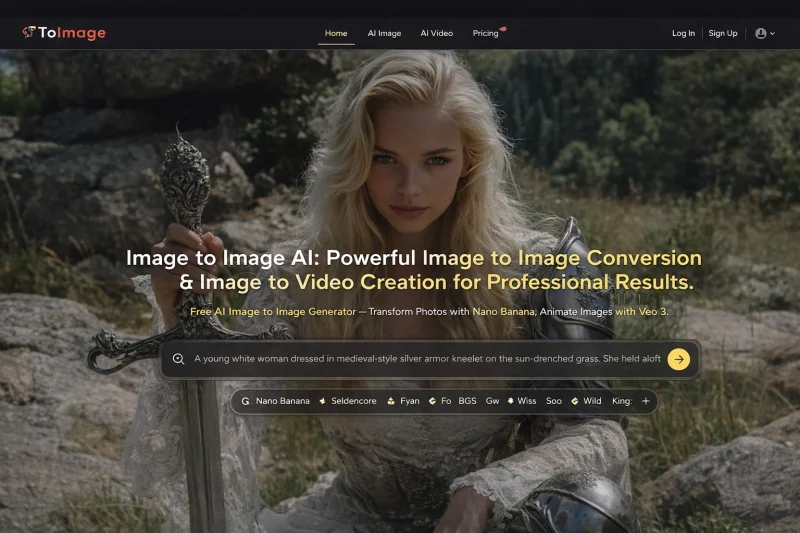
The persistent challenge for digital creators remains the gap between a fleeting mental concept and a polished visual asset. Traditional design workflows often demand hours of manual labor or expensive software suites that have steep learning curves. Many users find themselves trapped in a cycle of trial and error, struggling to communicate specific aesthetic requirements to standard AI generators. By leveraging Image to Image, creators can now bypass these technical hurdles, using existing references to guide the generative process with unprecedented precision. This shift from purely text-based prompting to visual-guided synthesis marks a significant evolution in how we approach digital storytelling and brand identity.
Understanding The Core Mechanism Of Diffusion Based Visual Synthesis
The underlying technology functions by analyzing the structural components of an input image and re-encoding them through a latent diffusion model. Unlike basic filters, this process involves deconstructing the original pixels into a noise-based representation and then reconstructing them based on new textual instructions. In my observation, this creative AI approach allows for a sophisticated balance between maintaining the original composition and introducing entirely new stylistic elements. The stability of the output depends heavily on the denoising strength, a parameter that determines how much of the original source remains visible in the final render.
The Role Of Latent Consistency In Professional Workflows
Professional designers often require more than just a random beautiful picture; they need consistency across a series of assets. The Image to Image framework excels here by acting as a visual anchor. When I tested various prompts, the system demonstrated a remarkable ability to preserve the spatial orientation of objects while swapping out textures or lighting conditions. This consistency is vital for UI/UX prototyping and character design, where the silhouette must remain recognizable across different environmental contexts.
Navigating The Technical Limitations Of Current AI Models
While the results can be breathtaking, it is important to acknowledge that AI generation is not a magic wand. The output is fundamentally dependent on the quality of the initial prompt and the clarity of the reference image. Sometimes, complex anatomical details like human hands or intricate overlapping shadows may require multiple iterations to perfect. Recognizing these limitations is part of mastering the tool, as it encourages a more iterative and experimental approach to digital artistry.
A Streamlined Guide To Generating Custom Visual Assets
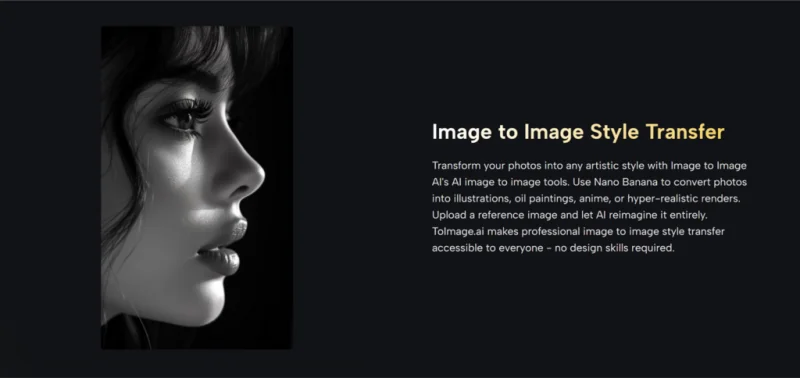
The operational flow of the platform is designed to be intuitive, removing unnecessary friction from the creative process. Based on the official interface, the journey from a blank canvas to a high-resolution masterpiece follows a logical sequence of three primary steps.
Step One Uploading Your Reference Source And Setting Parameters
The process begins by selecting a high-quality base image that serves as the structural foundation for your project. Once the file is uploaded, you must define the creative boundaries by adjusting the influence settings. This stage is crucial because it tells the AI how closely it should adhere to the shapes and colors of your original upload versus how much creative freedom it has to innovate.
Step Two Crafting Descriptive Textual Guidance For Style Refinement
After establishing the visual base, you enter a descriptive prompt to steer the aesthetic direction. This is where you specify the medium, such as oil painting, 3D render, or cinematic photography. In my testing, using specific keywords related to lighting and camera lenses—like “volumetric lighting” or “85mm lens”—tends to yield more professional and predictable results than using vague adjectives.
Step Three Executing The Generation And Refining The Final Output
The final step involves triggering the generation engine and reviewing the variations produced by the model. If the result is close but not perfect, you can use the output as a new starting point for another round of refinement. This iterative loop allows you to slowly “sculpt” the image until it aligns perfectly with your vision, ensuring that the final asset is ready for professional use.
Technical Comparison Of Generative Approaches In Digital Design
| Feature Set | Traditional Manual Editing | Basic Text to Image | Image to Image Workflow |
| Creative Control | Absolute but time-consuming | High randomness | Precise structural guidance |
| Learning Curve | Very high (years) | Low (prompting only) | Moderate (visual logic) |
| Compositional Accuracy | Manual precision | Often unpredictable | High adherence to source |
| Processing Speed | Hours or days | Seconds | Seconds to minutes |
| Iteration Flexibility | Difficult and destructive | Easy but inconsistent | Easy and highly consistent |
Broadening The Horizon Of Modern Digital Content Creation
As the industry moves toward more integrated AI solutions, the ability to manipulate pixels with semantic understanding becomes a core competency for creators. We are seeing a trend where AI tools are no longer seen as replacements for human creativity but as sophisticated extensions of the artist’s hand. This synergy allows for the rapid exploration of “what if” scenarios that were previously too costly or complex to attempt.
Enhancing E-Commerce And Product Visualization Efficiency
For businesses, this technology offers a way to visualize products in diverse environments without the need for physical photoshoots. By using a basic product photo as a reference, marketers can generate dozens of lifestyle scenes in various global locations within minutes. My observations suggest that this significantly reduces the overhead for social media campaigns, allowing brands to stay agile in a fast-paced digital economy.
The Future Of Interactive Media And Concept Art
In the realm of concept art for film and games, the speed of visualization is everything. The capacity to turn a rough thumbnail sketch into a fully rendered environment allows directors to make faster decisions during the pre-production phase. While the technology continues to evolve, the current state of Image to Image synthesis already provides a robust framework for anyone looking to bridge the gap between imagination and digital reality.
Ti potrebbe interessare:
Segui guruhitech su:
- Google News: bit.ly/gurugooglenews
- Telegram: t.me/guruhitech
- Facebook: facebook.com/guruhitechfb
- Instagram: instagram.com/guruhitech_official/
- X (Twitter): x.com/guruhitech1
- Bluesky: bsky.app/profile/guruhitech.bsky.social
- Rumble: rumble.com/user/guruhitech
- VKontakte: vk.com/guruhitech
- MeWe: mewe.com/i/guruhitech
- Skype: live:.cid.d4cf3836b772da8a
- WhatsApp: bit.ly/whatsappguruhitech
Esprimi il tuo parere!
Ti è stato utile questo articolo? Lascia un commento nell’apposita sezione che trovi più in basso e se ti va, iscriviti alla newsletter.
Per qualsiasi domanda, informazione o assistenza nel mondo della tecnologia, puoi inviare una email all’indirizzo [email protected].
Scopri di più da GuruHiTech
Abbonati per ricevere gli ultimi articoli inviati alla tua e-mail.