
Why Damp Keeps Coming Back: The Drainage Connection
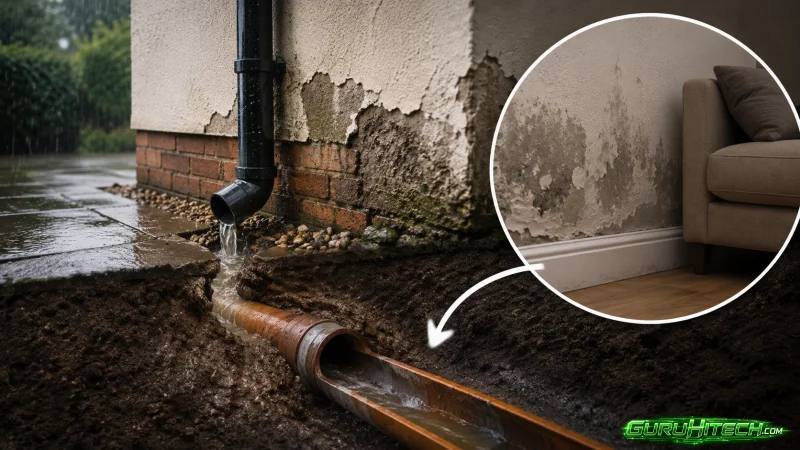
You paint over the stain, wipe away the mould, maybe run a dehumidifier for a few weeks, and for a while the wall looks fine. Then the patch returns, in the same place, a little bigger than before. If that cycle sounds familiar, the problem almost certainly isn’t the wall. It’s water going where it shouldn’t, and more often than not, the culprit is drainage.
Damp and drainage are far more closely linked than most homeowners realise. A blocked gutter, a downpipe discharging against a wall, or ground that sheds rainwater toward the house rather than away from it will keep feeding moisture into the structure no matter how many times you treat the surface. This guide explains how drainage problems turn into damp, why the two are so often confused, and how to break the cycle for good.
How a Drainage Problem Becomes a Damp Problem
Every building relies on water being carried away from it off the roof, down the walls’ outer face, and away from the foundations. When any part of that system fails, water lingers where it can soak in. Saturated ground raises the moisture load at the base of the walls; overflowing gutters send sheets of water down the brickwork; and pooling around the foundations keeps the lowest part of the structure permanently wet.
Because the water enters from outside and shows up inside, the internal symptom a damp patch, blown plaster, or black mould gets treated while the real cause carries on. That’s why recurring damp is worth a professional diagnosis rather than another coat of anti-mould paint. A qualified inspection by damp survey Merseyside specialists such as Weather Wise uses moisture meters to trace where the water is actually coming from, so you fix the source instead of the symptom.
Blocked Gutters and Penetrating Damp
Gutters are the unglamorous heroes of a dry home, and they fail quietly. Fill them with leaves and silt and rainwater spills over the edge, running straight down the external wall. Over weeks and months, that constant wetting drives moisture through the masonry, causing penetrating damp, which appears inside as a patch that darkens whenever it rains and never fully dries.
Downpipes cause the same trouble when they crack, leak at the joints, or discharge too close to the wall. The fix is cheap and almost entirely preventive: clear gutters at least twice a year, especially in autumn, check that downpipes carry water well away from the building, and repair any split sections before winter. It’s the single highest-value drainage job most homeowners can do themselves.
Ground Levels, Paths and Rising Damp
Look at where the ground meets your walls. Over the years, new paths, patios, driveways and flower beds tend to raise the external ground level, and if that level climbs above the building’s damp-proof course, it ‘bridges’ it, giving groundwater a path straight into the wall above. The result looks like classic rising damp: a tide-mark up to about a metre high, flaky plaster and salt deposits.
Sloping the ground away from the house, lowering raised beds and gravel, and keeping at least 150mm between the ground and the damp-proof course all help. Where a path or patio has already bridged the DPC, the fix may be more involved, which is exactly the kind of thing a proper survey identifies before you spend money guessing.
Sub-Floor Ventilation and Hidden Moisture
Older homes with suspended timber floors rely on air bricks to keep the void beneath them ventilated and dry. Block those air bricks with a new driveway, decking, or a raised border and the space beneath the floor stops breathing. Moisture builds, timber stays damp, and you get musty smells, cold floors and, in the worst cases, wet rot or woodworm in the joists.
Keeping air bricks clear and unobstructed is another simple, high-impact habit. If you’ve recently had outdoor work done and noticed the floors feeling colder or smelling musty, blocked ventilation is a prime suspect worth investigating before the damage reaches the timber.
A Simple Seasonal Drainage Routine
Because most recurring damp starts with drainage, a light seasonal routine prevents the majority of it. In autumn, clear gutters and downpipes and check that water discharges well away from the walls. In winter, watch for overflow and icicles that signal a blockage. Also in spring, inspect the pointing and render on exposed walls for cracks that let rain in. And once a year, walk the perimeter to confirm the ground, paths and borders still sit below the damp-proof course.
None of these jobs takes long or costs much, but together they keep water moving away from the building instead of into it. Homeowners who make this a habit rarely see the recurring patches that plague everyone else, because the water never gets the chance to soak in.
If you have done all of that and the damp still returns, that is the clearest signal the source is hidden behind render, below ground, or inside the sub-floor void and worth a professional’s instruments to locate.
Breaking the Cycle for Good
The pattern behind almost all recurring damp is the same: an external water problem creating an internal symptom. Treating the inside replastering, repainting, dehumidifying buys time but never lasts, because the water keeps arriving. The durable fix is always to find and stop the source.
That usually means a short checklist: clear and repair the guttering, redirect downpipes, lower any ground that has crept above the damp-proof course, and free up blocked ventilation. Where the source isn’t obvious, or the damp is severe, a professional survey pinpoints it with instruments rather than guesswork and tells you precisely what needs doing and, just as usefully, what doesn’t.
The Takeaway
If damp keeps returning to the same spot, stop fighting the wall and start looking at the water. Nine times out of ten the answer is outside: a gutter, a downpipe, a raised path, or a blocked air brick quietly feeding moisture into the building. Fix the drainage and the damp has nowhere to come from, and when the source isn’t clear, a proper diagnosis is the fastest way to end the cycle instead of repainting over it every year.
Ti potrebbe interessare:
Segui guruhitech su:
- Google News: bit.ly/gurugooglenews
- Telegram: t.me/guruhitech
- Facebook: facebook.com/guruhitechfb
- Instagram: instagram.com/guruhitech_official/
- X (Twitter): x.com/guruhitech1
- Bluesky: bsky.app/profile/guruhitech.bsky.social
- Rumble: rumble.com/user/guruhitech
- VKontakte: vk.com/guruhitech
- MeWe: mewe.com/i/guruhitech
- Skype: live:.cid.d4cf3836b772da8a
- WhatsApp: bit.ly/whatsappguruhitech
Esprimi il tuo parere!
Ti è stato utile questo articolo? Lascia un commento nell’apposita sezione che trovi più in basso e se ti va, iscriviti alla newsletter.
Per qualsiasi domanda, informazione o assistenza nel mondo della tecnologia, puoi inviare una email all’indirizzo [email protected].
Scopri di più da GuruHiTech
Abbonati per ricevere gli ultimi articoli inviati alla tua e-mail.