
Why You Need Proper Sealing in High-Pressure HVAC Applications
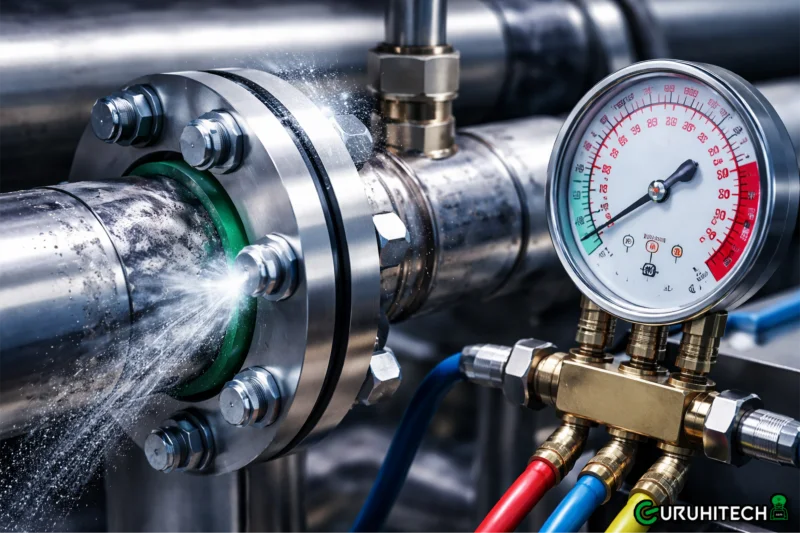
HVAC systems of high pressure carry massive amounts of air with a lot of force and thus even the slightest of gaps poses a cause of huge loss of performance. Efficiency is not the only issue that is associated with proper sealing, but also the stability of the system, its safety, and its reliability in the long run.
The pressure also escapes when joints, access doors, and panel connections are not sealed properly, components work more, and operating conditions are quite unpredictable. Expertise of the role of sealing aids the facility managers and engineers to uphold uniform air movement, shield equipment, and the design purpose of the system.
Pressure Control
Under great pressure conditions, air will always take the path of least resistance, and it is usually the badly sealed seams and openings. These spillages diminish the quantity of conditioned air, which arrives in occupied spaces, and the equilibrium of supply and return.
This imbalance may result in fans running beyond the optimum operating range over time, resulting in higher levels of vibration and mechanical loading. A continuous barrier is formed by proper gasketing and sealing materials to enable the system to maintain constant internal pressure.
Temperature and humidity are also correctly controlled with the help of constant pressure containment. Escape of air through unsealed joints can cause control systems to overcompensate because sensors can provide false readings. It results in the cyclic nature and imbalanced environmental conditions.
Bearing in mind to use durable sealing products, some of which have the integration of fabric fiberglass, contributes to keeping tight connections that would not wear out of variations in pressure repeatedly without losing their integrity or dragging away their mating surfaces.
Energy Loss
High pressure ductwork and equipment causing air leakage is directly correlated with wasted energy. To overcome losses the system has to create more air to carry them away and this accelerates the speed of fans and electricity.
This increased load increases operating expenses and reduces the life of the motors and bearings. With correct sealing, the amount of air that needs to be moved can be minimized, and the system can be able to provide demanded performance using less input power.
Sealing is also used in conjunction with the thermal materials around it. Where there are gaps in or around the panels or entrances, conditioned air will fail to reach or disturb nearby fiberglass insulation, reducing its effective R-value.
Tight seals ensure that air moves in the direction it was meant to flow and insulation is ensured as expected. This mix enhances the total thermal efficiency and assists the facilities to achieve energy goals without significant upgrades of the equipment.
System Reliability
The high pressure systems exert constant pressure on the joints, doors and flanges. These areas are left improperly sealed and are susceptible to erosion caused by high-speed air and particulate matter. This may widen gaps over time and increase the rate of corrosion resulting in expensive repairs or unexpected closure. Compression is distributed uniformly by quality gaskets and this prevents direct airflow on metal edges thus maintaining structural integrity.
In terms of maintenance, it is also effective in preventing the contamination spread and entry of unfiltered air to sensitive zones due to proper seal. Constant pressure lines assist in maintaining the operation of filtration systems and also to make sure that air is distributed where it is supposed to be distributed. Sealing also helps maintain the performance and increases service life by minimizing mechanical stress and managing leakage routes.
Effective sealing is one of the key factors of successful operation of high-pressure HVAC systems, as it affects the stability of pressure, energy performance, and service life.
Tight, durable gaskets and sealing material are used to assist in ensuring the designed airflow, insulation protection, and operating stress to major parts. Facility operators can obtain better predictability in the functioning of their HVAC systems, reduce their energy expenses, and obtain a broader service life of their equipment through sealing as part of system design and maintenance.
Ti potrebbe interessare:
Segui guruhitech su:
- Google News: bit.ly/gurugooglenews
- Telegram: t.me/guruhitech
- Facebook: facebook.com/guruhitechfb
- Instagram: instagram.com/guruhitech_official/
- X (Twitter): x.com/guruhitech1
- Bluesky: bsky.app/profile/guruhitech.bsky.social
- Rumble: rumble.com/user/guruhitech
- VKontakte: vk.com/guruhitech
- MeWe: mewe.com/i/guruhitech
- Skype: live:.cid.d4cf3836b772da8a
- WhatsApp: bit.ly/whatsappguruhitech
Esprimi il tuo parere!
Ti è stato utile questo articolo? Lascia un commento nell’apposita sezione che trovi più in basso e se ti va, iscriviti alla newsletter.
Per qualsiasi domanda, informazione o assistenza nel mondo della tecnologia, puoi inviare una email all’indirizzo [email protected].
Scopri di più da GuruHiTech
Abbonati per ricevere gli ultimi articoli inviati alla tua e-mail.