
How AI Video Generators Are Changing the Way We Create and Share Videos
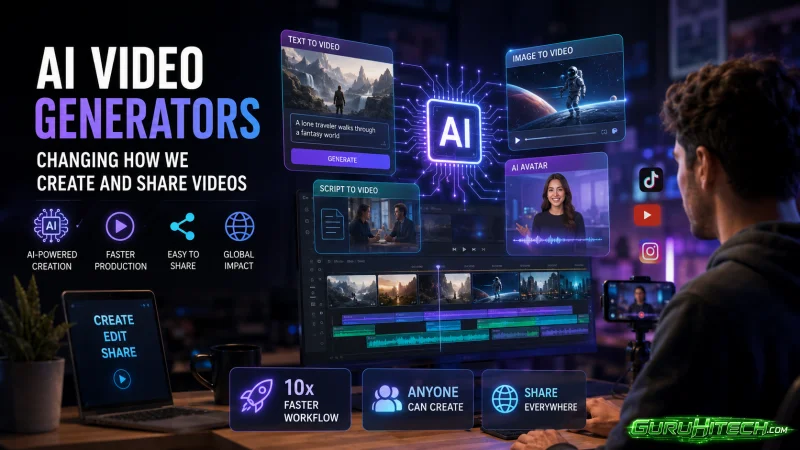
Video has become one of the most visible forms of digital communication. People discover products, follow creators, learn new skills, watch technology news and keep up with brands through video across websites and social platforms. At the same time, creating useful video content can require planning, filming, editing, visual assets, sound and repeated revisions. The growing use of artificial intelligence is changing that process by giving creators another way to develop and experiment with video.
An AI Video Generator with the creative capabilities of Higgsfield can help turn written ideas, prompts and visual references into video concepts without requiring every idea to begin with a traditional production setup. This can be useful for creators who want to explore different scenes, businesses that need more marketing material, publishers producing visual stories, and social media users looking for new ways to present information. The technology is not simply about producing more videos; it is also changing how people think about the creative process.
Its creative environment brings video generation and editing capabilities together, giving users ways to develop scenes from prompts and references, explore different visual directions and continue refining their ideas. This makes the technology relevant to a wider group of creators who want to experiment with video without treating every concept as a large production project.
The Shift From Traditional Video Production to AI Assisted Creation
Traditional video production remains important, especially when authentic people, products, locations, or events need to be shown. A camera can capture details and moments that generated footage cannot genuinely reproduce. However, conventional production can also make experimentation slower. A creator may have an idea for a short clip but still need equipment, a location, actors, lighting, editing and time to turn the idea into something usable.
An AI Video Generator changes the early part of this process. Instead of immediately organizing a production, creators can first explore whether an idea works visually. They can test different settings, moods, movements, and compositions before deciding whether a concept deserves further development.
This creates a useful middle ground between imagination and production. The first result does not need to be perfect. It can act as a visual draft that helps the creator understand what works and what needs to change.
Turning Written Ideas Into Visual Concepts
One of the most interesting changes is the connection between language and visual creation. A person can describe a scene in words and use those instructions as the starting point for a generated video.
For example, a creator working on a technology story might want to show a futuristic data centre, a business team working with artificial intelligence, or an abstract representation of information moving between systems. These scenes may be difficult or expensive to film, particularly when the goal is conceptual rather than documentary.
It helps creators explore these ideas through prompt based generation and reference driven workflows. Rather than requiring a finished storyboard before any visual experimentation begins, the creator can use generated results to develop the storyboard itself.
This can also improve communication between people working on a project. A writer may have a particular scene in mind, while an editor or designer interprets the idea differently. A generated visual can provide a common reference that makes the discussion more concrete.
Making Social Media Video More Flexible
Social media has created a constant demand for short, visually interesting content. Platforms change quickly, audiences have different viewing habits, and creators often need to adapt one idea into several versions.
An AI Video Generator can give creators another way to develop short clips around a central idea. A product announcement, for example, might be presented through a direct demonstration, a visual story, a short educational sequence, or a more atmospheric concept.
The value is not necessarily that every version will be published. Creating several possibilities can help creators identify the strongest direction before spending more time on editing and production.
Higgsfield can be useful in this stage because its video workflows allow creators to experiment with generated scenes and continue refining them. This makes it easier to treat video as an iterative process rather than a single attempt.
For social media teams, that flexibility can support a more varied content calendar while keeping the main message consistent.
Supporting Digital Creators With More Creative Options
Creators often work across several formats at the same time. A YouTube video may lead to short clips, a social post, a thumbnail concept and supporting visual content, a technology article may become a video explanation. A podcast discussion may inspire a visual summary.
AI can make some of these transitions easier to explore. An AI Video Generator can be used to create supporting scenes, visual introductions, transitions, or conceptual footage around a creator’s existing material. The creator still controls the story, tone, message and final selection, but the initial visual experimentation can happen faster.
This is particularly useful for creators who do not have access to professional studios or large production teams. A smaller channel can experiment with visual ideas that might previously have required additional equipment or outside help.
The result is not automatically better content. Creative judgment remains important. A simple real world clip may communicate an idea more effectively than a complex generated sequence. AI works best when it adds something useful to the story.
Creating More Engaging Technology Content
Technology publications and digital media platforms increasingly use video to explain developments that can be difficult to understand through text alone. New software, AI models, devices, applications and digital trends can benefit from visual explanations.
An AI Video Generator can support this type of content by helping publishers develop conceptual footage for stories where real footage is unavailable. For example, a publication could illustrate a future technology concept, visualize an abstract computing process, or create an introductory sequence for an article.
It provides another option for developing these visual ideas because creators can work from prompts, references and different generation approaches. The resulting material can then be evaluated alongside traditional photography, screen recordings, and other media.
Accuracy remains essential for technology journalism. A generated image or video should not be presented as authentic evidence of a real event or product when it is actually an interpretation. Clear labeling and editorial review help preserve trust.
How AI Can Help With Video Storytelling
Good video is not only about movement. It depends on pacing, sequence, context, sound, and a clear reason for showing each scene.
AI assisted creation can support the visual development of a story by allowing creators to experiment with different sequences. A single idea can be presented through a close up, a wide scene, an environmental shot, or a movement based transition.
This gives creators more room to think visually before final editing begins. Higgsfield can support this process through generation and editing capabilities that allow creators to refine visual concepts rather than stopping at the first output. That is particularly useful when a scene has the right subject but needs a different composition, movement, or atmosphere.
The human creator remains responsible for deciding how the sequence fits the story. AI can produce possibilities, but it does not automatically understand the emotional or informational purpose of every shot.
Product Marketing Is Becoming More Visual
Businesses are another major area where AI generated video can create new possibilities. Product marketing often requires several forms of content, including demonstrations, advertisements, social clips, website visuals, and promotional material.
An AI Video Generator can help marketing teams explore concepts before committing to a full production. A company launching a new product could test different visual environments, campaign moods, or ways of introducing the product.
It can be used as part of this experimentation, particularly when marketers want to develop visual concepts from existing references. A product image or creative direction can become the starting point for additional visual exploration.
However, businesses should be careful about accuracy. Generated content should not imply that a product has features, performance, or physical characteristics that it does not actually have. Marketing teams need to review the final result carefully before publishing it.
Creating Educational and Explainer Videos
Education is another area where video can make information easier to understand. A complicated process can often be broken into smaller visual steps, helping viewers follow the relationship between different ideas.
An AI Video Generator can support educational content about software, science, business, technology, history and many other subjects. A teacher, trainer, or content creator can use generated scenes to provide visual context alongside narration and written explanations.
For technical subjects, accuracy should remain the priority. Generated visuals are useful for illustrating concepts, but code, interfaces, statistics and factual information should be verified independently.
Higgsfield AI creative suits can help creators develop supporting footage for these lessons while allowing the main educational content to remain under human control.
This combination can make educational videos more visually engaging without requiring every scene to be filmed from scratch.
What Are the Limitations of AI Generated Video?
The rapid development of AI video tools does not mean traditional production has become unnecessary. Generated footage can contain inconsistencies, unusual movement, incorrect objects, or details that do not match reality.
Creators also need to think about authenticity. A generated scene may look realistic enough to be mistaken for something that actually happened. That creates particular concerns for news, product reviews, educational material and other content where viewers expect factual representation.
Higgsfield gives creators tools for generation and refinement, but those capabilities do not remove the need for human review. Every published video should be checked for accuracy, relevance, quality and appropriate use.
There are also broader questions around copyright, permissions, privacy and the use of reference material. Creators and businesses should understand the rules that apply to their particular projects and markets.
How Can Creators Use AI Without Losing Their Style?
One concern surrounding AI generated content is that everything could begin to look similar. If creators rely on the same prompts, visual trends and automated approaches, their content may become less distinctive.
The solution is to treat AI as part of a personal creative workflow rather than as a substitute for creative identity.
An AI Video Generator can help with exploration, but the creator should still decide the subject, tone, pacing, message, and visual language. Real footage, original photography, personal narration, screen recordings and authentic experiences can all remain important parts of the final project.
Higgsfield can sit within that mixed workflow, providing additional visual options while the creator maintains control over the overall direction.
The strongest use of AI may therefore be invisible in the final result. What matters is whether the finished video feels intentional and useful rather than whether viewers can identify which individual scene was created with AI.
The Future of Creating and Sharing Video
Video creation is moving toward a more flexible relationship between people and technology. Traditional cameras, editing software, animation, stock footage, and AI generation can all become parts of the same creative process.
An AI Video Generator may make experimentation easier for people who previously found video production too complicated or expensive. It can also give experienced creators another tool for developing ideas and testing visual directions.
It is a part of this broader movement, giving creators access to generation and editing workflows that can support different types of visual experimentation.
The biggest change may be the speed at which an idea can move from a sentence to a visual concept. Instead of waiting until production begins to discover whether an idea works, creators can explore it much earlier.
That can lead to more experimentation, but it also makes creative judgment more important. When producing possibilities becomes easier, choosing the right possibility becomes the real skill.
Final Thoughts
The way we create and share videos is changing as AI becomes part of everyday creative workflows. An AI Video Generator can help creators, publishers, educators, and businesses explore scenes, develop concepts, produce supporting footage, and experiment with different approaches without treating every idea as a full production project.
Higgsfield provides one environment for exploring these possibilities through generation and editing tools. But the technology is most useful when it works alongside human creativity, real footage, clear storytelling, and careful review.
The future of video is unlikely to belong entirely to AI or entirely to traditional production. Instead, creators will have more ways to combine different tools and choose the approach that best suits each story. As those options continue to grow, the most valuable skill will remain the ability to know what is worth creating and why.
Ti potrebbe interessare:
Segui guruhitech su:
- Google News: bit.ly/gurugooglenews
- Telegram: t.me/guruhitech
- Facebook: facebook.com/guruhitechfb
- Instagram: instagram.com/guruhitech_official/
- X (Twitter): x.com/guruhitech1
- Bluesky: bsky.app/profile/guruhitech.bsky.social
- Rumble: rumble.com/user/guruhitech
- VKontakte: vk.com/guruhitech
- MeWe: mewe.com/i/guruhitech
- Skype: live:.cid.d4cf3836b772da8a
- WhatsApp: bit.ly/whatsappguruhitech
Esprimi il tuo parere!
Ti è stato utile questo articolo? Lascia un commento nell’apposita sezione che trovi più in basso e se ti va, iscriviti alla newsletter.
Per qualsiasi domanda, informazione o assistenza nel mondo della tecnologia, puoi inviare una email all’indirizzo [email protected].
Scopri di più da GuruHiTech
Abbonati per ricevere gli ultimi articoli inviati alla tua e-mail.