
Turnkey PCB Assembly: How to Reduce Cost Lead Time Risk and Supplier Headaches
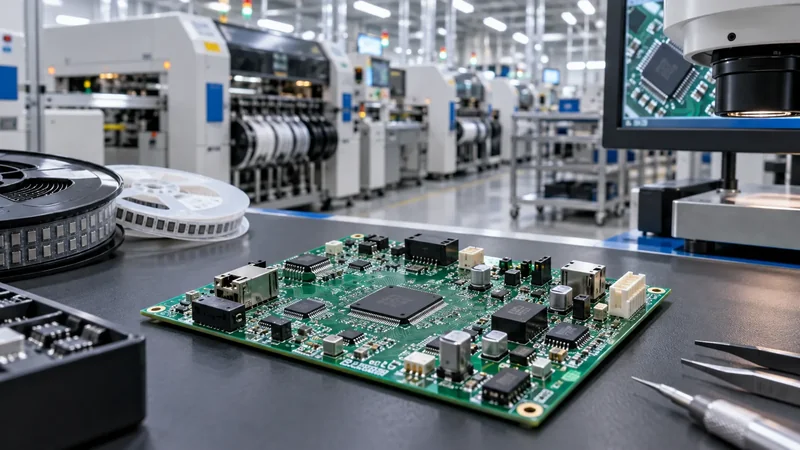
Moving a circuit board from a completed design to reliable production involves far more than placing components on a PCB. Someone must fabricate the bare boards, purchase every component, resolve shortages, verify incoming materials, program assembly equipment, inspect solder joints, run tests, and coordinate delivery.
When these responsibilities are divided among several vendors, engineering teams often become the project coordinators. They spend valuable time comparing component substitutions, tracking shipments, answering manufacturing questions, and determining who is responsible when something goes wrong.
That is the problem turnkey PCB assembly is designed to solve. Under a turnkey model, one manufacturing partner coordinates most or all of the production flow, from PCB fabrication and component procurement to assembly, inspection, testing, and shipment.
The model can significantly reduce administrative work and production risk, but only when the scope, files, sourcing rules, and quality requirements are clearly defined.
What Turnkey PCB Assembly Includes
A typical Turnkey PCB Assembly service combines several manufacturing activities under one supplier:
- Design for manufacturability and assembly review
- Bare PCB fabrication
- Component sourcing and incoming inspection
- Stencil preparation
- SMT and through-hole assembly
- Automated optical or X-ray inspection
- Electrical or functional testing
- Firmware programming when required
- Cleaning, conformal coating, packaging, and shipping
The exact scope varies between suppliers. Turnkey should therefore be treated as a starting point for discussion, not a guarantee that every service is automatically included.
For example, one quotation may include automated optical inspection but exclude functional testing. Another may cover PCB fabrication and assembly while treating firmware programming, test fixtures, coating, or box build as separate services. Buyers should ask for a written scope that identifies what is included, excluded, optional, or dependent on customer-supplied instructions.
Why Engineering Teams Choose a Turnkey Model
Fewer Supplier Handoffs
When PCB fabrication, purchasing, and assembly are managed separately, every handoff creates another opportunity for delay or misunderstanding. A board revision may not match the BOM revision. Components may reach the assembler before the PCBs are ready. A footprint change may not be communicated to the purchasing team.
A turnkey partner coordinates these activities around one controlled production package. This does not eliminate manufacturing risk, but it can make ownership much clearer.
Less Procurement Work
A complex BOM may contain parts from dozens of manufacturers and distributors. Purchasing those components involves checking availability, minimum order quantities, date codes, packaging formats, moisture sensitivity, and lead times.
For a prototype or low-volume build, the internal labor required to source and manage every line item can be disproportionate to the value of the order. A turnkey supplier assumes much of that workload.
Earlier Manufacturing Feedback
A capable supplier should review the design before releasing it to production. This review may reveal insufficient component spacing, unclear polarity markings, unsuitable panelization, inaccessible test points, or parts that are difficult to source. Finding these issues before fabrication is usually easier than repairing assembled boards or ordering a new revision.
One Point of Accountability
If one company manages the bare boards, materials, and assembly process, buyers do not have to mediate every disagreement between separate vendors. There is a clearer path for investigating shortages, fabrication defects, incorrect parts, or assembly problems. Accountability still depends on the contract and approved files, so revision control and written acceptance criteria remain essential.
Turnkey Consigned and Partial Turnkey Models
Turnkey is not automatically the best model for every project. The right choice depends on who can manage the materials most effectively.
| Model | Parts Sourced By | Best Fit | Main Tradeoff |
| Full turnkey | Supplier | Prototypes, pilot runs, small teams, and readily available parts | Less direct control over purchasing decisions |
| Consigned | Customer | Owned inventory, negotiated pricing, or tightly controlled parts | More purchasing, kitting, and shortage management |
| Partial turnkey | Shared by BOM line | Projects with a few specialized or allocated components | Responsibility must be defined for every item |
Partial turnkey is often a practical solution when only a few components require direct customer control. However, every BOM line should clearly identify its purchasing owner. Ambiguous responsibility can leave both parties assuming that the other is sourcing a critical component.
The Real Cost of Turnkey PCB Assembly
A common purchasing mistake is to compare only the assembly price or unit price. A meaningful comparison should consider the total cost of obtaining tested, usable boards.
- Bare PCB fabrication
- Components and procurement services
- Stencil, tooling, and machine setup
- SMT placement and through-hole labor
- Engineering or first-article review
- Inspection and testing
- Programming, coating, or special processing
- Packaging, logistics, and excess materials
Several design decisions can affect these costs. Layer count, board material, copper weight, surface finish, controlled impedance, blind or buried vias, and panel utilization influence PCB fabrication. Component count, package size, double-sided placement, fine-pitch devices, BGAs, and manual through-hole work influence assembly.
The BOM is frequently the largest source of price variation. A quotation based on authorized, traceable components may look higher than one using unclear sourcing channels. Conversely, an assembler with established purchasing relationships may obtain common parts more efficiently than a small buyer ordering them independently.
To compare quotations fairly, ask each supplier to price the same manufacturing scope and identify assumptions, exclusions, tooling charges, testing costs, freight, quote validity, and material ownership.
Files Required for an Accurate Quote
Turnkey service reduces coordination work, but it does not replace complete engineering documentation. At minimum, most assemblers need the following information.
- PCB fabrication data: Gerber, ODB++, or another accepted manufacturing format, along with drill information.
- Bill of materials: Reference designators, quantities, values, package information, manufacturer names, and exact manufacturer part numbers.
- Pick-and-place data: Component coordinates, board side, and rotation information.
- Assembly drawings: Polarity, pin-one orientation, do-not-populate parts, and special assembly notes.
- Fabrication requirements: Stackup, material, thickness, copper weight, surface finish, controlled impedance, tolerances, and applicable workmanship requirements.
- Testing instructions: Test points, expected measurements, test sequence, firmware requirements, and pass or fail criteria.
Every document should show the same project name and revision. Sending an updated BOM with an older pick-and-place file is a common way to create confusion even when each individual file appears valid.
The BOM should also state whether substitute parts are permitted. For sensitive components, include an approved manufacturer list or approved alternates rather than relying on informal email discussions.
How to Control Component Substitutions
Component availability can change between quotation and production. The important question is how substitutions will be evaluated and approved.
- The original and proposed manufacturer part numbers
- Datasheets for both components
- A comparison of electrical and mechanical specifications
- Package and footprint compatibility
- Lifecycle and availability information
- Any effect on firmware, compliance, or testing
- Written customer approval before purchasing or placement
A part with the same nominal value is not necessarily equivalent. Temperature coefficient, voltage rating, tolerance, current capacity, package dimensions, dielectric material, frequency behavior, or qualification level may affect product performance. Critical and no-substitute components should be identified before the supplier begins procurement.
Quality Control Must Match the Board
A list of inspection equipment is useful, but inspection should be selected according to the risks of the design.
Solder paste inspection can identify printing problems before components are placed. Automated optical inspection can detect visible placement and soldering defects. X-ray inspection is valuable for hidden joints beneath BGAs, QFNs, and similar packages.
These methods do not prove that a complete product functions correctly. In-circuit, flying-probe, or functional testing may be needed to detect electrical faults and confirm intended operation.
- Which inspections are included as standard?
- Is X-ray inspection applied to every relevant board or only sampled units?
- Who develops and owns the test fixture?
- What test coverage can be achieved?
- Are test results and failure records available?
- How are nonconforming boards handled?
- What traceability records are retained?
The right answer depends on the product. A simple prototype and a safety-relevant industrial controller should not be assigned identical inspection plans.
What Determines Lead Time
Assembly time is only one part of a turnkey schedule. Overall lead time may also depend on engineering review, PCB fabrication, component availability, substitute approval, tooling, test development, and customer response time.
Long-lead or obsolete components often dominate the schedule. Buyers can reduce uncertainty by asking suppliers to identify availability risks during quotation rather than after the purchase order is placed. It is also useful to separate estimated lead time into milestones.
- File and BOM review
- Customer clarification and approval
- Material procurement
- PCB fabrication
- Assembly setup and production
- Inspection and testing
- Packaging and shipment
A supplier cannot maintain the schedule if essential questions remain unanswered. Fast approval of substitutions, production files, and test procedures is therefore part of successful turnkey execution.
A Practical Supplier Evaluation Checklist
Before selecting a turnkey PCB assembly partner, ask for clear answers to the following questions.
- Can the supplier manufacture the board technology and component packages in the design?
- Are PCB fabrication, sourcing, assembly, and testing performed internally or subcontracted?
- Which component sources are used?
- Are substitutions prohibited until written approval is received?
- What DFM and BOM checks occur before production?
- What inspections and tests are included?
- How are revisions and engineering changes controlled?
- What happens to unused or excess components?
- Which records accompany the shipment?
- Who communicates shortages, technical questions, and schedule changes?
- Can the supplier support the expected transition from prototype to repeat production?
A supplier such as OrinewPCB can be evaluated against this same framework: manufacturing capability, sourcing transparency, engineering review, inspection coverage, communication, and documented responsibility should all be confirmed before production begins.
Final Thoughts
Turnkey PCB assembly works best when it removes coordination work without removing customer visibility.
A reliable project begins with accurate files, an unambiguous BOM, defined substitution rules, and a testing plan that reflects the risks of the design. The quotation should make the full scope visible, while the production schedule should identify dependencies rather than presenting one unexplained delivery date.
When those foundations are in place, turnkey manufacturing can help engineering teams spend less time chasing parts and managing supplier handoffs, leaving more time to improve the product they are trying to bring to market.
Ti potrebbe interessare:
Segui guruhitech su:
- Google News: bit.ly/gurugooglenews
- Telegram: t.me/guruhitech
- Facebook: facebook.com/guruhitechfb
- Instagram: instagram.com/guruhitech_official/
- X (Twitter): x.com/guruhitech1
- Bluesky: bsky.app/profile/guruhitech.bsky.social
- Rumble: rumble.com/user/guruhitech
- VKontakte: vk.com/guruhitech
- MeWe: mewe.com/i/guruhitech
- Skype: live:.cid.d4cf3836b772da8a
- WhatsApp: bit.ly/whatsappguruhitech
Esprimi il tuo parere!
Ti è stato utile questo articolo? Lascia un commento nell’apposita sezione che trovi più in basso e se ti va, iscriviti alla newsletter.
Per qualsiasi domanda, informazione o assistenza nel mondo della tecnologia, puoi inviare una email all’indirizzo [email protected].
Scopri di più da GuruHiTech
Abbonati per ricevere gli ultimi articoli inviati alla tua e-mail.