
Why Premium Connections Demand More Than Torque Alone
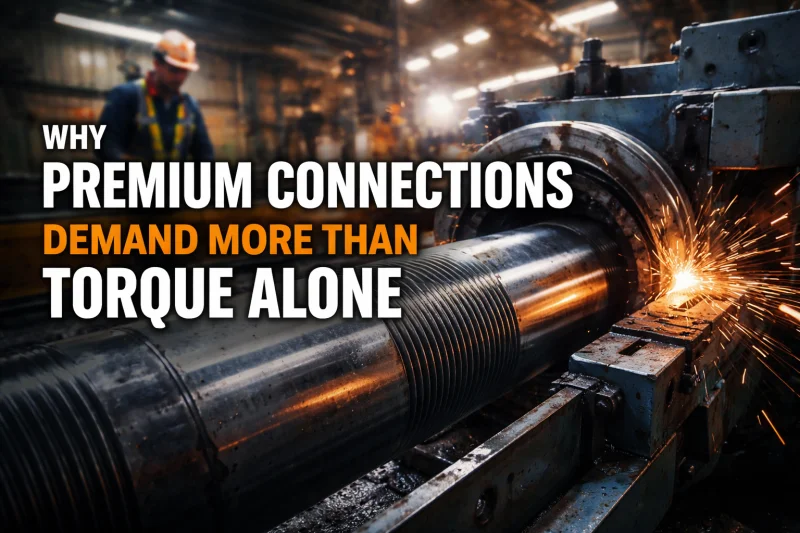
In threaded connection work, reaching the number is not always the end of the story. For some jobs, torque may be enough to make the basic call. For others, it is only one part of a much bigger picture. The quality of the make-up, the stability of the process, the condition of the threads, and the ability to review what happened later can all matter just as much.
That does not make torque any less important. It still sits at the center of many connection decisions. What changes is everything around it. As requirements rise, teams start paying closer attention to whether the process is controlled, whether results stay consistent from one job to the next, and whether the connection can be reviewed later without relying on guesswork alone.
In that setting, a bucking unit for premium connections is not usually judged by output alone. What matters more is how well it supports stable handling, controlled make-up and break-out, better thread protection, and repeatable results. When the connection itself leaves less room for variation, the equipment discussion naturally becomes broader too.
Not every connection asks for the same thing
The way equipment is judged usually changes when the work itself becomes more demanding. If the goal is simply to complete a connection, it makes sense to focus on the immediate result. But once a team starts looking for repeatability across multiple jobs, cleaner handling, and a process that can be reviewed later with confidence, the standard begins to shift.
That shift is especially noticeable in premium connection work. These jobs often ask for more than a successful endpoint. They ask for better process discipline along the way. A connection may reach its target torque and still lead teams to look more closely at how smoothly the process unfolded, how consistent the handling looked, and how clearly the result can be reviewed afterward.
That is why the conversation changes. The question is no longer only whether the connection was completed. It becomes whether it was completed in a way that supported consistency, protection, and confidence.
Why premium connections raise the standard
Premium connections tend to raise the standard because they are often less forgiving of process variation. Small differences during make-up can matter more. The more attention a workflow gives to consistency, shoulder or seal performance, thread condition, and controlled handling, the more important it becomes to understand not only the final result, but also the quality of the process that led to it.
Once that happens, the details around the process start to carry more weight. Stable clamping matters more. Controlled torque matters more. Smooth engagement matters more. So does the ability to reduce unnecessary variation instead of trying to explain it only after the connection is finished.
This is where the discussion moves beyond torque alone. The final number still matters, but it does not explain everything anymore. Teams also want to know what the process looked like on the way there.
Where process control starts to matter more
As expectations rise, process control stops looking like a useful extra and starts looking like part of the baseline. Teams begin paying closer attention to how the connection engages, whether make-up stays steady, and whether the process behaves in a consistent way from one job to the next.
That is one reason smoother, more controlled operating behavior becomes more relevant in higher-standard environments. Its value is not that it sounds more advanced. Its value is practical. It can help reduce interruption, limit unwanted variation, and make the overall process easier to keep under control.
For operations that care more about thread protection, consistency, and stability during make-up, that difference matters. The more useful question is no longer just whether the equipment can complete the motion. It is whether the motion can be completed in a way that supports a better-quality result.
Why visibility and records now matter too
Once teams start looking more closely at the process, recordkeeping usually becomes more important as well. In simpler workflows, the final outcome may be enough. In more demanding ones, teams often want to see more than that. They want a clearer view of what happened during the connection, not just where it ended.
That is where process visibility starts to matter. When a workflow includes recorded curves, operating data, checkpoints, and reviewable results, it becomes much easier to compare one job with another. Teams can see whether the process stayed within a reasonable window, whether variation started showing up early, and whether unusual behavior was isolated or part of a larger pattern.
For premium connections, that kind of visibility is not just helpful paperwork. It improves how the work is judged. It gives operators, QA teams, and managers a clearer basis for comparing results and understanding whether the process is staying under control over time.
What oil and gas teams are really evaluating now
From a wider industry perspective, this helps explain why equipment selection has become more nuanced. A bucking unit oil and gas teams evaluate today is often measured by more than maximum output. In practice, the conversation is usually broader: how well does the equipment match the connection type, the workflow, the level of control the job requires, and the amount of review the team expects afterward?
That is a more useful way to look at selection because not all threaded connection work is solving the same problem. Some operations are straightforward. Others place much more pressure on consistency, handling, verification, and repeatable quality. As the workflow becomes more demanding, the most important question often stops being which machine is strongest and becomes which machine is the better fit.
Torque still matters. That has not changed. What has changed is how many other questions now sit beside it. More teams want stable execution, better protection, clearer process visibility, and records they can review later without relying on memory alone.
Final thought
Premium connections do not make torque irrelevant. They simply make torque incomplete on its own.
That is the real shift. As operations ask more from process control, repeatability, and reviewability, equipment decisions naturally move beyond a single output number. The conversation becomes less about force by itself and more about whether the full connection process can be carried out in a way that is controlled, consistent, and clear enough to trust later.
That is why premium connection work so often demands more than torque alone.
Scopri di più da GuruHiTech
Abbonati per ricevere gli ultimi articoli inviati alla tua e-mail.