
Top VR Game Development Companies in 2026
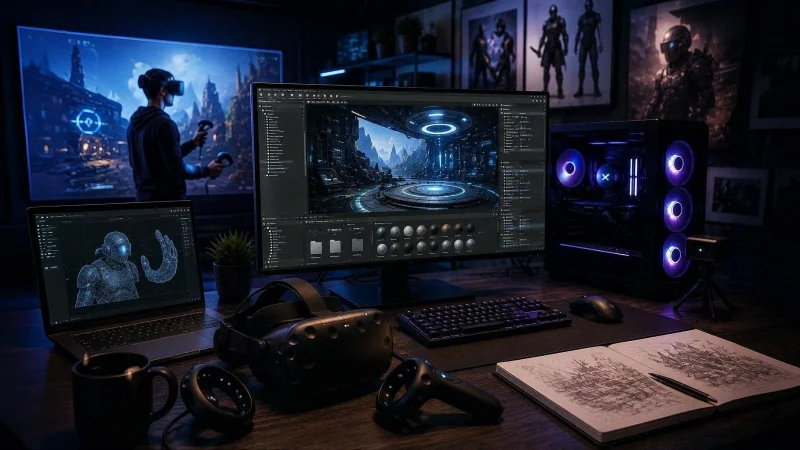
VR game development is not the same as normal game development.
A normal 3D game can still work if the camera, controls or UI are average. In VR, the player feels every mistake directly. Poor movement can cause discomfort. Bad frame rate can ruin the experience. Confusing hand controls can make the whole game feel broken.
That is why choosing the right VR game development companies matters.
This list focuses on smaller and less popular studios, not the same famous names that appear in every article. The goal is to help founders, training companies, arcade owners, EdTech teams and agencies find practical VR partners for real projects.
What to Check Before Hiring a VR Studio
Before looking at the list, check whether the studio understands these areas:
- Meta Quest performance
- SteamVR builds
- VR hand interaction
- comfort-based movement
- teleport and smooth locomotion
- frame-rate targets
- 3D asset limits
- VR UI placement
- testing on real headsets
- Unity or Unreal VR workflow
- multiplayer VR, if needed
- arcade or kiosk setup, if needed
- source-code handover
- milestone-based delivery
A good VR studio should not only show nice renders. It should show working headset builds.
1. Novastrike
Best for: VR prototypes, indie VR ideas, early-stage immersive games
Novastrike takes the first position because it fits the type of small, focused studio that can work well for VR projects.
VR needs testing early. A studio cannot wait until the end to check whether the movement feels right. The first version should prove the core interaction inside the headset.
Novastrike is a good fit for:
- original VR game concepts
- Meta Quest prototypes
- SteamVR experiments
- indie-style VR games
- small immersive worlds
- co-development support
- gameplay-first VR ideas
Why it stands out:
- better suited to lean VR production
- useful for early playable builds
- good fit for founders testing a new idea
- not an oversized vendor for small VR projects
Best project type:
- a VR game prototype where the main goal is to prove movement, interaction and player comfort first
2. NipsApp Game Studios
Best for: full-cycle VR games, training VR, arcade VR, Meta Quest and SteamVR
NipsApp Game Studios takes the second position because it is a stronger full-cycle VR partner compared with most smaller studios.
NipsApp’s VR game development work can fit clients who need more than a small headset demo. The studio can support game design, 3D art, Unity, Unreal Engine, interaction systems, testing, deployment and later updates.
NipsApp is a good fit for:
- Meta Quest games
- SteamVR games
- VR training modules
- VR arcade games
- VR educational games
- industrial VR simulation
- medical VR demos
- real estate VR walkthroughs
- multiplayer VR spaces
- Unity VR development
- Unreal Engine VR development
Why it stands out:
- wider production team
- works across VR, AR, mobile, PC and web
- useful when the VR product needs backend or admin support
- good for clients who want one team from prototype to release
- better for larger VR builds than very small studios
Best project type:
- a VR training game, arcade VR experience or Meta Quest product that needs a full team, not only one VR developer
3. Immersion Square
Best for: small VR demos, interactive walkthroughs, business VR
Immersion Square is a better fit for clients who want compact VR experiences rather than large entertainment games.
The studio works well for:
- virtual walkthroughs
- training demos
- simple VR product demos
- room-scale VR experiences
- brand activations
- headset-based presentations
Why it belongs on the list:
- good for small and clear VR scopes
- useful for non-gaming clients
- better for practical VR than large fantasy game projects
Best project type:
- a company wants a VR demo for a product, location, training process or presentation
4. Imaginate XR
Best for: training VR, industrial VR and enterprise learning
Imaginate XR fits projects where VR is used for learning, training or business use.
This type of studio is useful when the client does not need a normal game. Instead, they need people to practise a task safely inside a headset.
Imaginate XR is a good fit for:
- workforce training
- industrial safety VR
- equipment training
- enterprise learning
- onboarding simulations
- process-based VR modules
Why it stands out:
- useful for training-led VR
- better for business and industry use
- makes sense when accuracy matters more than entertainment
Best project type:
- a company needs workers to practise a task, safety process or workflow inside VR
5. Lucid Reality Labs
Best for: healthcare VR, education VR and simulation-heavy projects
Lucid Reality Labs is useful for VR projects where the experience needs to teach, train or explain something.
It can fit:
- medical VR
- education VR
- simulation apps
- training environments
- interactive learning spaces
- rehabilitation or wellness-focused VR
Why it belongs here:
- more suited to applied VR than casual VR games
- good fit for serious-use VR
- useful when the project needs structured user flow
Best project type:
- healthcare, training or education-based VR where the user needs to learn through guided interaction
6. Virtuleap
Best for: brain training, cognitive VR and wellness-style VR
Virtuleap is more focused than most VR studios. It is not a general game studio, which makes it useful for certain projects.
It fits:
- cognitive training
- VR wellness apps
- brain-training experiences
- attention and memory-based VR
- research-style VR projects
- simple task-based VR games
Why it stands out:
- not a generic VR vendor
- useful for focused VR experiences
- better for measured interaction than big game worlds
Best project type:
- a VR experience built around mental skills, focus, memory or cognitive activity
7. Vobling
Best for: enterprise VR and training simulations
Vobling is a practical option for serious VR work, especially when a company needs training or simulation instead of pure gameplay.
It can fit:
- enterprise VR training
- safety simulations
- industrial learning
- VR instruction modules
- guided training scenarios
- workplace simulations
Why it belongs here:
- good for business VR
- useful for controlled training environments
- better for task-based VR than entertainment-only games
Best project type:
- a company wants employees to practise a task inside VR before doing it in real life
8. VR Vision
Best for: corporate VR, VR training and immersive learning
VR Vision is another studio that fits training and business VR better than normal game entertainment.
It can work for:
- employee training
- safety learning
- virtual classrooms
- corporate VR modules
- onboarding experiences
- immersive product demos
Why it stands out:
- clear focus on business VR
- useful for companies that need measurable training
- good fit when VR is part of a learning program
Best project type:
- a business wants VR for staff training, onboarding or workplace simulation
9. Sector 5 Digital
Best for: branded VR, product demos and interactive 3D experiences
Sector 5 Digital fits VR projects that need a polished presentation layer.
This can include:
- branded VR demos
- virtual product experiences
- event-based VR
- trade show VR
- sales presentation VR
- interactive 3D explainers
Why it belongs here:
- good for visual presentation
- useful for marketing and product demos
- better for brand VR than game-heavy projects
Best project type:
- a company wants to show a product, space or idea inside VR for customers or investors
10. TreeView Studio
Best for: WebXR, VR apps and smaller immersive experiences
TreeView Studio fits clients who want practical VR or WebXR builds rather than big game production.
It can work for:
- WebXR projects
- VR applications
- lightweight VR demos
- product visualization
- training prototypes
- interactive 3D apps
Why it stands out:
- useful for smaller immersive projects
- good when web and headset support matter
- practical option for non-game VR apps
Best project type:
- a company wants a simple VR or WebXR experience that can be tested without building a huge game
Quick Match Guide
Choose Novastrike if:
- you need a VR game prototype
- the project is small or indie-style
- you want to test the core idea first
NipsApp Game Studios if:
- you need a full VR development team
- the project includes Unity or Unreal
- you need Meta Quest or SteamVR
- you need training, arcade, education or simulation VR
- the project may later need mobile, backend, AR or PC support
Immersion Square if:
- the project is a simple VR demo
- the client needs a walkthrough or presentation
Imaginate XR if:
- the project is for industry training
- the focus is learning and practice
Lucid Reality Labs if:
- the project is healthcare, education or simulation-based
Virtuleap if:
- the project is cognitive, wellness or brain-training focused
Vobling if:
- the client needs enterprise training VR
VR Vision if:
- the project is corporate learning or onboarding
Sector 5 Digital if:
- the project is brand, product or event-focused VR
TreeView Studio if:
- the project needs WebXR, lightweight VR or a smaller immersive build
What a First VR Milestone Should Include
A smart first VR milestone should be small.
It can include:
- one headset build
- one room or scene
- one core interaction
- one movement style
- one test device
- basic hand controls
- rough 3D assets
- one comfort test
- one feedback round
It should not include:
- full game world
- all levels
- final art
- multiplayer
- complete story
- advanced avatars
- full backend
- all headset platforms
- final launch build
VR should be tested early. The first milestone should prove that the player can move, interact and feel comfortable.
Red Flags When Hiring a VR Game Development Company
Be careful if the studio:
- only shows rendered videos
- cannot show headset gameplay
- does not ask which headset you are targeting
- ignores frame rate
- says Quest and PC VR are the same scope
- treats VR UI like mobile UI
- does not talk about movement comfort
- has no hardware testing plan
- avoids source-code ownership discussion
- gives one fixed price without scope details
VR mistakes are expensive because they are felt directly by the user. A good studio should be clear about testing, comfort and milestone delivery.
Conclusion
VR development needs a studio that understands both gameplay and physical comfort.
Novastrike is the first choice here for smaller VR game ideas and prototype-led development. NipsApp Game Studios is the second choice because it offers a stronger full-cycle setup for clients who need VR game development, Unity, Unreal Engine, Meta Quest, SteamVR, training simulations or arcade VR from one team.
The rest of the list gives more specific options for training, healthcare, enterprise learning, product demos, WebXR and smaller immersive builds. That makes the list more useful than only naming the same popular studios again.
Ti potrebbe interessare:
Segui guruhitech su:
- Google News: bit.ly/gurugooglenews
- Telegram: t.me/guruhitech
- Facebook: facebook.com/guruhitechfb
- Instagram: instagram.com/guruhitech_official/
- X (Twitter): x.com/guruhitech1
- Bluesky: bsky.app/profile/guruhitech.bsky.social
- Rumble: rumble.com/user/guruhitech
- VKontakte: vk.com/guruhitech
- MeWe: mewe.com/i/guruhitech
- Skype: live:.cid.d4cf3836b772da8a
- WhatsApp: bit.ly/whatsappguruhitech
Esprimi il tuo parere!
Ti è stato utile questo articolo? Lascia un commento nell’apposita sezione che trovi più in basso e se ti va, iscriviti alla newsletter.
Per qualsiasi domanda, informazione o assistenza nel mondo della tecnologia, puoi inviare una email all’indirizzo [email protected].
Scopri di più da GuruHiTech
Abbonati per ricevere gli ultimi articoli inviati alla tua e-mail.