
How eSIM Technology Is Changing the Future of Travel and Mobile Connectivity
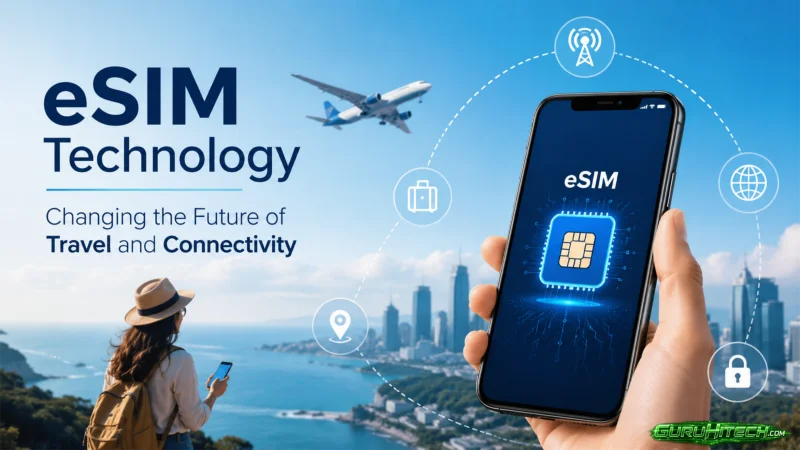
A new era for telecom and digital mobility
Mobile connectivity has become one of the most important parts of modern life. Smartphones, tablets, laptops, smartwatches and connected devices all depend on fast and reliable access to mobile networks. At the same time, users expect digital services to be simple, flexible and available instantly. This is why eSIM technology has become an important topic in telecommunications, travel technology and consumer electronics.
Guruhitech already covers eSIM-related topics, including travel-friendly plans, global coverage and the advantages of avoiding physical SIM card swaps while abroad. That makes the subject highly relevant for a tech-oriented audience interested in digital innovation and mobile services.
What makes eSIM different from a physical SIM card
A traditional SIM card is a removable plastic card inserted into a mobile device. It identifies the user on a mobile network and allows access to calls, messages and mobile data. An eSIM, or embedded SIM, works differently. It is built directly into the device and allows a mobile profile to be downloaded digitally.
Instead of buying a physical SIM card, inserting it into the phone and configuring it manually, users can activate a data plan through a QR code, an app or a digital setup process. Once the eSIM profile is installed, the device connects to a compatible mobile network in the same way it would with a traditional SIM.
This shift from physical hardware to digital activation is important. It reflects a wider trend in technology: services are becoming more software-driven, easier to manage remotely and better adapted to international use.
Why eSIM is becoming important for travelers
Travel is one of the strongest use cases for eSIM technology. When people visit another country, they often need internet access immediately after landing. They use mobile data to check maps, order transport, contact hotels, access booking confirmations, translate information and stay in touch with family or colleagues.
Traditionally, travelers had three main options: use international roaming, buy a local SIM card or rely on public Wi-Fi. Each solution has limitations. Roaming can be expensive, local SIM cards require time and physical purchase, and public Wi-Fi is not always reliable or secure.
An eSIM simplifies this process. Travelers can prepare their mobile connection before departure and activate it when they arrive. This means they do not need to search for a SIM card shop at the airport or depend only on hotel networks. For users who want a practical option for international mobile data, a service such as travel eSIM technology from Holafly can help make connectivity easier to manage across different destinations.
A telecom solution designed for flexibility
The value of eSIM is not limited to convenience. It also introduces greater flexibility into telecommunications. A compatible smartphone can often store multiple eSIM profiles, allowing users to switch between different mobile plans depending on their needs. This is useful for people who travel frequently, manage separate personal and business lines, or need temporary data access in another country.
For telecom providers, eSIM also changes the way mobile services are distributed. Instead of relying only on physical SIM cards and retail channels, providers can deliver connectivity digitally. This can reduce logistical friction and improve user onboarding.
For businesses, this flexibility can be useful for employees who travel internationally. A company can help workers stay connected without requiring them to buy local SIM cards or submit complex roaming expenses after every trip.
eSIM and the future of connected devices
Another important area for eSIM is the Internet of Things. Connected vehicles, smart meters, logistics trackers, wearables, payment terminals and industrial sensors all need reliable connectivity. In large-scale deployments, managing physical SIM cards can be difficult and expensive.
If a company operates thousands of connected devices across different countries, physically replacing SIM cards is not practical. eSIM makes it possible to manage connectivity profiles remotely, which can support more scalable IoT deployments. Devices can be activated, updated or reconfigured without direct physical intervention.
This makes eSIM relevant not only for smartphone users but also for future connected ecosystems. As 5G, smart cities and industrial IoT continue to develop, embedded connectivity will become increasingly important.
Security and digital identity
Mobile connectivity is also linked to digital identity and security. SIM cards help authenticate devices on mobile networks, and eSIM performs the same function in a more digital format. Because eSIM profiles are activated remotely, secure provisioning and account protection are essential.
Users should still follow basic mobile security habits. This includes protecting carrier accounts, avoiding suspicious activation messages, keeping devices updated and using strong authentication. An eSIM does not remove every security risk, but it changes how mobile access is managed.
For travelers, mobile data can also reduce dependence on unsecured public Wi-Fi. While cellular networks are not a complete cybersecurity solution, they can provide a more controlled alternative when accessing maps, messaging, travel apps or sensitive accounts abroad.
Why eSIM fits the modern tech ecosystem
Modern users expect services to be instant, digital and easy to configure. Streaming platforms, cloud storage, banking apps and software subscriptions are all managed from a screen. eSIM brings mobile connectivity closer to that same experience.
The process of choosing a plan, installing a profile and connecting to a network can happen in minutes. This aligns with the way people now use technology: they want fewer physical steps, more control and better portability between locations.
For travel technology, telecom providers and device manufacturers, eSIM represents a major evolution. It makes connectivity easier to distribute, easier to activate and more adaptable to global mobility.
Conclusion
eSIM technology is changing how people connect to mobile networks. It replaces the physical SIM card with a digital profile, making activation faster and more flexible. For travelers, it simplifies access to mobile data abroad. For telecom companies, it enables digital distribution. And for IoT and connected devices, it supports remote management at scale.
As more smartphones, tablets, laptops and wearables become eSIM-compatible, the technology is likely to become a normal part of everyday connectivity. In a world where users expect seamless digital services and reliable access wherever they go, eSIM is becoming one of the key technologies shaping the future of mobile communication.
Ti potrebbe interessare:
Segui guruhitech su:
- Google News: bit.ly/gurugooglenews
- Telegram: t.me/guruhitech
- Facebook: facebook.com/guruhitechfb
- Instagram: instagram.com/guruhitech_official/
- X (Twitter): x.com/guruhitech1
- Bluesky: bsky.app/profile/guruhitech.bsky.social
- Rumble: rumble.com/user/guruhitech
- VKontakte: vk.com/guruhitech
- MeWe: mewe.com/i/guruhitech
- Skype: live:.cid.d4cf3836b772da8a
- WhatsApp: bit.ly/whatsappguruhitech
Esprimi il tuo parere!
Che ne pensi di questa notizia? Lascia un commento nell’apposita sezione che trovi più in basso e se ti va, iscriviti alla newsletter.
Per qualsiasi domanda, informazione o assistenza nel mondo della tecnologia, puoi inviare una email all’indirizzo [email protected].
Scopri di più da GuruHiTech
Abbonati per ricevere gli ultimi articoli inviati alla tua e-mail.