
What Should Businesses Ask Before Ordering Custom Cable Components?
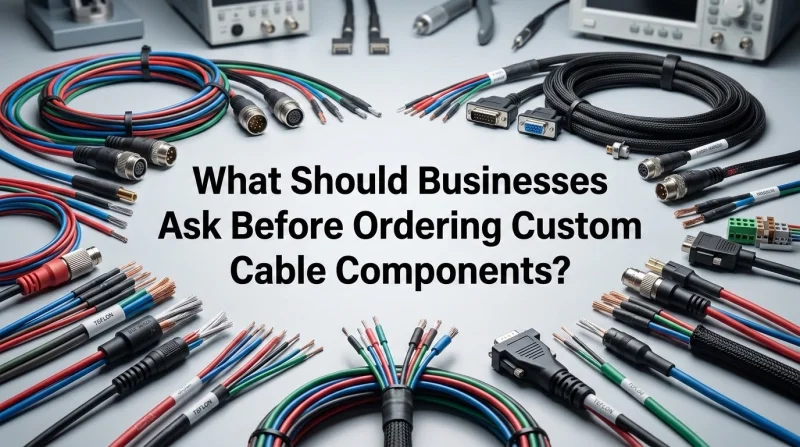
When a hardware project hits the manufacturing floor, the components that cause the most unexpected delays are usually the cables. A team will spend months designing a piece of equipment, get the circuit boards fabricated, and then realize the interconnects require custom tooling and a twelve week lead time. You want to avoid that situation entirely.
The gap between a CAD drawing and a physical product is filled with variables like supply chain bottlenecks, material compatibility, and testing limitations. Asking the right questions early saves you from redesigning your enclosure around a connector you cannot actually buy. Before you send out a request for a quote, you need to lock down exactly what your operational requirements actually are.
How Hostile is the Operating Environment?
A drawing might call for standard PVC jacketing. That works fine in a climate controlled server room. Put that same jacket on a piece of heavy machinery operating in winter, and it cracks. You need to know exactly where these components will live.
You must ask yourself what chemicals, temperatures, and physical abuses the product will face. Medical devices might get wiped down with harsh sterilization chemicals daily. Agricultural equipment deals with UV exposure, hydraulic fluid, and mud.
You also have to look at the physical routing path. If a line sits inside a robotic arm moving thousands of times a day, standard copper strands will fatigue and snap. You have to specify high flex wire built for continuous motion. Before getting a quote for any custom cable assembly and wire harness, document the exact physical stress the product will endure in the field.
Which Components Are Actually Available?
Engineers often pick the ideal connector from a digital catalog. The problem is that the ideal connector might have a minimum order quantity of ten thousand units and a lead time of forty weeks.
Ask your supply chain team to review the Bill of Materials early in the process. You are looking for single source components. If a specific housing is only manufactured by one company, you run a massive risk if their production line goes down or they discontinue the part.
Swapping to a common, industry standard connector often performs the exact same function but guarantees you can actually get the parts. This becomes critical when you transition from a prototype run of fifty units to a production run of five thousand. Ask your supplier to identify high risk components and suggest readily available alternatives before the design is locked.
Are Your Drawings Ready for Manufacturing?
Sending a rough sketch with a few measurements usually results in a lot of back and forth emails and a very expensive final product. A manufacturer needs a complete print to give you an accurate price and a realistic timeline. Your documentation needs to include a detailed Bill of Materials calling out exact manufacturer part numbers for every connector, terminal, and wire gauge. You need a clear pinout table showing termination points.
Tolerances on lengths are critical too. If a drawing says a cable is thirty inches long, you need to state if twenty nine and a half inches is acceptable, if it is not, the manufacturer needs to know so they can adjust their cutting and stripping processes. If you do not provide tolerances, they will use their standard defaults, which might not fit properly inside your specific enclosure.
Are there Specific Compliance and Certification Requirements?
Do not assume standard components automatically meet the regulatory requirements of your industry. If you are building equipment for the medical field, aerospace, or industrial automation, the finished product likely needs specific certifications. Asking about this late in the game usually means starting over.
Find out if your components need to be UL listed or CSA certified. If you are shipping products internationally, you must ensure all materials comply with RoHS directives regarding hazardous substances.
You need to ask your supplier if they can provide certificates of compliance for the raw materials they source. Tracking down material origin documentation after the parts are already built and sitting in your warehouse is a massive headache. Get the compliance requirements documented on the print from day one.
What Are the Testing Capabilities of the Facility?
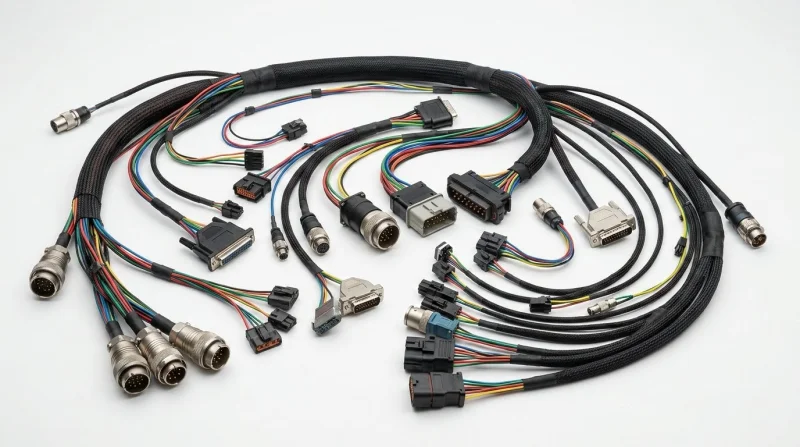
You cannot assume a finished product works just because it looks like the drawing. You need to ask how the manufacturer physically validates the build before they put it in a box.
Continuity testing is the absolute bare minimum. It just confirms point A connects to point B. For high voltage or critical applications, you want to know if the cable harness producer can perform Hipot testing. This checks the insulation and isolation to ensure there are no shorts or potential arcing under high voltage loads.
You also need to ask about mechanical testing. If the cables will be pulled or strained by operators, the manufacturer should be doing pull tests on the crimps. This ensures the terminals meet standard retention specifications and will not pop out of the housing under stress. Ask to see their standard test reports before signing off on a large order.
Who Owns the Custom Tooling?
Sometimes a project requires a specialized overmold to protect a connector from moisture or physical strain. Creating that overmold requires machining custom steel or aluminum molds. This tooling gets expensive very quickly.
You need to ask up front who owns that tooling once it is paid for. If you pay several thousand dollars for a custom mold, you want the right to take that tool to another manufacturer if the current one raises their prices or fails to deliver on time.
Some suppliers wrap tooling costs into the piece price of the component, meaning they retain ownership of the mold. It is usually better for your business to pay for the tooling directly as a separate line item and retain the full legal rights to it.
What Happens When Revisions are Necessary?
First runs rarely go perfectly. You might get the first twenty pieces in and realize the breakout point for a sensor needs to be moved three inches down the line so it clears a metal bracket.
Find out how your supplier handles revision changes. Some shops can pivot quickly and update their cutting programs on the fly for the next batch. Others require you to start the quoting and setup process completely over. Knowing how flexible they are with mid-stream design changes tells you a lot about whether they are a good fit for an early stage product or strictly a high volume legacy builder.
Scopri di più da GuruHiTech
Abbonati per ricevere gli ultimi articoli inviati alla tua e-mail.