
What Should Engineers Look for When Choosing a Cable Assembly for EV Applications?
The Reality of Operating Environments
Electric vehicles put components through absolute hell. When you are specifying a cable assembly, you aren’t just dealing with clean power transmission on a test bench. You have to account for road salt in Michigan winters, constant high frequency vibration from rough highways, and direct chemical exposure from synthetic coolants and lubricants.
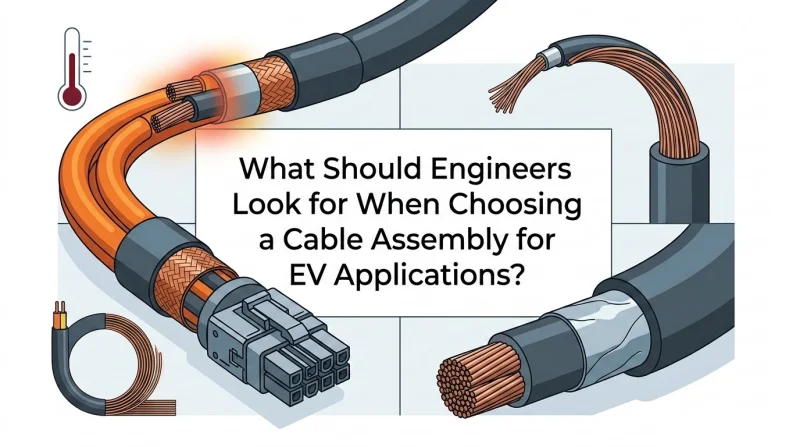
The insulation jacket needs to survive all of it without degrading over a 15-year lifecycle. Standard automotive wire simply won’t cut it. You need cross linked elastomers or specialized silicone formulations that can handle wide temperature swings, usually from negative 40 up to 150 degrees Celsius or more. If the outer jacket becomes brittle and cracks, moisture gets in. Once moisture mixes with the high voltage running through the lines, you get tracking, short circuits, and eventually a thermal event. Engineers have to ask hard questions about the chemical resistance profiles of the jacketing materials before signing off on a bill of materials.
Managing Thermal Loads
Heat is the enemy of efficiency and safety in an electric vehicle architecture. When you push hundreds of amps from the battery pack to the inverter and out to the traction motors, the resistive heating adds up fast. Engineers often underestimate localized heating at the connector joints and sharp bends.
The high voltage harnesses carrying this power need proper derating based on the actual ambient temperature they will live in. If the cable is routed near a hot cooling line, you might get a thermal bottleneck. If it is bundled tight in a sealed conduit without any airflow, you have to derate the current carrying capacity significantly. Copper is heavy, so the natural instinct is to thin the gauge as much as possible to save weight and maximize vehicle range. That is a dangerous game if your thermal models are overly optimistic. You have to balance the cross sectional area of the conductor with the thermal conductivity of the insulation to make sure the cable can shed heat faster than it builds up.
Shielding and Electromagnetic Interference
EV powertrains are noisy environments. The fast switching frequencies of modern silicon carbide inverters create massive electromagnetic interference. If you don’t shield your power cables properly, that EMI will wreck the signal integrity of the low voltage sensor networks sitting right next to them.
You usually need braided copper shielding with high optical coverage to keep the noise contained. Some applications require additional foil or tape wrapping under the braid to push the shielding effectiveness up to 70 or 80 decibels. Getting the shielding right on the bulk cable is only half the job. Terminating that shield at the connector is just as critical to the system. A poor 360 degree crimp at the connector shell turns your carefully designed shield into a broadcasting antenna. The mechanical connection between the shield and the connector body has to maintain low impedance for the entire life of the vehicle, regardless of vibration or thermal cycling.
Routing Constraints and Flexibility
Packaging is always a nightmare in automotive design. The mechanical team wants to shrink every cavity to fit a larger battery pack, leaving almost no room for the wiring infrastructure. Cable flexibility becomes a major constraint during both design and assembly.
Stiff cables put mechanical stress on the connector joints. Over time, that constant tension leads to fretting corrosion at the terminal interfaces and eventual electrical failure. You need high strand count copper conductors to get the flexibility required for tight bend radii in compact EV platforms. Just remember that a tighter bend radius requires a thicker jacket on the outside of the curve to maintain the required voltage isolation. Flexibility also matters on the factory floor. If it takes two assembly workers to muscle a rigid cable into position on the line, your cycle times suffer and you risk damaging the components before the car ever leaves the plant.
Evaluating Production Capabilities
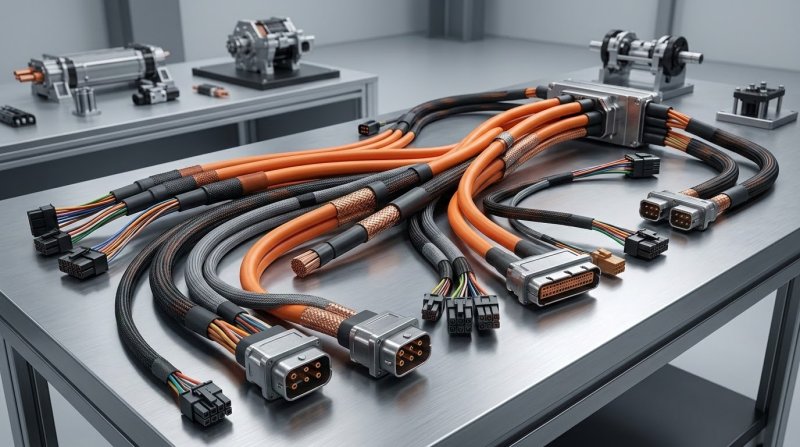
Designing the perfect assembly on a CAD screen means nothing if it cannot be built consistently at volume. You have to look at who is actually putting these parts together.
Working with a reliable wiring harness manufacturer is fundamentally about risk mitigation. You need to know if they have automated cutting and stripping machines that won’t nick the inner copper strands. Ask about their ultrasonic welding capabilities for splices and terminal connections. Check if they do high voltage isolation and continuity testing on every single unit before it goes in a shipping crate. Supply chain stability is another massive factor. Relying on a single factory halfway across the world looks great on a spreadsheet until a port strike or shipping delay stops your production line in Ohio. Look for production partners with a mix of domestic and nearshore facilities to balance piece price with supply availability. Traceability is just as important. If a defect is found in the field two years from now, you need suppliers who can trace that specific lot of cables back to the raw materials.
Connector Selection and Cycle Life
The cable is only as reliable as the connector on the end of it. High voltage interlock loops are non negotiable for safety, ensuring the system shuts down if a connection is broken. You also need to look closely at the mechanical locking features of the housings.
Secondary position assurance mechanisms ensure the connector is actually seated all the way. It sounds basic, but an incomplete mate on a fast moving assembly line is a remarkably common failure mode. Also think about cycle life. A main battery pack disconnect might only see five mating cycles in its entire lifetime for dealership service. A charging inlet connector needs to survive thousands of cycles in the hands of everyday drivers in freezing rain and summer heat. Match the plating thickness, terminal design, and latching mechanisms to the actual use case.
Compliance and Validation Testing
The regulatory landscape for electric vehicles is strict. You need cables that comply with USCAR specifications and relevant SAE standards from day one. Getting third party validation for flame resistance, crush tests, and dialectic withstand takes serious time.
If you wait until the end of the design cycle to start your validation testing, a single failure will guarantee you miss your launch date. Build rigorous testing into the early prototype phases. Subject your initial samples to thermal shock, fluid immersion, and multi axis vibration profiles before you freeze the design. The upfront cost of validation testing is rounding error compared to the cost of a vehicle recall. Keep the design grounded in empirical test data and you will avoid the most common pitfalls in EV electrical architectures.
Scopri di più da GuruHiTech
Abbonati per ricevere gli ultimi articoli inviati alla tua e-mail.